
Most people grow up hearing myths as entertainment heroic gods, monsters, and epic battles. Yet history often hides inside stories, especially in cultures that relied on memory instead of written records. The idea behind Ragnarök climate evidence is that an ancient Norse legend may actually describe a real catastrophe.
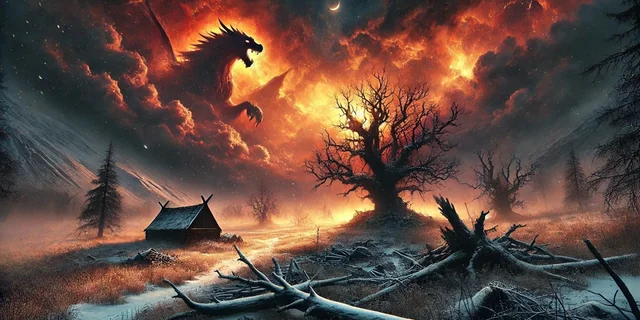
Over the past few years, historians and climate scientists have begun comparing mythological descriptions with scientific data, and Ragnarök climate evidence now appears less like fantasy and more like a distant eyewitness account. The Norse people lived close to nature. Their survival depended on farming seasons, sunlight, and predictable winters. When something disrupted those cycles, it would have been terrifying. Today, researchers are carefully examining old poems and sagas alongside ice samples, tree growth patterns, and archaeological discoveries. When placed side by side, the similarities are difficult to ignore. The myth may not just tell a spiritual story about the end of the world. It may preserve human memory of a devastating environmental collapse.
The field studying Ragnarök climate evidence treats mythology as a cultural record rather than simple fiction. Around 536 CE, scientists believe a massive environmental disaster struck much of the Northern Hemisphere. Volcanic eruptions released ash and gases into the atmosphere, weakening sunlight and dropping temperatures for years. Farming societies across Europe faced hunger and instability. The Norse myth describes almost the same scenario. A long winter called the Fimbulwinter arrives, harvests fail, and society breaks apart. Researchers now suspect oral traditions carried the memory for centuries before medieval writers finally recorded it. What seemed symbolic may actually be a remembered experience passed from generation to generation.
Table of Contents
Researchers Explore Climate Clues Connected to the Ragnarök Tale
| Evidence Source | What Scientists Found | Link To Ragnarök Story | Approximate Date |
|---|---|---|---|
| Ice core samples | Volcanic material blocking sunlight | Dark skies before destruction | 536–540 CE |
| Tree ring records | Sudden cooling and poor plant growth | Endless winter conditions | Mid 6th century |
| Archaeology | Abandoned settlements and famine | Social collapse in myth | Late 6th century |
| Historical texts | Widespread crop failure | Chaos and hardship | 536–550 CE |
| Norse mythology | Fimbulwinter and rebirth | Cultural memory of disaster | Written later |
The investigation into Ragnarök climate evidence has changed how scholars view mythology. Instead of pure fantasy, the Norse apocalypse may describe a real sixth century environmental crisis triggered by volcanic eruptions and global cooling. Ice core analysis, tree ring data, archaeological findings, and historical records all support this interpretation. Perhaps the most remarkable part is the preservation of memory. Without instruments or scientific understanding, ancient communities recorded what they witnessed through storytelling. Their narrative survived long enough for modern science to interpret it. Ragnarök therefore stands as more than a dramatic legend. It is a reminder that human experience with climate change stretches far back in time. Long before modern research, people observed nature carefully and passed down warnings in the only way they could through stories.
The Fimbulwinter Description
- In Norse tradition, Ragnarök does not begin with fire or battle. It begins with weather. The Fimbulwinter is described as three winters with no summer in between. Snow blankets the land continuously, temperatures remain brutal, and people struggle to survive.
- Scientists studying Ragnarök climate evidence noticed how closely this matches tree growth records. Trees in Scandinavia show extremely thin growth rings beginning around 536 CE. That means the growing season shortened dramatically and sunlight weakened. Crops would have failed repeatedly. For early farming communities, losing harvests even once was dangerous. Losing them year after year would have been catastrophic.
- The myth also mentions families turning against each other and social order breaking down. Archaeological evidence supports this possibility. Some settlements appear abandoned during this time, and burial patterns changed. These signs suggest population decline and migration, consistent with famine conditions.
Volcanic Eruptions And A Darkened Sun
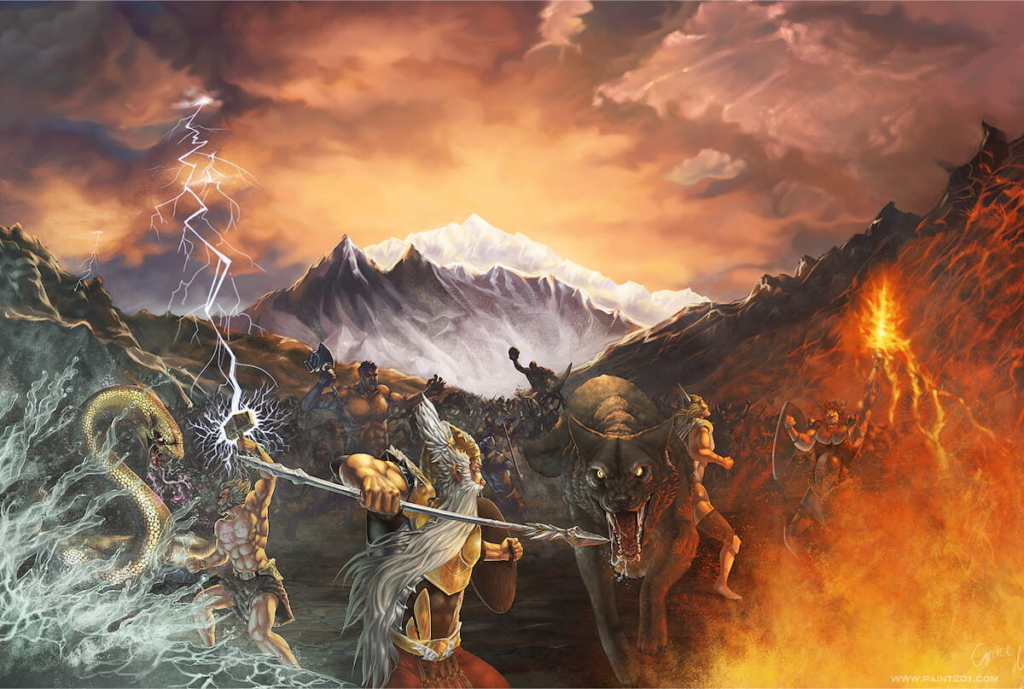
- One of the most memorable images in the story is the sun disappearing. The myth says wolves chase and swallows the sun and moon, leaving the sky dark. Modern research offers a natural explanation. Ice cores extracted from Greenland contain microscopic volcanic particles dated precisely to the mid sixth century. When large volcanoes erupt, they release sulfur aerosols high into the atmosphere. These particles reflect sunlight away from Earth, producing cooling and dim skies.
- Historical writings from other regions describe the same phenomenon. Mediterranean observers wrote that the sun appeared weak and cold. Some accounts say it looked like a pale moon even at midday. This aligns strongly with Ragnarök climate evidence. The Norse storytellers likely interpreted the dimmed sun through symbolism, turning atmospheric haze into mythological creatures. Scientists believe at least one enormous eruption and possibly multiple eruptions triggered this global cooling. The event lasted several years, not just a single season.
Evidence From Tree Rings And Agriculture
Tree rings provide one of the clearest climate records available. Each year a tree forms a ring depending on temperature and sunlight conditions. Good seasons create thick rings, while harsh conditions create thin ones. Researchers analyzing trees from Northern Europe discovered a dramatic shift starting in 536 CE. Growth slowed sharply and remained suppressed for more than a decade. This indicates prolonged cold summers and shortened growing seasons. For agricultural societies, this meant repeated crop failure. Grain shortages would quickly lead to famine. Here the Ragnarök climate evidence becomes particularly convincing. The myth describes hunger spreading across lands before the final destruction. Archaeological findings show abandoned farms and fewer settlements during this period, suggesting people either died or migrated in search of food.
Historical Accounts Outside Scandinavia
- The cooling event was not isolated to the Norse world. Records from many civilizations mention strange weather and food shortages.
- Byzantine historians reported failed harvests and starvation. Irish records described years without reliable bread production. Chinese chronicles documented summer frost and unusual snowfall. These independent accounts confirm a widespread climate disaster.
- This global consistency strengthens the argument for Ragnarök climate evidence. While literate societies recorded the event in writing, the Norse preserved it through oral storytelling. Different cultures described the same experience using different methods.
Myth As Cultural Memory
Before writing became common in Scandinavia, knowledge passed through spoken poetry. Skilled storytellers memorized long epics and recited them across generations. During this process, real events were often transformed into symbolic narratives. A volcanic haze became wolves devouring the sun. Harsh winters became a supernatural cosmic winter. Yet the central memory remained. Researchers believe Ragnarök climate evidence shows how oral traditions can preserve environmental disasters for centuries. Even when details changed, the core experience survived long enough to be written down in medieval texts.
Why The Story Endured
- The Ragnarök tale does not end in darkness. After destruction, the world renews. The sun returns, vegetation grows again, and surviving humans rebuild society.
- Climate records show a similar pattern. After years of cooling, temperatures gradually recovered and farming resumed. Communities adapted and stabilized.
- Because the story explained both suffering and recovery, it remained meaningful. It helped people understand hardship while offering hope. This emotional power likely ensured its survival. The continued relevance of the legend is one reason scholars today take Ragnarök climate evidence seriously.
What Modern Science Learns From Ancient Myths
- One major lesson from Ragnarök climate evidence is that myths can function as historical archives. Ancient observers paid close attention to nature. Without scientific language, they described events using metaphor and narrative.
- Modern researchers now combine climatology, archaeology, and literature to reconstruct past disasters. Studying these events helps scientists understand human responses to sudden climate change such as migration, conflict, and adaptation.
- This research has present day relevance. While technology has improved, human reactions to crisis remain similar. Understanding past resilience may help societies prepare for future environmental challenges.
FAQs About Researchers Explore Climate Clues Connected to the Ragnarök Tale
What Is Ragnarök in Norse Mythology
Ragnarök is a legendary series of events describing the destruction of the gods, harsh winters, and the rebirth of the world in Norse tradition.
What Does Ragnarök Climate Evidence Suggest
It suggests the myth may preserve memories of a real global cooling event caused by volcanic eruptions around 536 CE.
What Was the Fimbulwinter
The Fimbulwinter refers to three consecutive winters without summer, believed to reflect a prolonged cold period in Northern Europe.
How Do Scientists Confirm The Climate Event
They rely on ice core samples, tree ring patterns, archaeological discoveries, and written historical records from different regions.