
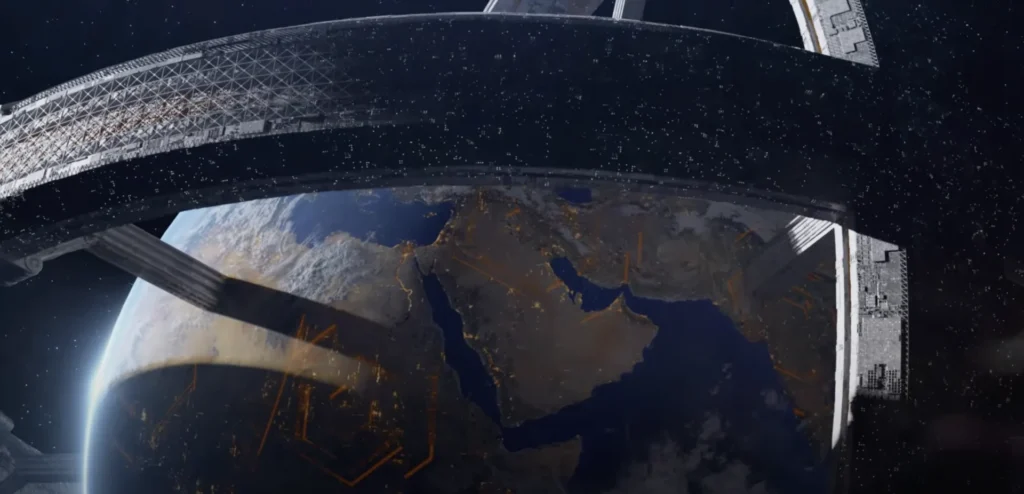
Scientists in the United States, Europe, and Japan are testing technologies that could one day create a Solar Ring — a network of orbiting solar-power satellites designed to wirelessly transmit electricity to Earth. Recent successful demonstrations of energy beaming from orbit suggest the system, once considered science fiction, could eventually supply continuous clean power and reshape the global energy economy.
Table of Contents
Solar Ring
| Key Fact | Detail / Statistic |
|---|---|
| First orbital power beamed | Caltech experiment detected electricity transmitted from space to Earth |
| Continuous solar exposure | Orbiting panels receive sunlight nearly 99% of the time |
| Target deployment | Pilot operational systems studied for 2030s–2040s |
Large-scale deployment remains uncertain, and many engineering, economic, and regulatory questions must be resolved. Yet continued testing shows steady progress. As one European Space Agency feasibility report noted, orbital solar power has moved from speculative concept to a potential future infrastructure. Further demonstrations planned this decade will determine whether the Solar Ring becomes a defining technology of the 21st-century energy system.
What the Solar Ring Means
The Solar Ring is not a rigid metallic ring around Earth. Engineers use the term to describe a coordinated constellation of satellites placed in orbit, working together as a large distributed power plant.
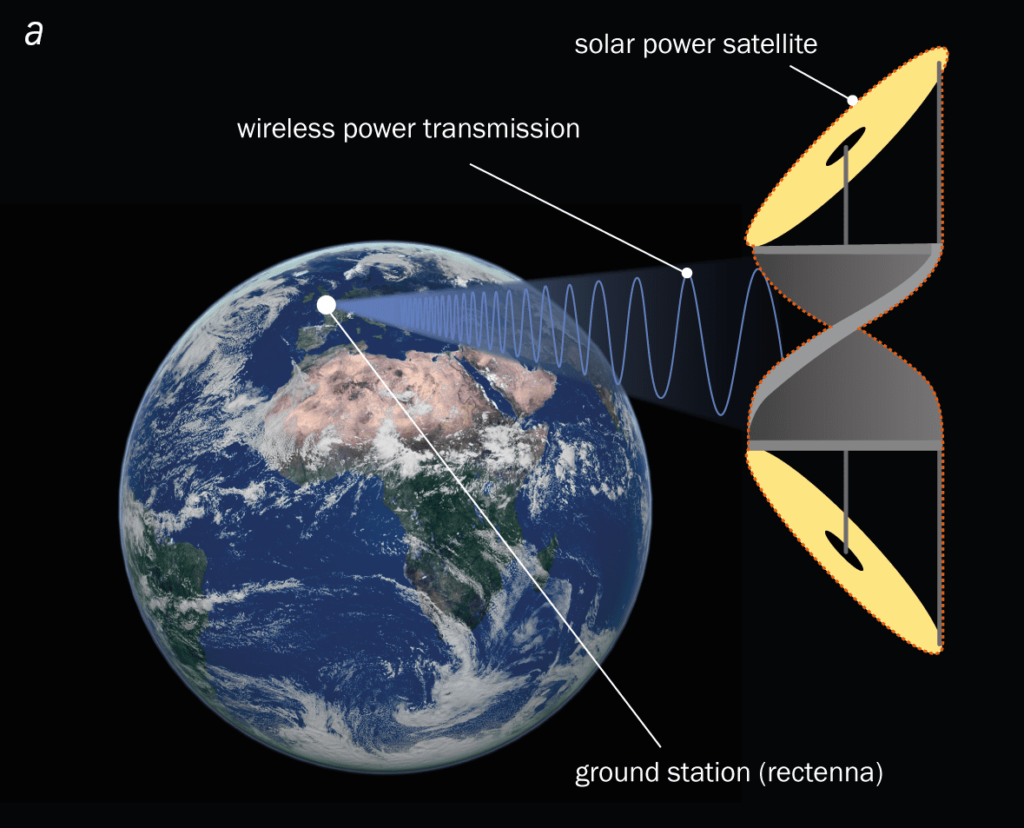
Each spacecraft would carry solar panels, power converters, and transmitting antennas. The system converts sunlight into electrical energy and sends it to receiving stations on Earth.
Ground installations, known as rectifying antennas or “rectennas,” convert the incoming microwave signal into usable electricity for the grid.
The U.S. National Aeronautics and Space Administration (NASA) has studied the concept for decades. In technical research assessments, NASA scientists concluded that orbital solar systems could provide “continuous and dispatchable electric power,” a property rarely achieved by renewable technologies.
Unlike terrestrial solar plants, the Solar Ring would operate almost continuously because satellites in geostationary orbit remain exposed to sunlight nearly all year.
Historical Roots of the Idea
The idea dates back to 1968, when aerospace engineer Peter Glaser first proposed transmitting solar energy from space. During the 1970s oil crisis, NASA and the U.S. Department of Energy examined large orbital solar stations but halted the project due to high launch costs.
For decades, the concept remained mostly theoretical. Rockets were too expensive, assembly in orbit was impossible, and wireless energy transfer was unproven at scale.
That situation has changed dramatically over the past fifteen years due to reusable rockets, robotic space assembly, and advances in high-efficiency solar panels.
How the Technology Works
Solar Collection in Orbit
Solar satellites would operate roughly 36,000 kilometers above Earth in geostationary orbit. From that location, they remain fixed relative to a point on the planet and receive almost constant sunlight.
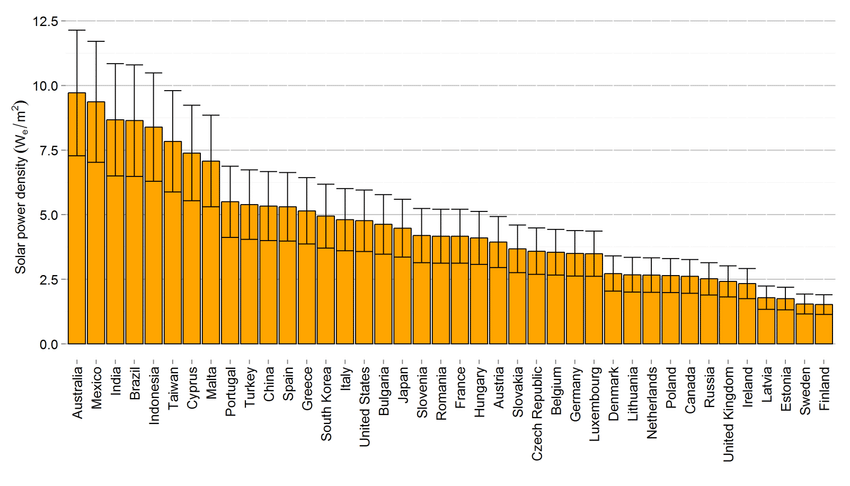
Solar radiation in space is roughly 30–40% stronger than what reaches ground panels after atmospheric filtering. Additionally, panels avoid nighttime, seasons, and weather disruptions.
Because of this, space-based solar power could achieve extremely high capacity factors — the percentage of time a power plant produces energy — compared with ground renewables.
Wireless Power Transmission
Electricity produced aboard the satellite converts into microwaves and is directed toward Earth using phased array antennas. The beam spreads as it travels, reducing intensity.
Dr. Ali Hajimiri, electrical engineer at the California Institute of Technology, said after the 2023 orbital test, “We demonstrated that wireless power transfer works in space and can be detected on Earth. It establishes the technical feasibility of the concept.”
The received microwave signal passes through a rectenna field composed of lightweight metal mesh and diodes. The structure converts electromagnetic energy back into electricity and feeds it into the power grid.
Researchers say the energy density would be similar to standing in sunlight and below international safety exposure limits.
Why Governments Are Investing
One of the strongest motivations is the need for renewable baseload energy — electricity available at all times, regardless of weather.
Wind and ground solar are intermittent. Coal, gas, and nuclear plants currently supply stable output.
Energy analysts say the Solar Ring could combine the environmental benefits of renewables with the reliability of conventional power plants.
The Japan Aerospace Exploration Agency (JAXA) has conducted wireless transmission experiments since the 2010s. Japan’s long-term national energy strategy includes evaluating orbital solar power stations.
“Space solar power may contribute to energy security for resource-poor nations,” JAXA researchers wrote in project assessments.
The European Space Agency (ESA) has launched feasibility studies under its SOLARIS initiative. Officials say the technology could support carbon neutrality targets by mid-century.
Potential Global Impact
Climate Change Mitigation
The International Energy Agency estimates electricity demand could double by 2050 as transportation and industry electrify. Many countries face difficulty replacing fossil fuels while maintaining stable electricity supply.
The Solar Ring could:
- supply clean energy continuously
- reduce need for energy storage
- support electric vehicles
- replace peaking fossil-fuel plants
Disaster and Humanitarian Uses
Energy beams could be redirected quickly to affected regions. Emergency responders could power hospitals, water purification systems, and communications infrastructure after natural disasters.
Remote communities without grids could receive power without building transmission lines across mountains, forests, or oceans.
Economic Considerations
Economists say the greatest uncertainty is cost.
Building a Solar Ring requires thousands of tons of equipment in orbit. Even with modern reusable rockets, launch expenses remain substantial.
However, proponents argue that once operational, maintenance costs would be relatively low because solar fuel — sunlight — is free and continuous.
Industry analysts compare the concept to early satellite communications. Initially expensive, communications satellites eventually became fundamental global infrastructure.
Some projections suggest space solar electricity could become competitive if launch costs fall below certain thresholds.
Safety and Environmental Concerns
Microwave Exposure
Scientists emphasize that microwave beams would be spread over several kilometers, keeping intensity low. Birds, aircraft, and weather systems could pass safely through.
Independent safety studies have compared exposure levels to ambient solar radiation.
Space Debris
Orbital congestion is a growing issue. Engineers propose placing satellites in controlled orbits with automated collision avoidance and de-orbit systems.
Ground Land Use
Rectenna sites would require large areas but could coexist with agriculture because the mesh structures allow sunlight and rain to reach crops.
Why the Idea Is Gaining Credibility
Three major developments have changed expert opinion:
- Reusable heavy-lift rockets dramatically reducing launch cost
- Robotic assembly enabling large structures in orbit
- Verified microwave power transmission in space
Dr. John Mankins, a former NASA physicist and long-time space solar researcher, wrote in energy policy research that the technology is now “engineering-limited rather than physics-limited.”
In other words, scientists no longer question whether it can work — only whether it can be built economically.
Geopolitical Implications
Energy independence has historically shaped geopolitics. Nations dependent on imported fossil fuels face supply risks and price shocks.
A Solar Ring network could change global energy trade. Countries with rectenna infrastructure could receive power without oil imports.
Security analysts say such systems may also have strategic value because they could power remote bases without fuel supply chains.
However, international coordination would be necessary. Power beams crossing borders and orbital infrastructure would require treaties and regulation through organizations such as the United Nations Office for Outer Space Affairs.
Comparison With Other Clean Energy Solutions
| Technology | Strength | Weakness |
|---|---|---|
| Ground solar | Cheap and scalable | Nighttime limitation |
| Wind | High output | Weather dependent |
| Nuclear | Continuous power | Cost and safety concerns |
| Solar Ring | Continuous renewable electricity | High initial investment |
Experts increasingly view orbital solar not as a replacement but as a complement to terrestrial renewables.
FAQ
Is a giant structure actually being built?
No. The Solar Ring refers to a network of satellites, not a physical ring.
Could it power entire countries?
In theory, yes. Large constellations could generate gigawatts of electricity comparable to major power plants.
Is the beam dangerous?
Studies indicate exposure levels similar to sunlight and within safety standards.
When might it become operational?
Pilot systems may appear in the 2030s, while full-scale networks could take decades.