

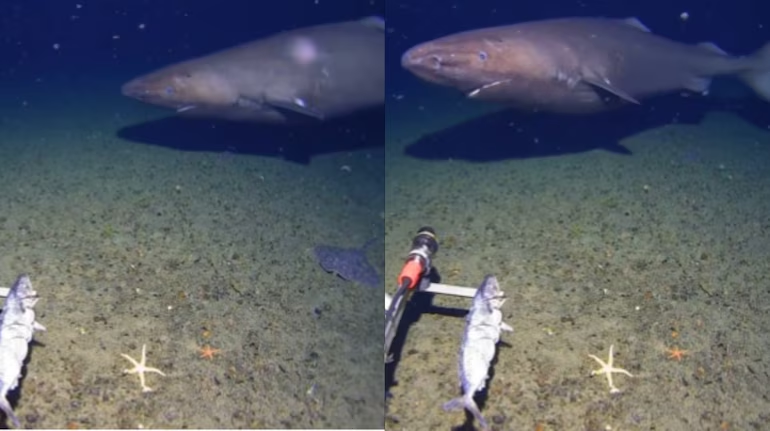
Marine Researchers have confirmed the first verified shark sighting in Antarctic waters after a deep-sea camera recorded a large sleeper shark near the Antarctic Peninsula in early 2025. The observation, made roughly 500 meters below the surface in near-freezing conditions, overturns decades of scientific belief that sharks could not survive in Earth’s coldest ocean ecosystem and raises new questions about the Antarctic ecosystem.
Table of Contents
Shark Sighting in Antarctic Waters
| Key Fact | Detail |
|---|---|
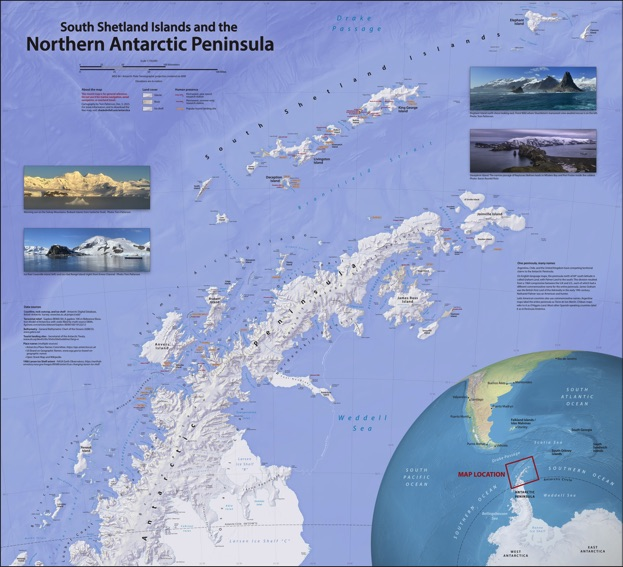
| Location | Near South Shetland Islands, Antarctic Peninsula |
| Depth | Approx. 490 m (1,600 ft) below sea surface |
| Species | Likely southern sleeper shark (Somniosus antarcticus) |
| Water Temperature | About 1.3°C (34°F) |
What Scientists Observed
Researchers from the University of Western Australia and partner institutions recorded the animal during a January 2025 expedition investigating deep-sea biodiversity through advanced deep-sea exploration equipment. A stationary baited camera system documented a slow-moving shark approximately 3–4 meters long.
“This is a remarkable observation because Antarctica has long been viewed as a biological barrier for sharks,” said marine ecologist Dr. Ben Williams, a member of the research team. “We now have clear visual confirmation that at least one species is present.”
The team identified the animal as a southern sleeper shark, a deep-water species related to the Greenland shark. Scientists said the body shape, swimming behavior, and dorsal fin placement strongly matched known descriptions.
The finding represents the first verified evidence of a shark living within the Antarctic marine ecosystem rather than passing through nearby sub-Antarctic waters.
Why Antarctica Was Thought Shark-Free
For decades, marine biology textbooks stated that sharks could not inhabit Antarctic waters because of their unique physiology. Sharks regulate internal salt levels using chemicals such as urea and trimethylamine oxide. Scientists believed these compounds would crystallize in sub-freezing temperatures, preventing survival.
By contrast, Antarctic fish evolved antifreeze proteins that prevent ice formation in blood and tissues. Sharks were not known to possess such adaptations.
Dr. Cassandra Brooks, a polar policy researcher at the University of Colorado who was not part of the expedition, explained the significance:
“Antarctica has always been considered a natural boundary for many marine predators. This discovery suggests the Antarctic ecosystem is more connected to the global ocean than we previously understood.”
A History of Searching the Southern Ocean
The Southern Ocean surrounding Antarctica remains one of the least studied marine environments on Earth. Harsh weather, sea ice, and months of darkness severely limit scientific expeditions.
Early Antarctic exploration in the late 19th and early 20th centuries focused on geography rather than biology. Even modern research vessels only reach remote sites during a short summer window lasting roughly four months.
Marine researchers have used trawl nets and scuba surveys for decades but rarely reached deep habitats below 300 meters. The new sighting occurred nearly 500 meters deep, well beyond traditional sampling.
The development of autonomous cameras and remotely operated vehicles (ROVs) has transformed deep-sea exploration. Scientists can now leave equipment on the seabed for weeks, recording animals that rarely encounter humans.
How the Shark Survives
Deep-Water Refuge
The observed shark appeared in a deep layer of slightly warmer water. Oceanographers note that deeper Antarctic water can remain stable compared to icy surface layers exposed to air temperatures below −20°C.
Southern sleeper sharks typically inhabit depths between 400 and 1,100 meters. These depths provide steady temperatures, reduced currents, and access to prey.
The species is known for extremely slow movement and low metabolism. Such energy efficiency likely helps survival in cold, low-food environments.
Biological Adaptations
Scientists suspect sleeper sharks possess biochemical tolerance to cold temperatures rather than antifreeze proteins. Their tissues contain compounds that remain stable at near-freezing temperatures.
The shark’s sluggish behavior also conserves energy. Unlike fast-swimming tropical sharks, sleeper sharks drift slowly through deep water, conserving oxygen and calories.
Role in the Antarctic Food Web
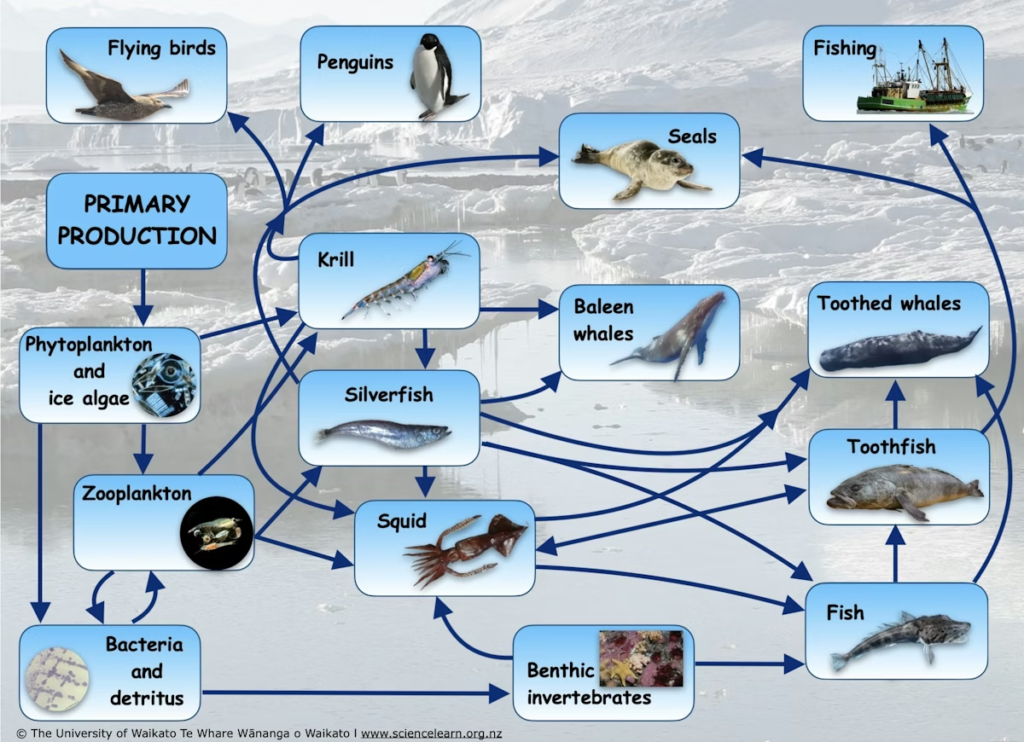
The sleeper shark discovery may change scientific understanding of the Antarctic food web.
Until now, the region’s major predators included:
- Leopard seals
- Weddell seals
- Orcas
- Antarctic toothfish
“If sharks are present, they may represent an overlooked apex predator,” said marine biologist Dr. Michelle Taylor in a research commentary. “That affects nutrient recycling and scavenging patterns across the seabed.”
Sleeper sharks are known scavengers that consume dead whales, seals, and fish. In Antarctica, whale carcasses sinking to the seafloor may provide an important food source.
Climate Change Questions
Scientists caution the sighting does not prove climate change caused the shark’s presence. However, ocean warming could gradually shift species ranges.
The Antarctic Peninsula is one of the fastest-warming regions in the Southern Hemisphere. Warmer waters may allow deep-sea species to expand southward.
“This may be a resident species we simply never detected,” said Dr. Williams. “Or it could represent a distribution shift. We need long-term monitoring.”
Researchers plan repeated surveys to determine whether a population exists.
Conservation and Policy Implications
The discovery may influence international conservation discussions. Antarctica is governed by the Antarctic Treaty System, which promotes scientific cooperation and environmental protection.
Several countries and environmental organizations are currently debating new marine protected areas in the Southern Ocean.
If sharks are part of the ecosystem, fishing policies may require revision. The Antarctic toothfish fishery, for example, could overlap with shark habitat.
Marine conservation groups argue that protecting predators helps maintain ecosystem balance. Apex predators regulate prey populations and prevent ecological collapse.
Scientific Importance
The finding highlights how little is known about the deep Southern Ocean. More than 90% of the Antarctic seafloor remains poorly surveyed.
New technologies — including deep-sea cameras, environmental DNA sampling, and autonomous underwater vehicles — are rapidly changing ocean science.
Researchers believe many unknown species likely inhabit Antarctic depths.
The sleeper shark discovery demonstrates that assumptions based on limited data may be unreliable in extreme environments.
What Happens Next
Scientists intend to deploy additional cameras and sensors during future Antarctic summers. Genetic sampling could confirm whether the species forms a stable population.
The research team will also analyze ocean chemistry and prey availability.
“We’ve learned that assumptions about extreme environments can be wrong,” said Dr. Williams. “The Antarctic Ocean still holds major biological surprises.”
Broader Implications for Ocean Science
The discovery strengthens scientific arguments that deep oceans remain the least explored habitat on Earth. Researchers often compare deep seas to outer space because both remain largely unmapped.
Understanding the Antarctic ecosystem is particularly important because polar oceans influence global climate. Cold Antarctic waters drive deep ocean currents that circulate heat and nutrients around the world.
Apex predators like sharks can serve as indicators of ecosystem health. Their presence may signal a more complex and balanced environment than previously assumed.
Closing
Future expeditions will determine whether more sleeper sharks inhabit Antarctic waters. For now, marine researchers say the finding serves as a reminder that even the planet’s most studied regions still hold major unknowns. Continued deep-sea exploration may reveal additional species and reshape scientific understanding of life in extreme environments.
FAQs About Shark Sighting in Antarctic Waters
Are sharks dangerous in Antarctica?
No evidence suggests risk to humans. Antarctic waters are too cold for swimming, and the shark lives hundreds of meters below the surface.
What species was discovered?
Scientists believe it is the southern sleeper shark (Somniosus antarcticus), a deep-sea species already known in sub-Antarctic oceans.
Why was it never seen before?
Most Antarctic research occurs near the surface. This shark lives deep underwater where humans rarely observe wildlife.
Does this prove climate change?
Not yet. Scientists need multiple observations over time to determine whether warming oceans are influencing distribution.