
A major international genetics project investigating the Origins of Papua New Guinea has found that modern inhabitants of the Pacific nation descend from the same early humans who migrated out of Africa roughly 60,000 to 70,000 years ago. The research also confirms unusually high levels of Denisovan ancestry in local populations, offering new insight into ancient human movement and adaptation.
| Key Fact | Detail |
|---|---|
| Human migration | Out-of-Africa migration about 60–70k years ago |
| Denisovan ancestry | Up to ~5% in some Papua New Guinea populations |
| Geographic isolation | Long separation preserved ancient DNA |
Table of Contents
How the DNA study changes human history
Scientists from multiple research institutions sequenced genomes collected across diverse regions of Papua New Guinea and surrounding islands. Using advanced computational modeling, they reconstructed human migration routes across Asia and Oceania.
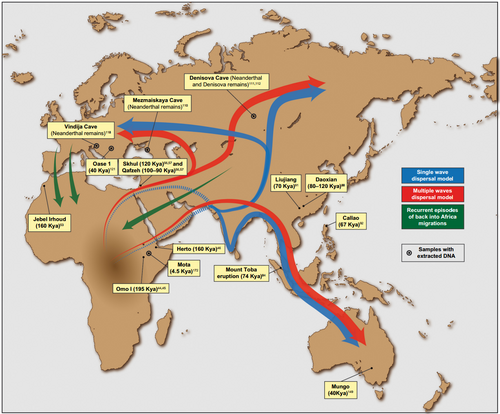
The findings challenge older anthropological theories suggesting Papuan populations descended from an earlier migration separate from other non-African humans. Instead, researchers concluded that modern Papuans belong to the same major human dispersal event that populated Eurasia.
Anthropologists now say this strengthens the “single major expansion” theory — the idea that nearly all non-African people share a common ancestral migration.
Dr. Anders Bergström, a population geneticist whose research focuses on early human dispersal, has previously explained that early humans likely traveled along coastal corridors from East Africa into South Asia, eventually reaching Southeast Asia and the ancient continent of Sahul.
The new genetic evidence aligns closely with that scenario.
A key Discovery: Denisovan Interbreeding
The most important finding concerns the extinct human relatives known as Denisovans.
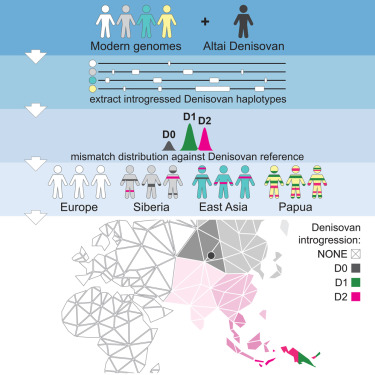
Discovered in Siberia through DNA recovered from a finger bone, Denisovans are a sister group to Neanderthals. Yet paradoxically, their strongest genetic legacy survives thousands of miles away in the Pacific.
Scientists now believe that early humans migrating through Southeast Asia encountered Denisovans and interbred with them. Those genetic contributions became permanently embedded in the populations that settled New Guinea.
Researchers report Papuan populations contain the highest levels of Denisovan ancestry ever identified in living humans.
This differs from Europeans and most Asians, whose genomes contain more Neanderthal DNA instead.
What Denisovan DNA does biologically
Scientists emphasize Denisovan ancestry is not merely historical. It appears to have provided survival advantages.
Researchers identified genes linked to:
- immune system regulation
- fat metabolism
- skin protection from ultraviolet radiation
- resistance to certain pathogens
Ancient DNA research has shown similar archaic gene contributions in Tibetan populations that help regulate oxygen usage at high altitudes. In tropical regions, genetic adaptations may have improved disease resistance.
“The interaction between modern humans and archaic humans likely helped early migrants survive unfamiliar environments,” evolutionary geneticists involved in the research explained.
Why Physical Similarities Caused Confusion
For decades, anthropologists debated the Origins of Papua New Guinea populations because of visible physical similarities between some Papuan groups and certain African populations.
Earlier theories suggested a separate African migration tens of thousands of years earlier than other global movements.
The new study disputes that view. Researchers say the similarities resulted from convergent evolution — when unrelated populations independently develop comparable traits due to similar environments.
Strong sunlight, humidity, and tropical conditions influenced pigmentation, hair type, and body structure.
Genetic data now shows these features evolved independently rather than through shared recent ancestry.
Isolation Preserved Ancient DNA
Papua New Guinea’s geography helps explain why its people retain unique genetic patterns.
The island contains mountain ranges, deep valleys, and dense rainforest. Communities historically lived in relative isolation from one another.
After early humans crossed into Sahul — a prehistoric landmass connecting Australia and New Guinea during lower sea levels — populations became separated for thousands of years.
This isolation limited later migration and mixing. As a result, ancient DNA fragments persisted in higher concentrations than in most other parts of the world.
Archaeological evidence supports the DNA findings
Archaeologists have uncovered evidence showing humans reached New Guinea at least 50,000 years ago. Stone tools, cave remains, and ancient settlements confirm long-term habitation.
The settlement required early seafaring skills. Even at the lowest sea levels, water crossings were necessary to reach Sahul.
This suggests early humans possessed advanced planning abilities and maritime technology much earlier than once believed.
Researchers now think the Pacific migration represents one of the earliest examples of long-distance exploration in human history.
Cultural Diversity and Language
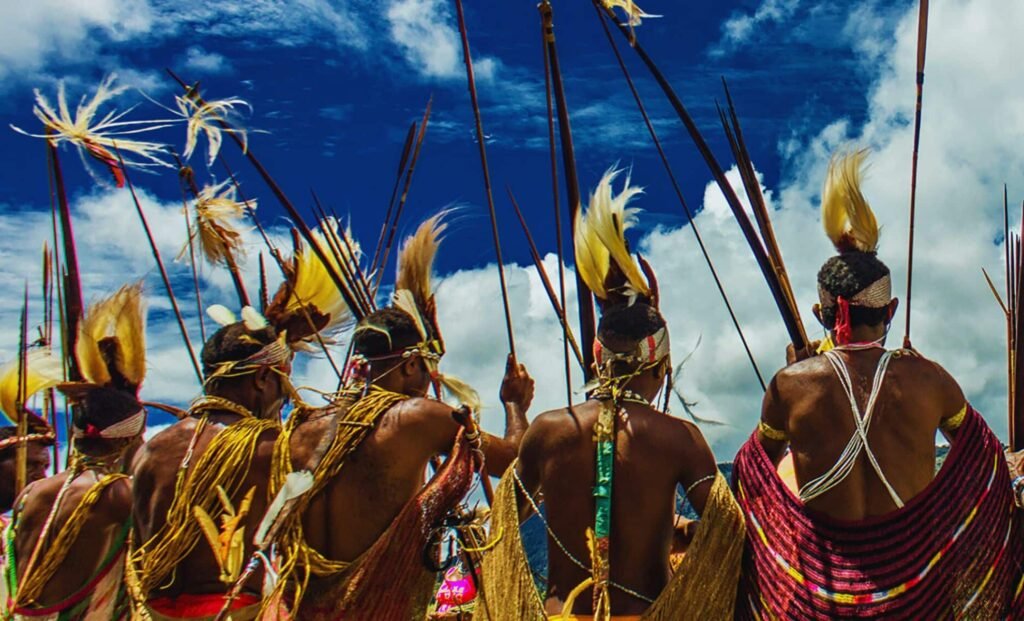
Papua New Guinea today contains extraordinary cultural diversity. More than 800 languages are spoken there — the highest linguistic diversity of any country.
Anthropologists believe this diversity reflects ancient settlement patterns combined with geographic separation. Small communities developed independently over millennia.
Genetic findings support this. Distinct regional populations show subtle variations in Denisovan ancestry and genetic adaptation.
Experts say studying the Origins of Papua New Guinea could help explain how human societies diversified after early migrations.
Why Denisovan Genes Matter Today
Some Denisovan gene variants affect immune responses and metabolism. Medical researchers say understanding them could improve global health research.
For example, certain genes appear linked to how the body responds to infections and environmental stress. Scientists believe ancient interbreeding contributed useful biological traits.
Researchers stress that the study concerns adaptation rather than racial categorization.
“The genetic differences we see reflect environment and survival strategies, not hierarchy,” scientists involved in the project noted.
Global Significance for Anthropology
The study is widely viewed as a milestone in understanding early human expansion.
Papua New Guinea preserves evidence of:
- early ocean travel
- archaic human interaction
- long-term population isolation
- environmental adaptation
Scientists say these findings reshape human evolutionary history. Human evolution now appears less linear and more interconnected, with multiple groups interacting and exchanging genes.
What Scientists Still don’t Know
Despite major advances, researchers say several mysteries remain.
Scientists have never found a Denisovan skeleton in Southeast Asia, even though genetic evidence suggests they lived there. Most fossil evidence comes from Siberia and Tibet.
Researchers now believe Denisovans were widespread across Asia, but fossils may not yet have been discovered or identified.
Further excavations in Indonesia and the Philippines could provide answers.
Broader Implications
The findings also affect understanding of global migration patterns. The migration that produced the Origins of Papua New Guinea likely passed through South Asia and Southeast Asia.
Some South Asian populations today carry very small Denisovan genetic traces, supporting the migration pathway theory.
The research may also inform climate adaptation studies, disease resistance, and personalized medicine.
Scientists increasingly view human evolution as a story of interaction rather than replacement.
Modern humans did not simply displace earlier species — they sometimes absorbed them genetically.
FAQs About New Insights Into the Origins of Papua New Guinea Populations
Did Papua New Guineans descend from a different species?
No. They are modern humans who share the same main ancestors as all non-African populations.
Why is their DNA unique?
They carry unusually high levels of Denisovan ancestry preserved by long geographic isolation.
Where did Denisovans live?
They likely lived across large parts of Asia, especially Southeast Asia.
Why is the study important?
It clarifies early human migration routes and shows how interbreeding helped humans adapt to new environments.
Final outlook
Researchers say additional genetic sampling in Southeast Asia and Oceania may refine migration timelines further. New archaeological discoveries could also locate Denisovan fossil sites closer to New Guinea.
Scientists expect future research to deepen understanding of early human exploration.
“The Origins of Papua New Guinea are central to the story of our species,” a researcher involved in the project said. “By studying these populations, we are learning not just regional history, but human history.”