
When astronomers identify a small object possibly formed from lunar debris, it immediately sparks curiosity. The idea that a tiny rock could originate from the Moon itself is fascinating not only because it is close to Earth, but because it opens a window into the dynamic interactions of the Earth-Moon system.
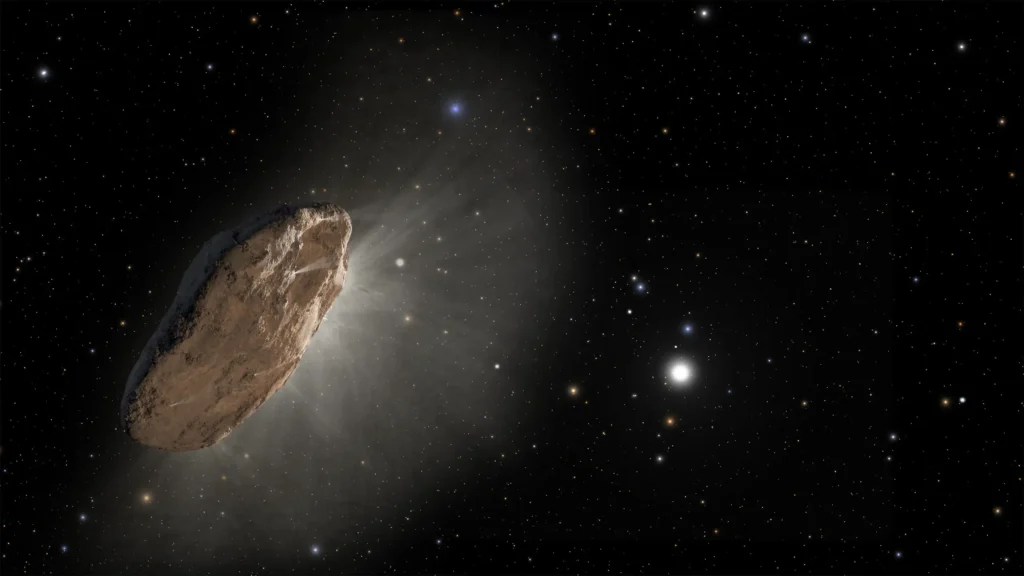
For centuries, scientists have studied asteroids and near-Earth objects, but discoveries like this suggest that some of these objects may be closer to home than we thought. The concept challenges our understanding of how lunar material moves through space and how it occasionally intersects with our planet’s orbit. This discovery revolves around a small near-Earth object called 2024 PT5, first spotted in August 2024. Unlike typical asteroids from the main asteroid belt, 2024 PT5 exhibits characteristics that strongly suggest it may be lunar debris ejected from the Moon during a massive impact event. Such an object is not just a scientific curiosity it provides a rare opportunity to study material from the Moon without sending a spacecraft to collect it, giving researchers unique insights into both lunar history and near-Earth space dynamics.
The small object that has caught astronomers’ attention is 2024 PT5, measuring approximately 10 meters (33 feet) in diameter. Discovered by the Asteroid Terrestrial-impact Last Alert System (ATLAS) in South Africa, PT5 immediately stood out because of its unusual orbit and composition. While most near-Earth objects originate from the asteroid belt between Mars and Jupiter, PT5’s path is strikingly Earth-like. Between September and November 2024, PT5 followed a horseshoe-shaped trajectory near Earth. This temporary visit to Earth’s vicinity allowed scientists to closely observe its movement and surface properties. Unlike typical asteroids, PT5’s orbit and reflective spectrum suggested a possible lunar origin. Its surface composition matches lunar rocks brought back by Apollo missions, particularly in silicate minerals. This is a strong clue that PT5 may be a fragment ejected from the Moon by a significant impact, traveling through space before briefly crossing near Earth’s orbit.
Table of Contents
Small Object Possibly Formed from Lunar Debris
| Feature | Details |
|---|---|
| Object Designation | 2024 PT5 |
| Discovery Date | August 7, 2024 |
| Discovering System | ATLAS, South Africa |
| Estimated Size | ~10 meters (33 feet) |
| Orbit Pattern | Earth-like, horseshoe trajectory |
| Composition Clues | Lunar-like reflectance spectrum |
| Possible Origin | Lunar ejecta from ancient impact |
| Close Observational Window | September–November 2024 |
| Future Pass Events | Continued orbit around Sun, monitored periodically |
Evidence That PT5 Might Be Lunar Debris
- The evidence supporting the idea that PT5 could be lunar debris comes from several observations. First, its orbital dynamics are unusual. Most near-Earth objects come from distant regions, like the main asteroid belt, and their orbits reflect those origins. PT5, however, shares a nearly identical orbital plane with Earth, which is uncommon for standard asteroids.
- Second, its reflectance spectrum the pattern in which sunlight bounces off its surface closely matches the lunar rocks brought back by the Apollo missions. Specific silicate minerals visible in these spectral readings are rarely found in typical asteroids, further strengthening the lunar connection.
- Finally, PT5’s reaction to solar radiation pressure indicates it is a dense, solid rock rather than lightweight debris, such as parts of rockets or satellites. Artificial space debris reacts differently to sunlight, exhibiting accelerated or irregular motion, which was not observed with PT5. Taken together, these factors suggest that PT5 is a natural object, likely originating from the Moon, rather than a fragment of human-made space equipment.
Temporary Visit to Earth’s Vicinity
PT5’s visit to Earth’s neighborhood was brief but highly valuable for observation. During the period from late September to late November 2024, the object maintained a horseshoe-shaped trajectory relative to Earth. While it never became a true satellite like the Moon, this type of temporary capture is rare and allows scientists to track its orbit and composition closely. Observations using ground-based telescopes and radar systems allowed researchers to measure the object’s size, reflectivity, and trajectory. These measurements helped refine the predictions of PT5’s future orbit, confirming its classification as a near-Earth object with a likely lunar origin. Understanding temporary visitors like PT5 helps astronomers study the dynamics of small bodies in Earth’s vicinity and provides clues about how lunar material can escape the Moon and travel through the solar system.
Why This Discovery Matters
- Identifying a potential piece of lunar debris among near-Earth objects is significant for several reasons. First, it demonstrates that lunar material can escape the Moon and follow complex orbits around the Sun, sometimes intersecting with Earth. This highlights the dynamic nature of the Earth-Moon system and emphasizes the interconnected movement of celestial bodies in our solar neighborhood.
- Second, PT5 belongs to a growing group of small co-orbital objects sometimes referred to as “mini-moons” or Arjuna asteroids. These bodies have orbits similar to Earth’s, making them easier to study and, in some cases, more accessible for exploration than traditional asteroids in the main belt. Studying them can improve our understanding of solar system dynamics, lunar history, and even planetary defense strategies, as understanding orbital patterns is crucial for predicting potential impacts.
- Finally, lunar-origin objects like PT5 provide opportunities for science and exploration without the need for expensive lunar missions. Researchers could analyze samples indirectly by observing these fragments, offering insights into lunar geology, impact history, and the processes that shape near-Earth space. This opens a new pathway for studying the Moon and its interactions with Earth, leveraging naturally occurring celestial objects.
Implications For Lunar and Solar System Science
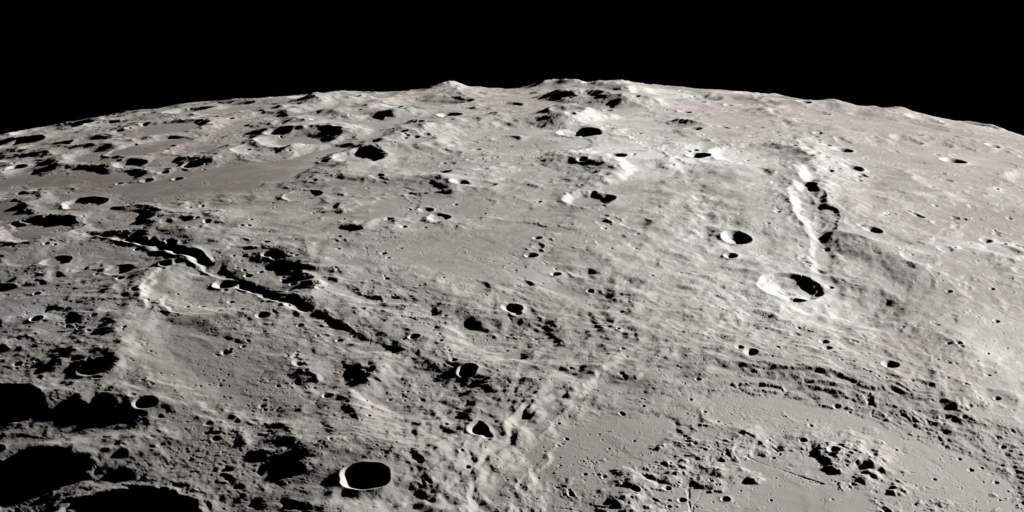
If confirmed, PT5 and similar objects could redefine how scientists view lunar ejecta. Large impacts on the Moon have been ongoing for billions of years, and while much material falls back to the lunar surface, some fragments achieve escape velocity. These fragments can travel through the solar system and occasionally cross near-Earth space. Observing lunar fragments like PT5 helps scientists’ piece together the Moon’s impact history and the broader history of our solar system. Each fragment carries information about the Moon’s surface composition, the nature of ancient impacts, and even conditions in the early solar system. By tracking and studying these objects, researchers can build models that predict how often lunar material enters near-Earth space and how it behaves over time. Additionally, this discovery encourages the search for other lunar-origin asteroids, suggesting there could be an unrecognized population of mini-moons in near-Earth space. These small bodies might be hiding in plain sight, classified previously as ordinary asteroids but potentially carrying valuable lunar material. Understanding this population could aid planetary defense, resource exploration, and future mission planning.
Future Observation and Research
- The discovery of PT5 is only the beginning. As telescopes become more powerful and surveys more comprehensive, astronomers expect to find more small objects with lunar origins. Facilities like the Vera Rubin Observatory and other next-generation telescopes will improve our ability to detect and track these objects, revealing details about their composition, orbits, and origin stories.
- Ongoing radar monitoring and spectral analysis are also essential for confirming PT5’s lunar origin and understanding its orbital evolution. Future close passes will allow additional observations, helping researchers refine predictions about other potential lunar fragments. These efforts will not only clarify the nature of PT5 but also expand knowledge of near-Earth object populations, co-orbital dynamics, and solar system history.
FAQs About Small Object Possibly Formed from Lunar Debris
1. What is the small object astronomers identified?
The object is 2024 PT5, a near-Earth object roughly 10 meters wide that may have originated from the Moon rather than the asteroid belt.
2. How do scientists know PT5 is not space junk?
Its orbital dynamics and response to solar radiation pressure indicate it is a dense, natural rock, not a piece of artificial debris.
3. Why do researchers believe it came from the Moon?
PT5’s surface reflectance spectrum closely matches lunar rocks returned by Apollo missions, especially in silicate minerals.
4. Did PT5 orbit Earth like a second Moon?
PT5 followed a horseshoe-shaped trajectory near Earth from September to November 2024 but was never permanently captured.