
A sweeping Upcoming SNAP Rule set to take effect nationwide in 2026 will expand work requirements for millions of low-income Americans receiving food assistance. The policy, adopted through federal legislation and implemented by the U.S. Department of Agriculture (USDA), is expected to tighten eligibility for the Supplemental Nutrition Assistance Program and could cause many households to lose benefits.
Table of Contents
Upcoming SNAP Rule Shift
| Key Fact | Detail / Statistic |
|---|---|
| Program size | About 42 million Americans rely on SNAP |
| New requirement | Roughly 80 hours per month of work, training, or service |
| Benefit limit | 3 months of benefits in a 3-year period without compliance |
| Expanded age group | Work rules now include older adults nearing retirement |
As states prepare implementation plans, policymakers and aid organizations will closely watch the results. Whether the Upcoming SNAP Rule increases employment or primarily reduces access to food assistance remains uncertain, and the answer may shape future U.S. welfare policy debates.
What Is the Upcoming SNAP Rule?
The Supplemental Nutrition Assistance Program (SNAP) is the United States’ largest anti-hunger food assistance program. It provides monthly funds to low-income households through electronic benefit cards that can be used to purchase groceries.
Under the Upcoming SNAP Rule, the federal government is expanding SNAP work requirements for certain adults who receive benefits but do not have dependents. The policy requires qualifying recipients to participate in employment, job training, or community service activities for approximately 80 hours each month.
According to the USDA Food and Nutrition Service (FNS), adults who fail to meet the requirement may receive assistance for only three months within a three-year period unless they qualify for an exemption.
The change represents one of the most significant adjustments to the food-aid program in more than a decade.
Who Is Affected
Expansion of Work Requirements
Previously, strict work rules applied mainly to adults ages 18 to 54 without children. The new regulation extends the requirement to older adults nearing retirement age.
Policy analysts say this shift matters because older low-wage workers often face physical limitations or unstable work opportunities.
“Older workers in low-income jobs frequently experience layoffs, irregular shifts, and health challenges,” said Dr. Lauren Bauer, a fellow at the Brookings Institution, in analysis of SNAP eligibility policies. “Meeting documentation rules can be harder than meeting the work requirement itself.”
Groups Facing Reduced Protection
Some groups once granted broad exemptions — including certain homeless individuals and veterans — may now need to meet work standards unless they qualify under strict disability criteria.
Government officials say protections remain for individuals medically unable to work, pregnant women, and primary caregivers of young children.
Advocacy groups argue the exemption system may still leave vulnerable individuals exposed to benefit loss due to administrative complexity rather than ineligibility.
Why Policymakers Changed the Rules
Supporters in Congress say the updated policy encourages employment and strengthens long-term self-sufficiency. They emphasize that SNAP has historically included work expectations.
A spokesperson for the U.S. House Committee on Agriculture stated that work participation “connects recipients to available jobs and helps transition households off assistance.”
The USDA has also highlighted expanded job training partnerships with local workforce agencies.
Economic Argument
Supporters note that the United States currently has job openings in service, retail, and logistics sectors. They say the Upcoming SNAP Rule aligns assistance programs with labor market needs.
Social Policy Debate
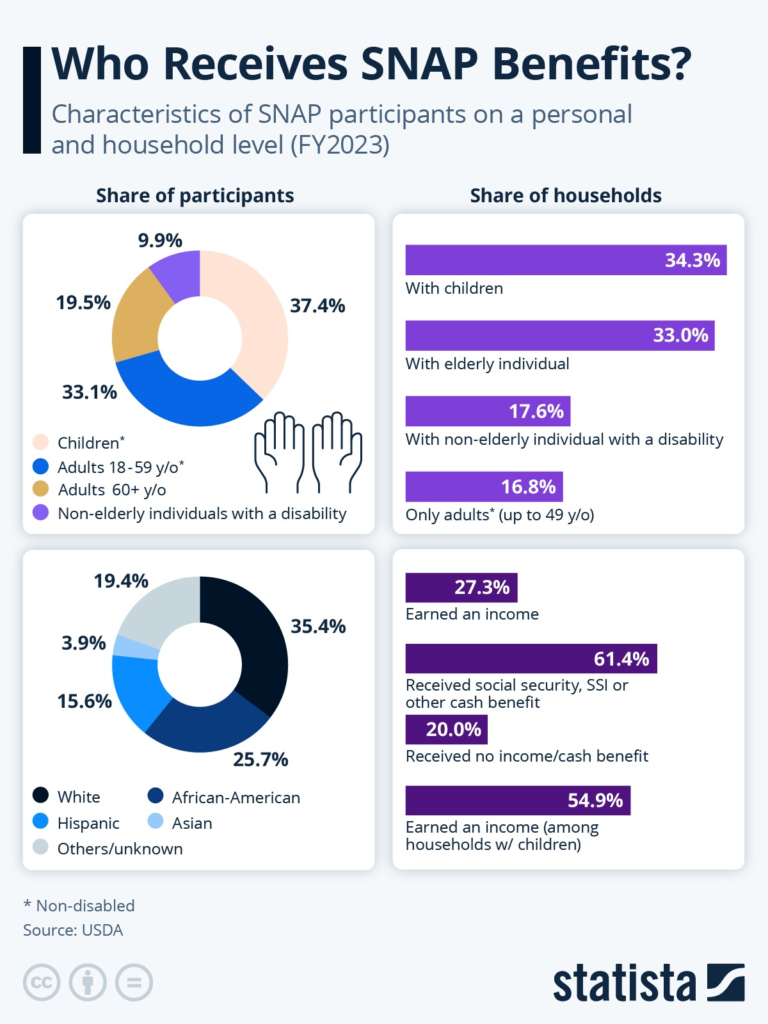
Critics say many recipients already work but remain poor. According to the Center on Budget and Policy Priorities, more than half of SNAP households with working-age adults report earned income during the year.
Low-wage jobs often provide inconsistent hours. Workers may qualify for benefits one month and lose eligibility the next due to fluctuating schedules.
Historical Context of SNAP Work Rules
Work requirements in the SNAP program are not new. Congress first introduced them in the 1996 welfare reform law, which reshaped federal assistance programs.
The policy originally limited able-bodied adults without dependents to three months of benefits unless they worked or trained.
During economic recessions — including the 2008 financial crisis and the COVID-19 pandemic — the federal government temporarily suspended those rules because unemployment rose sharply.
Economists say the Upcoming SNAP Rule represents a return to stricter pre-pandemic standards but with broader age coverage.
Potential Impact on Households
Researchers expect the policy’s effects to appear gradually as states implement eligibility reviews and recipients must verify compliance.
The major risk involves documentation. Recipients must verify work hours, attend training programs, and report earnings regularly. Missing paperwork can result in benefit termination.
For many households, SNAP covers a significant share of grocery spending. The USDA reports benefits help families purchase staples including bread, eggs, rice, vegetables, and milk.
Without assistance, food banks and charities may see increased demand.
Feeding organizations warn that the policy may not change employment but could reduce food access.
Real-World Example
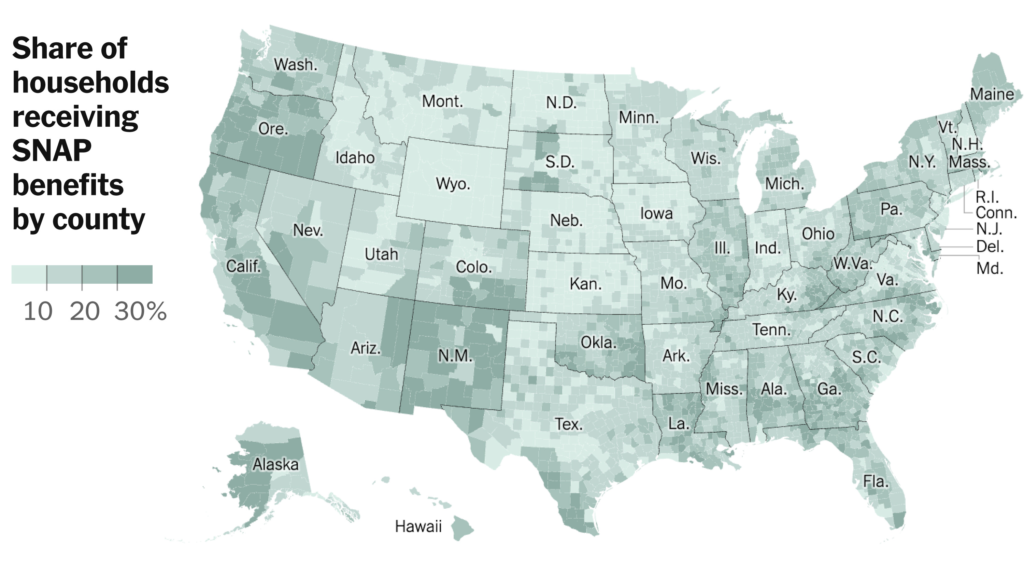
In rural regions, the impact may be especially strong. Transportation barriers can prevent recipients from reaching job sites or training programs.
For example, some counties lack public transportation entirely. Workers without cars may not be able to complete required work hours even if jobs exist.
Urban areas face different challenges. Temporary and gig workers — including cleaners, delivery drivers, and warehouse staff — often receive irregular schedules that make monthly hour reporting difficult.
Reaction From Experts and Advocacy Groups
Hunger relief organizations have expressed concern the policy could increase food insecurity.
Feeding America, a nationwide network of food banks, says benefit loss often occurs because of reporting errors or missed appointments rather than refusal to work.
“Administrative burden is one of the leading causes of SNAP case closures,” the organization stated in policy research.
Fiscal policy groups, however, support the rule as a way to encourage employment participation and reduce federal spending growth.
How the Program Works
SNAP is funded by the federal government but administered by individual states.
Eligibility depends on:
- Income level
- Household size
- Housing and utility costs
- Assets in some cases
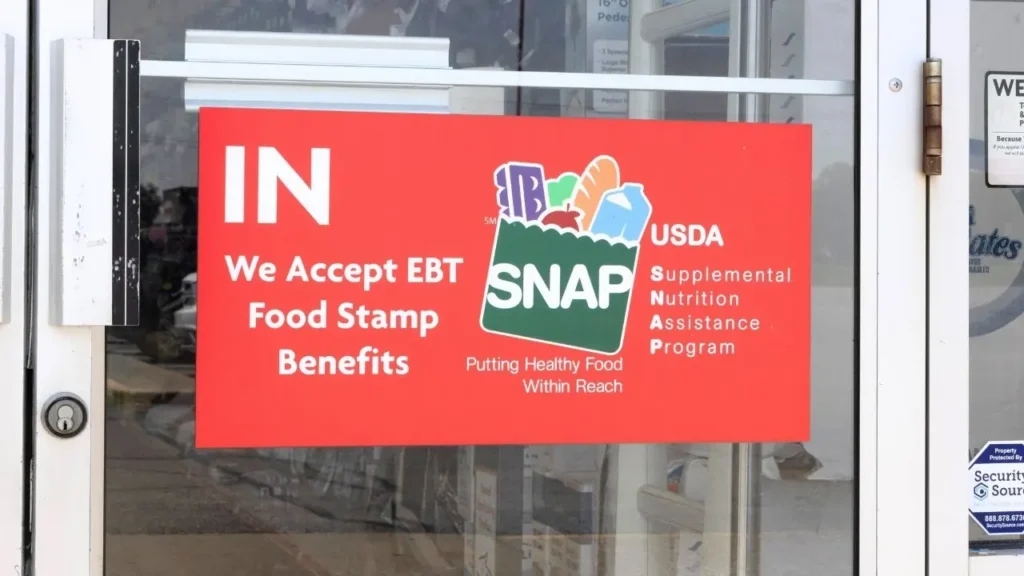
Participants receive EBT benefits through an Electronic Benefit Transfer card, which functions like a debit card but can only be used for approved food purchases.
Items such as alcohol, hot prepared meals, and non-food goods are excluded.
Broader Context: Food Assistance and Poverty
SNAP has long been considered one of the United States’ most effective anti-poverty policies.
Research from the U.S. Census Bureau shows the program significantly reduces severe poverty rates, particularly among children.
Economists often describe SNAP as an “automatic stabilizer.” During economic downturns, more people qualify and spending increases, helping both households and local grocery stores.
Retailers, especially in rural areas, depend on SNAP purchases as part of their revenue.
International Comparison
Other countries operate similar nutrition programs, though structures differ.
- The United Kingdom provides food assistance mainly through cash benefits and social welfare payments.
- Canada uses provincial income support programs rather than a separate national food-stamp system.
The United States stands out because SNAP is a targeted food purchasing subsidy rather than a general cash transfer.
Administrative Challenges
State agencies will bear much of the responsibility for implementing the Upcoming SNAP Rule.
They must:
- Track work hours
- Verify employment
- Process exemptions
- Notify recipients
Administrative capacity varies widely between states. Experts warn overwhelmed systems could increase accidental benefit terminations.
What Happens Next
States will implement the rules throughout 2026, and recipients will receive notices explaining compliance requirements. Federal agencies say outreach programs and training partnerships will accompany the rollout.
Researchers will track food bank usage, employment statistics, and poverty levels to evaluate outcomes.
A USDA official said the goal is to “support work while preserving nutrition access for eligible Americans.”
FAQs About Upcoming SNAP Rule Shift
What is SNAP?
The Supplemental Nutrition Assistance Program provides monthly grocery funds to low-income households.
Who must meet the new work rules?
Able-bodied adults without dependents, including newly added older age groups unless medically exempt.
Will everyone lose benefits?
No. Only recipients who fail to meet reporting or work requirements and do not qualify for exemptions.
When does the change begin?
Implementation begins in 2026 and will occur gradually by state.
Can people regain benefits?
Yes. Recipients can requalify after meeting work or training requirements.