

Running payroll is more than issuing paychecks. Every time an employer withholds federal income tax and Social Security or Medicare contributions from an employee’s wages, those funds are held in trust for the federal government.
The responsibility to collect, account for, and deposit those taxes on time is not optional—it is a legal obligation. When businesses fall behind, the consequences can begin with financial penalties. But in certain situations, those penalties can escalate into something far more serious: criminal prosecution.
Understanding how IRS enforcement works is critical for business owners, corporate officers, payroll managers, and anyone responsible for handling employment taxes. While many payroll mistakes result in civil assessments and interest, repeated or intentional misconduct—especially involving unpaid trust fund taxes—can trigger criminal charges under federal tax law.
Table of Contents
Employment Tax Violations and Criminal Charges
Employment tax violations and criminal charges often intersect when the issue goes beyond simple lateness or bookkeeping errors. The key factor is willfulness. If the government can show that a responsible individual knowingly failed to remit withheld taxes, the matter may move from civil collection to criminal enforcement. This distinction—between negligence and intentional wrongdoing—is what determines whether the case remains a financial liability or becomes a criminal case.
Below is a structured overview of how employment tax issues typically progress.
IRS Employment Tax Violations
| Issue | Description | Possible Consequences |
|---|---|---|
| Failure to Deposit | Payroll taxes not deposited on time | Civil penalties based on lateness |
| Failure to Pay | Taxes owed but not fully paid | Monthly penalty plus interest |
| Trust Fund Recovery Penalty (TFRP) | Responsible individuals held personally liable for unpaid withheld taxes | 100% of unpaid trust fund taxes assessed personally |
| Willful Failure to Collect or Pay Over (IRC § 7202) | Intentional failure to remit withheld taxes | Up to 5 years in prison, fines up to $10,000, prosecution costs |
| Repeated Non-Compliance | Ongoing failure to comply with deposit requirements | Civil penalties and possible criminal referral |
What Are Employment Taxes and Employer Obligations
Employers must withhold federal income tax and the employee portion of Social Security and Medicare taxes from wages. These funds are considered “trust fund taxes” because the employer holds them temporarily before transmitting them to the IRS.
Beyond withholding, employers must:
- Accurately calculate payroll taxes
- File required employment tax returns
- Deposit taxes according to IRS schedules
- Maintain payroll records
Failure in any of these areas can result in penalties. However, not every failure is criminal. The IRS distinguishes between errors, financial hardship, and intentional misconduct.
Civil Penalties for Employment Tax Problems
In most cases, enforcement begins with civil penalties. These are financial assessments designed to encourage compliance and recover unpaid taxes.
Failure to Deposit Penalty
Employers must deposit payroll taxes either monthly or semi-weekly, depending on their deposit schedule. If deposits are late, the IRS assesses a penalty that increases the longer the payment is overdue. The penalty is calculated as a percentage of the unpaid amount.
Even short delays can result in penalties, but these cases typically remain civil matters.
Failure to Pay Penalty
If employment taxes are not paid by the due date, the IRS may assess a monthly penalty, generally calculated as a percentage of the unpaid balance. Interest also accrues until the debt is satisfied.
This situation commonly arises during cash flow problems. While serious, it does not automatically imply criminal behavior.
Trust Fund Recovery Penalty (TFRP)
The Trust Fund Recovery Penalty is one of the most powerful civil enforcement tools available to the IRS. Under Internal Revenue Code Section 6672, the IRS may hold certain individuals personally liable for unpaid trust fund taxes.
A “responsible person” is anyone who had authority over financial decisions or payroll tax payments. This may include:
- Business owners
- Corporate officers
- Payroll managers
- Individuals with check-signing authority
If the IRS determines that a responsible person willfully failed to pay over trust fund taxes, that individual can be assessed a penalty equal to 100% of the unpaid withheld taxes.
Importantly, this is still a civil action. However, the finding of willfulness in a TFRP case can raise red flags that lead to further investigation.
When It Can Become Criminal
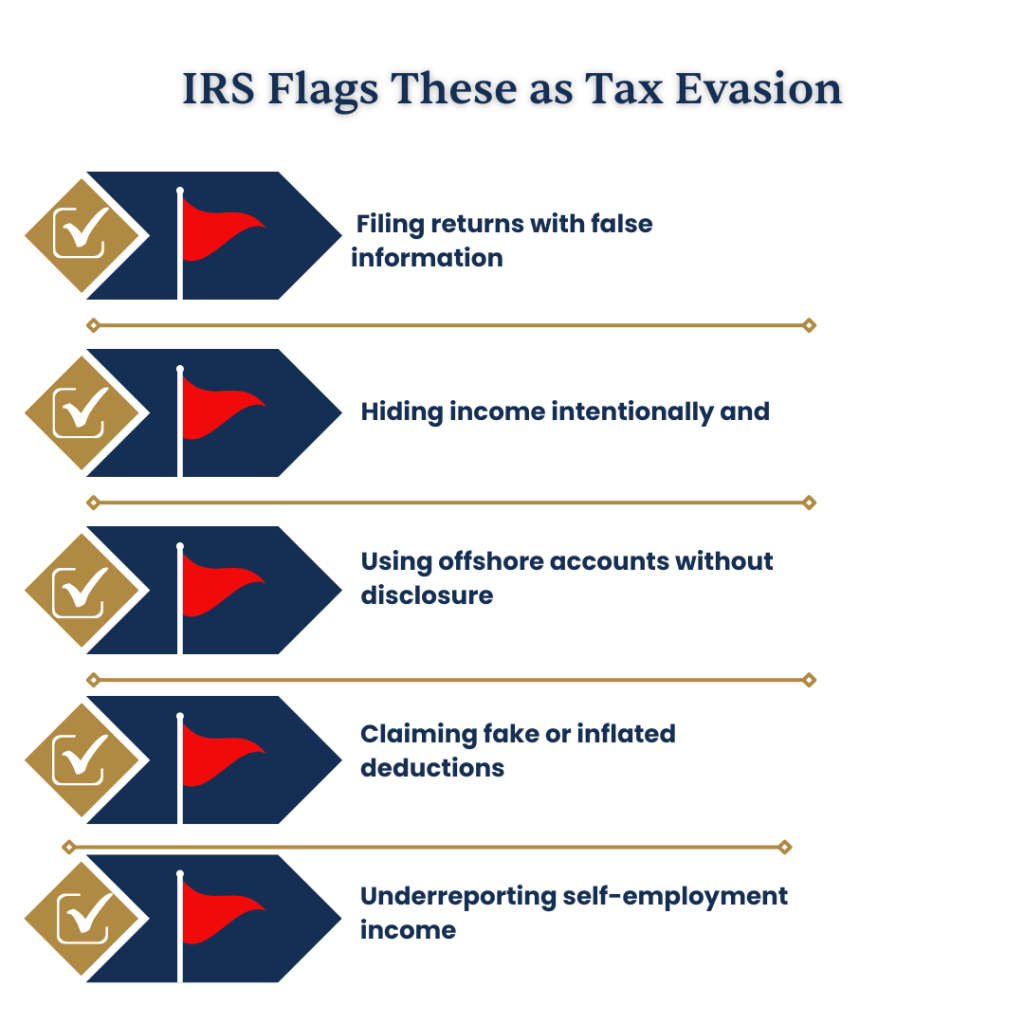
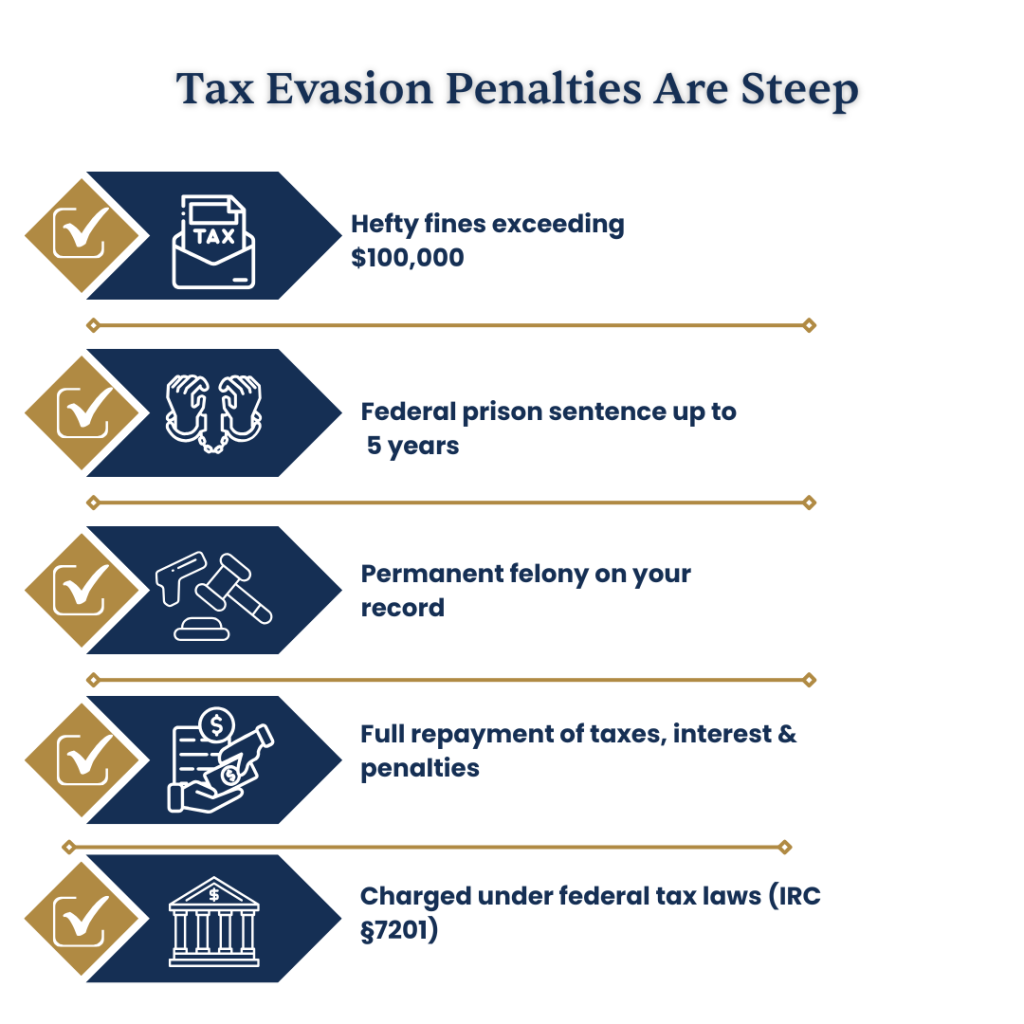
Civil penalties can escalate to criminal charges when the government believes the conduct was intentional. The most common criminal statute involved is Internal Revenue Code Section 7202, which addresses the willful failure to collect or pay over taxes.
Conviction under this statute can result in:
- Up to five years in prison
- Fines up to $10,000
- Payment of prosecution costs
Criminal enforcement is not triggered simply because taxes are unpaid. Prosecutors must prove that the individual knowingly violated a legal duty.
Willfulness: The Key Factor
Willfulness is the dividing line between civil and criminal liability. To prove willfulness, the government generally must show three elements:
- The person had a legal duty to collect and pay over taxes.
- The person failed to perform that duty.
- The failure was voluntary and intentional.
This does not require proof of evil intent. Instead, it means the individual knew the taxes were due and deliberately chose not to pay them.
Examples that may support a finding of willfulness include:
- Using withheld payroll taxes to pay vendors or operating expenses.
- Repeatedly failing to deposit taxes over multiple quarters.
- Ignoring IRS notices and collection efforts.
- Concealing payroll records or providing false information.
When withheld taxes are diverted for other purposes despite knowing they must be remitted, the situation becomes particularly serious. Courts consistently treat trust fund taxes differently because they were taken directly from employees’ wages.
What Happens First: Civil Action or Criminal Referral?
In most cases, the IRS begins with civil enforcement. The process often includes:
- Assessing penalties and interest
- Sending notices of deficiency
- Filing federal tax liens
- Issuing levies against assets
If the IRS revenue officer uncovers evidence suggesting intentional misconduct, the case may be referred to the IRS Criminal Investigation Division. From there, it may be forwarded to the Department of Justice for prosecution.
Civil and criminal proceedings can overlap. The existence of civil penalties does not prevent criminal charges. Likewise, payment of taxes after an investigation begins does not automatically eliminate criminal exposure.
How Repeated Non-Compliance Raises Risk
One isolated payroll mistake rarely leads to prosecution. However, patterns of non-compliance increase the likelihood of criminal scrutiny.
Warning signs that may draw attention include:
- Multiple quarters of unpaid employment taxes
- Continued operation of the business while ignoring tax obligations
- Paying other creditors before the IRS
- Shutting down one business and opening another to avoid tax debt
When such patterns appear deliberate rather than accidental, the government may interpret them as attempts to evade tax obligations.
Civil vs. Criminal: Key Differences
Understanding the difference between civil and criminal enforcement helps clarify the risk.
Civil cases focus on collecting unpaid taxes and penalties. The burden of proof is lower, and the consequence is financial.
Criminal cases focus on punishment and deterrence. The government must prove guilt beyond a reasonable doubt. The consequences can include incarceration.
The shift from civil to criminal generally occurs when there is clear evidence of intentional wrongdoing rather than inability to pay.
Practical Takeaways for Employers
Employment tax compliance should never be treated as flexible. Because withheld taxes belong to employees and the government—not the business—misuse of those funds is treated severely.
Employers should:
- Prioritize payroll tax deposits above other expenses.
- Maintain accurate payroll records.
- Respond promptly to IRS notices.
- Seek professional advice if cash flow issues arise.
Early action can often prevent a civil matter from escalating.
Conclusion
IRS employment tax violations begin as financial problems but can evolve into criminal cases when willfulness is involved. Late deposits and unpaid balances typically result in civil penalties and interest. However, knowingly withholding payroll taxes and failing to remit them—especially over an extended period—can lead to prosecution under federal law.
The distinction lies in intent. Honest mistakes and temporary financial hardship are generally handled through civil enforcement. Intentional misuse of trust fund taxes, on the other hand, exposes responsible individuals to personal liability, substantial fines, and possible imprisonment.
For employers and decision-makers, the message is clear: employment taxes are not working capital. Treating them otherwise can transform a tax debt into a criminal matter with lasting consequences.