
Hidden records and artifacts help decode catastrophic events in ancient China, according to interdisciplinary research combining archaeology, early Chinese inscriptions, and climate modeling. Scholars say that environmental disasters—including powerful floods and severe storms more than 3,000 years ago—likely played a crucial role in shaping political shifts, settlement patterns, and cultural developments during the Bronze Age.
Table of Contents
Decode Catastrophic Events in Ancient China
| Key Fact | Detail |
|---|---|
| Time Period Studied | Roughly 1250–1046 BCE, during the late Shang dynasty |
| Evidence Sources | Oracle bone inscriptions, excavation records, and climate modeling |
| Main Environmental Events | Flooding, extreme rainfall, and intensified storms |
| Societal Impact | Population migration, damaged infrastructure, and political instability |
Although more research is needed to confirm the full extent of ancient disasters, evidence from inscriptions, archaeological excavations, and climate models increasingly points to periods of severe environmental stress in Bronze Age China. As scholars continue studying hidden records and artifacts, they are gradually uncovering how natural forces shaped one of the world’s earliest and most influential civilizations.
The Ancient Documents Hidden in Bone and Shell
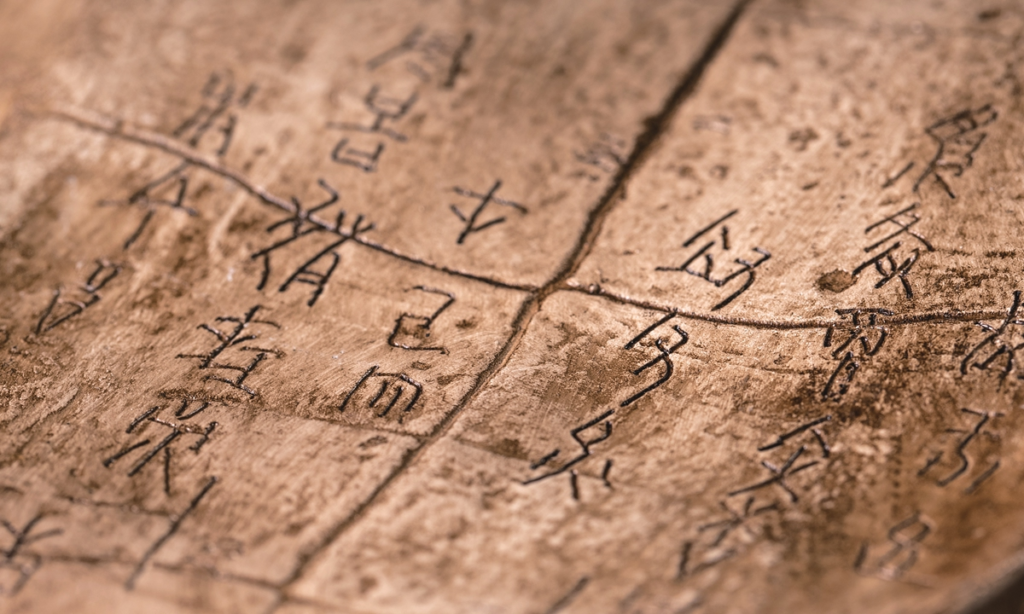
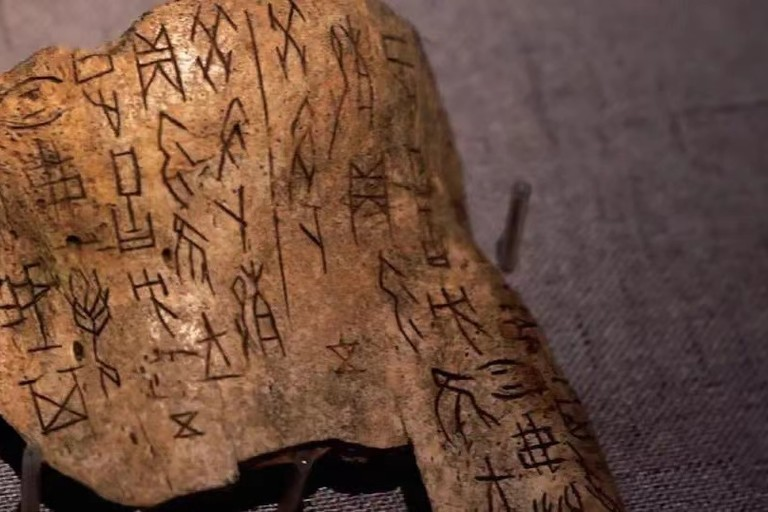
One of the most remarkable historical sources from early Chinese civilization is the oracle bone. These artifacts are pieces of turtle shell or ox shoulder blades used by priests during the Shang dynasty to predict the future through ritual divination.
During these ceremonies, questions were carved into the bone. The bones were then heated until cracks formed, and the pattern of cracks was interpreted as an answer from ancestral spirits. Importantly, scribes recorded both the question and the interpreted response.
Over time, thousands of these bones accumulated in royal archives.
Today, archaeologists have uncovered tens of thousands of them at sites such as Yinxu, the final capital of the Shang dynasty in modern-day Henan province.
These inscriptions represent the earliest known form of Chinese writing. They also serve as an unexpected historical archive.
Many questions carved into the bones concerned practical matters:
- Will it rain tomorrow?
- Will the river flood?
- Will the harvest succeed?
- Will storms destroy the crops?
Because rulers repeatedly asked these questions, oracle bones now provide an unusually detailed record of environmental conditions in ancient China.
Scholars examining these inscriptions have identified a striking pattern: references to heavy rainfall and flooding appear far more frequently during certain decades of the Shang period.
This suggests that ancient communities may have experienced extended periods of extreme weather.
Climate Science Meets Archaeology
While oracle bones provide written evidence of ancient environmental concerns, they do not by themselves prove that disasters occurred.
To test the historical record, scientists combined archaeological evidence with modern climate modeling techniques.
Using computer simulations of ancient atmospheric conditions, researchers reconstructed how monsoon patterns and typhoon activity may have behaved thousands of years ago.
These models suggest that stronger storms traveling inland from the Pacific Ocean could have transported enormous amounts of moisture across eastern China.
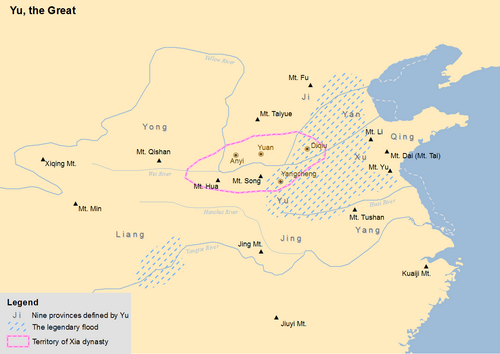
When such systems reached the interior plains, they likely triggered widespread flooding.
Geological evidence supports this scenario. Sediment layers discovered near ancient riverbeds indicate unusually large flood events during the same period documented in the oracle bones.
Some flood deposits suggest water levels far exceeding typical seasonal floods.
When examined together, these clues create a consistent picture: ancient China experienced periods of extreme hydrological instability during the late Bronze Age.
Archaeological Sites Reveal Signs of Disaster
Excavations across northern and central China have uncovered physical traces of environmental upheaval.
At several Bronze Age settlements, archaeologists have found evidence that entire neighborhoods were destroyed by floodwaters. Layers of silt and clay cover residential foundations, indicating rapid sediment deposition during catastrophic floods.
Some structures show signs of sudden abandonment. Pottery, tools, and household goods were left behind as residents fled rising waters.
In other areas, ancient defensive walls and irrigation structures appear to have been damaged or partially washed away.
These findings suggest that repeated flooding disrupted not only agriculture but also the infrastructure that sustained urban life.
Archaeologists also note shifts in settlement patterns. During later stages of the Shang dynasty, communities increasingly relocated to higher terrain.
The pattern implies a deliberate effort to avoid low-lying floodplains.
Such adaptations highlight the resilience of ancient populations confronting environmental stress.
How Disasters Could Reshape Civilizations
Environmental disasters rarely cause the collapse of societies on their own. Instead, they often intensify existing challenges.
For the Shang dynasty, flooding may have affected several aspects of daily life simultaneously.
Agriculture was particularly vulnerable. The Shang economy relied heavily on millet cultivation, which required stable seasonal rainfall.
Excessive flooding could destroy crops or render farmland unusable.
Food shortages might then lead to political unrest or weaken the authority of rulers.
Large infrastructure projects such as dikes and irrigation channels also required constant maintenance. Severe floods could damage these systems, forcing governments to divert resources to reconstruction.
In extreme cases, repeated disasters might contribute to the weakening of political structures.
Historians note that the Shang dynasty eventually gave way to the Zhou dynasty, which emerged around the mid-11th century BCE.
Although warfare and political rivalries played a decisive role in that transition, environmental stress may have influenced broader regional instability.
A Window Into Daily Life in Bronze Age China
Beyond large-scale historical trends, oracle bones reveal details about the concerns of ordinary people and rulers alike.
Many inscriptions show that ancient leaders closely monitored weather patterns. Diviners were asked to determine whether storms would damage crops or threaten important ceremonies.
The bones also record attempts to prevent disasters through ritual offerings.
Kings sometimes sacrificed animals to appease ancestors or natural forces believed to control rainfall.
These practices illustrate how environmental uncertainty shaped religious life.
They also highlight the intimate relationship between early political authority and the management of natural risks.
In many ancient societies, rulers were expected to maintain harmony between human communities and the natural world.
Repeated disasters could therefore undermine confidence in a king’s spiritual legitimacy.
Comparisons With Other Ancient Civilizations
The experience of environmental disruption in ancient China is not unique.
Across the ancient world, archaeologists have found evidence that climate fluctuations influenced the rise and fall of civilizations.
For example:
- Drought conditions have been linked to disruptions in the Maya civilization of Central America.
- Flooding and shifting river systems affected cities in Mesopotamia.
- Prolonged droughts contributed to stress within the Ancient Egyptian Old Kingdom.
These examples demonstrate how environmental pressures can interact with political, economic, and social factors.
Studying these historical patterns helps scholars understand the complex relationship between climate and human societies.
Ancient China provides a particularly valuable case study because of its rich documentary record.
Few other Bronze Age cultures preserved written evidence of weather concerns as detailed as the oracle bone inscriptions.
Modern Technology Unlocks Ancient Secrets
Advances in technology have significantly expanded the ability of scientists to analyze ancient artifacts.
High-resolution imaging allows researchers to read inscriptions that were previously too faint to decipher.
Artificial intelligence is also playing a growing role in translating oracle bone texts. Machine-learning systems can compare thousands of inscriptions to identify patterns in language and meaning.
At the same time, improvements in climate modeling enable researchers to simulate ancient atmospheric systems with increasing precision.
By combining these tools, scholars can connect written records with geological evidence and climate data.
This interdisciplinary approach is transforming how historians reconstruct the past.
What once seemed like isolated archaeological discoveries now form part of a larger scientific narrative.
Why Ancient Climate Records Matter Today
Understanding ancient environmental disasters has important implications for the present.
Climate scientists often rely on historical records to study the long-term behavior of storms, monsoons, and floods.
Because modern weather observations extend back only about 150 years, ancient records can significantly expand the timeline.
Oracle bones and archaeological evidence therefore offer valuable data about how extreme weather behaved thousands of years ago.
This information may help researchers improve predictions about the frequency and intensity of future storms.
It also provides perspective on how societies respond to environmental stress.
Ancient communities adapted through migration, infrastructure changes, and new agricultural strategies.
Modern societies facing climate challenges may draw lessons from these historical experiences.
Continuing Research and Future Discoveries
Despite decades of study, many mysteries about ancient China remain unsolved.
Thousands of oracle bones are still being analyzed, and new archaeological sites continue to be discovered.
Each new artifact has the potential to reveal additional details about environmental conditions, political structures, and daily life during the Bronze Age.
Researchers say the integration of archaeology, history, and climate science will likely produce even more discoveries in the coming years.
As technology advances, scholars expect to reconstruct increasingly detailed timelines of ancient weather events.
These findings could deepen understanding of how early civilizations interacted with the natural world.
FAQs About Decode Catastrophic Events in Ancient China
What are oracle bones?
Oracle bones are animal bones or turtle shells used for divination during the Shang dynasty. They contain some of the earliest examples of written Chinese language.
Why are they important for historians?
They record political decisions, rituals, and environmental concerns, offering direct insight into ancient Chinese society.
What disasters affected ancient China?
Evidence suggests severe flooding, storms, and extreme rainfall influenced settlement patterns and agricultural production.
How do scientists study ancient climate events?
Researchers combine historical texts, geological evidence, and computer simulations to reconstruct past environmental conditions.