
Lost Viking Grave of Ivarr the Boneless: Tucked away in the windswept landscape of West Cumbria, England, lies a mysterious hill — a mound that could rewrite Viking history. According to recent archaeological research, this unassuming earthwork might be the long-lost Viking grave of Ivarr the Boneless, one of the most feared warlords of the 9th century. You heard that right. An ancient site once referred to as “Coningeshou” — meaning The King’s Mound — could be hiding something incredible beneath its grassy surface: a Viking ship burial, possibly holding the remains of Ivarr himself. This theory, presented by archaeologist Steve Dickinson, has sparked global interest, blending history, mythology, and modern science.
Table of Contents
Lost Viking Grave of Ivarr the Boneless
So, could this hill in Cumbria be the lost Viking grave of Ivarr the Boneless? The evidence is stacking up, the experts are moving in, and the world is watching. While confirmation will take time and patience, the discovery could be one of the most significant Viking finds in British history. With careful science and a bit of luck, we may soon uncover the truth beneath the King’s Mound — and finally give Ivarr the Boneless a name in the earth.
| Feature | Details |
|---|---|
| Topic | Lost Viking grave of Ivarr the Boneless |
| Location | West Cumbria, England |
| Mound Size | Approx. 197 feet across, 20 feet high |
| Burial Type | Potential Viking ship burial |
| Main Proponent | Archaeologist Steve Dickinson |
| Historical Reference | Medieval texts citing “Coningeshou” (“The King’s Mound”) |
| Current Status | Pre-excavation; ground radar scans expected in 2026 |
| Significance | Could be UK’s first confirmed Viking ship burial; potential grave of a legendary warlord |
| Official Source | The Archaeologist |
Who Was Ivarr the Boneless?
To understand the gravity of this discovery, you have to know who Ivarr the Boneless was.
Born into Viking royalty, Ivarr was reportedly the son of the famous Ragnar Lothbrok, a name well-known to fans of history and the TV series Vikings. Ivarr’s real historical legacy is just as dramatic — if not more so — than any fiction. He helped lead the Great Heathen Army, a massive Viking force that invaded England around 865 CE, capturing towns, destroying kingdoms, and leaving a lasting mark on the British Isles.
He later ruled parts of Ireland and Northern England, establishing one of the most formidable Norse dynasties outside of Scandinavia.
But here’s the kicker: no one knows where he’s buried. His death is recorded around 873 AD, possibly during a campaign in England, but his tomb has remained a mystery — until now.
Why Cumbria? Historical Context of Viking Activity
Now, let’s answer a big question: Why would a Viking warlord be buried in Cumbria?
The answer lies in the Irish Sea cultural corridor. During the 9th century, Norse influence surged through coastal areas like Cumbria, the Isle of Man, western Scotland, and eastern Ireland. These regions were critical for trade, settlement, and warfare.
West Cumbria’s proximity to Dublin, a Viking power center, makes it a prime candidate for a Viking elite burial site. The mound’s name — “Coningeshou”, or “King’s Mound” — was recorded in medieval texts and linked to royal or noble burials.
Combine this with the fact that there’s no modern explanation for the mound’s construction, and it becomes a compelling case.
Could It Be a Lost Viking Grave of Ivarr the Boneless?
According to Steve Dickinson, there’s strong reason to believe that the King’s Mound isn’t just a pile of earth — it could be a ship burial, one of the most prestigious Norse burial practices.
In a Viking ship burial, the deceased — usually a person of great importance — was laid to rest inside a ship, surrounded by weapons, jewelry, food, and other grave goods. Sometimes animals were sacrificed to accompany the dead on their journey to the afterlife. The ship would then be covered in earth and stone, forming a large mound.
While several Anglo-Saxon ship burials (like Sutton Hoo) have been discovered in England, no confirmed Viking ship burial has ever been unearthed in the UK.
That’s what makes this potential discovery so groundbreaking.
The Evidence So Far of Lost Viking Grave of Ivarr the Boneless
Here’s what Dickinson has uncovered to support the theory:
- Medieval Documents: Old English and Norse texts reference Coningeshou in the region, hinting at a royal or elite burial site.
- Linguistic Clues: The term “Coningeshou” is a fusion of Old English “Cyning” (king) and “hōh” (hill/mound).
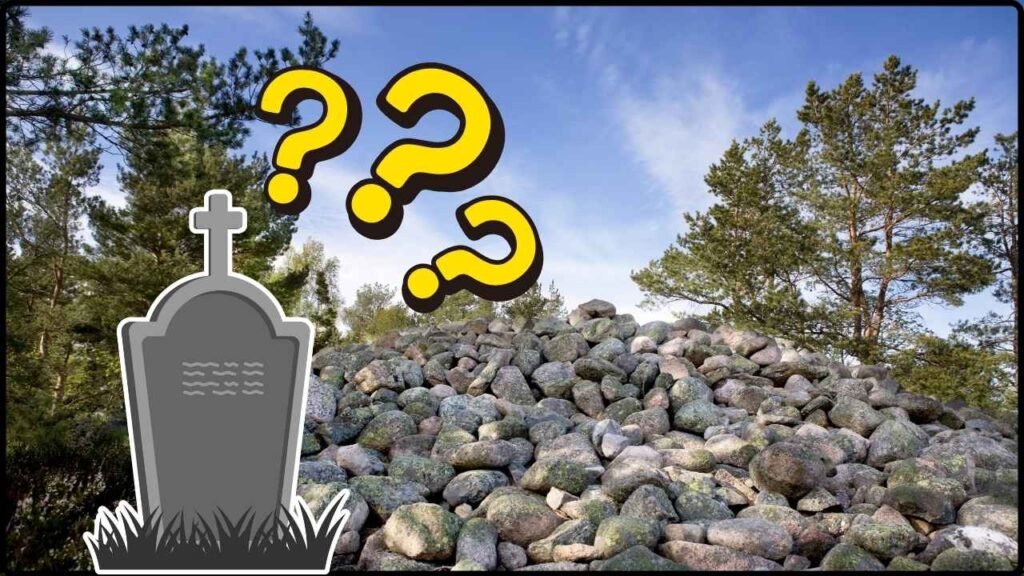
- Site Characteristics: The mound is 20 feet high and 197 feet wide — massive by ancient standards and consistent with other ship burials found in Scandinavia.
- Local Viking Finds: Norse artifacts have been discovered throughout Cumbria, especially along the coast, bolstering the Viking connection.
All of this led Dickinson to propose that the mound may conceal the grave of Ivarr the Boneless — and that we may be on the brink of confirming it.
How Will They Confirm It?
Discovering a lost Viking grave isn’t as easy as grabbing a shovel. There’s a strict scientific process involved.
Step 1: Ground-Penetrating Radar (GPR)
This non-invasive technology sends electromagnetic waves into the ground to detect structures, voids, or anomalies. It’s like taking an X-ray of the Earth. GPR can reveal the outline of a buried ship or grave without disturbing the soil.
Step 2: Geophysical Survey & Mapping
Specialists will map the area, taking soil samples and magnetic readings to identify human interference, especially wooden hulls, iron artifacts, or bones.
Step 3: Securing Excavation Permits
Excavating an ancient burial site requires governmental and archaeological approval, including environmental assessments and heritage protection.
Step 4: Excavation & Analysis
If scans confirm an anomaly, excavation will begin. Every inch will be documented, photographed, and preserved. Artifacts and human remains will be taken to labs for analysis, including carbon dating and DNA sequencing (if possible).
Step 5: Scholarly Review
Findings will be reviewed by academic institutions, published in peer-reviewed journals, and potentially put on display at museums.
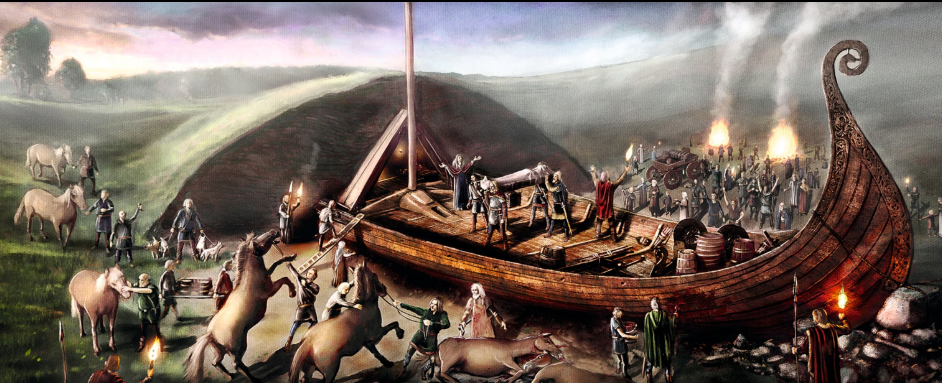
Comparison to Other Ship Burials
So how does this potential discovery stack up?
| Burial Site | Country | Key Features |
|---|---|---|
| Oseberg | Norway | Two women, ornate ship, preserved goods |
| Gokstad | Norway | Male warrior, weapons, shields, horse remains |
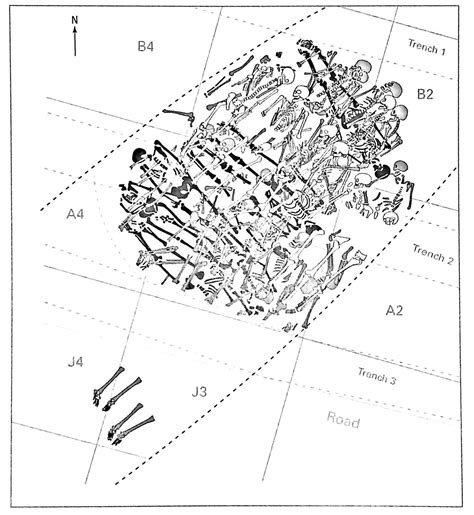
| Repton | England | Viking mass grave, possibly Great Heathen Army |
| Sutton Hoo | England | Anglo-Saxon king ship burial (not Viking) |
| The King’s Mound | England | Unconfirmed Viking ship burial; possibly Ivarr’s tomb |
If Dickinson is right, this would be the first-ever confirmed Viking ship burial in the UK, putting it on the same level as Oseberg or Gokstad.
Local Significance & Global Implications
If the King’s Mound turns out to be what Dickinson thinks, the impact will be massive — both historically and locally.
- Historic Validation: Many historians dismiss sagas as folklore. This find could change that, proving that Icelandic sagas contain real historical truths.
- Tourism & Economy: Just like Sutton Hoo became a national treasure, Cumbria could become a heritage tourism hub, boosting the local economy.
- Education & Research: Universities and scholars worldwide would focus on the site, bringing international attention and funding.
- Cultural Reconnection: The find would strengthen cultural ties between England, Ireland, Norway, and Denmark, where Viking heritage runs deep.
Glossary of Viking Terms
| Term | Meaning |
|---|---|
| Saga | Norse epic, often blending history and mythology |
| Thing | Viking assembly or court |
| Drakkar | Dragon-headed Viking longship used in raiding and war |
| Valhalla | Mythical afterlife for slain warriors |
| Beinlausi | “Boneless” in Old Norse; Ivarr’s nickname |
Inside China’s Mogao Caves: The Discovery of 1,000-Year-Old Paper Flowers