
If you’ve ever thought drinking alcohol was a purely human habit, modern primate research is beginning to change that assumption. Scientists working in West African forests recently observed a surprising behavior: wild chimpanzee alcohol consumption occurring naturally in the animals’ daily feeding routine.
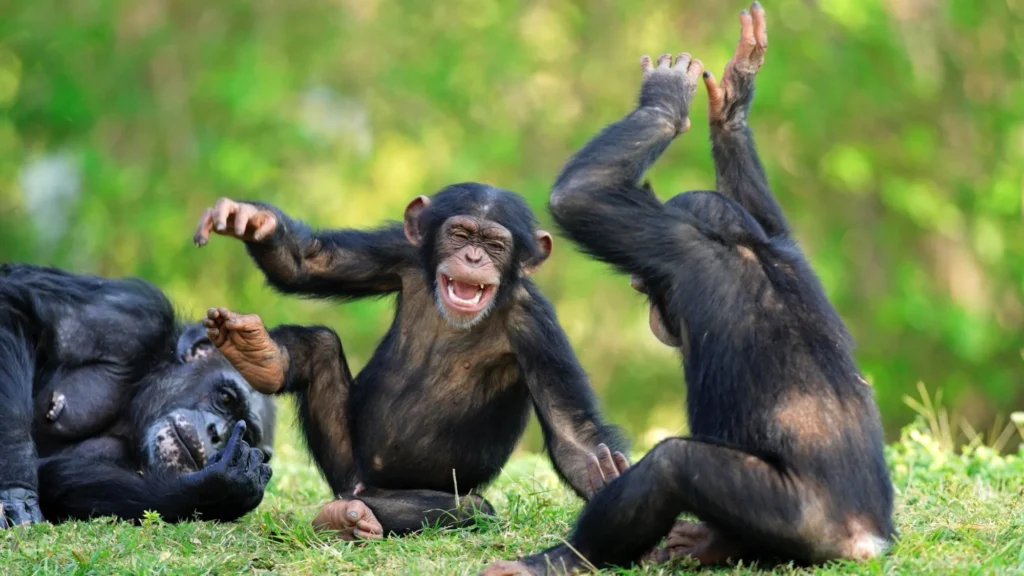
Even more interesting, wild chimpanzee alcohol consumption wasn’t an isolated accident. The behavior appeared repeatedly, suggesting chimpanzees were intentionally returning to fermented fruit sources rather than randomly encountering spoiled food. This discovery matters far beyond curiosity. Chimpanzees share a large percentage of their DNA with humans, and many of our social habits have evolutionary roots in primate behavior. Researchers noticed that the animals didn’t just eat fermented fruit quietly they gathered around it, interacted, and sometimes shared it. That single observation opens a fascinating possibility: human attraction to alcohol may not be cultural alone. It may be biological, inherited from ancestors that lived in forests millions of years ago.
The phrase wild chimpanzee alcohol consumption refers to documented field observations of chimpanzees eating naturally fermented palm fruit containing measurable ethanol. Scientists recorded multiple individuals visiting the same fruit clusters repeatedly, sniffing and selecting specific pieces, and eating them slowly. The fruit had alcohol levels similar to very diluted cider. This repeated feeding pattern indicates recognition and preference rather than accidental ingestion. Researchers believe wild chimpanzee alcohol consumption supports the idea that primates evolved the ability to metabolize alcohol long before humans began brewing. Early hominins likely encountered fermenting fruit regularly in forest environments, making ethanol exposure part of everyday survival and foraging.
Table of Contents
Alcohol Consumption in Wild Chimpanzees
| Category & Observation | Recorded Findings |
|---|---|
| Species & Subspecies | Western chimpanzee (Pan troglodytes verus) |
| Study Location & Habitat | Cantanhez National Park, Guinea-Bissau tropical forest |
| Food Source & Plant Type | Raffia palm fruit naturally fallen from trees |
| Alcohol Content & Strength | Low ethanol concentration similar to weak fermented drink |
| Research Method & Tools | Camera traps, behavioral observation, laboratory fruit analysis |
| Feeding Behavior & Pattern | Slow consumption and repeated visits |
| Social Interaction & Sharing | Individuals shared fruit pieces with others |
| Evolutionary Significance & Meaning | Evidence for ancient alcohol tolerance in primates |
| Human Relevance & Implication | Possible origin of human alcohol metabolism |
The observation of chimpanzees eating fermented fruit reshapes how we think about alcohol. Instead of being a recent human invention, alcohol exposure may be part of primate ecological history. Millions of years before humans cultivated crops, early ancestors likely encountered fermenting fruit regularly. Those able to metabolize ethanol efficiently gained access to valuable food resources. Today, the forest behavior of chimpanzees offers a rare window into that past. Their quiet gatherings around fallen fruit suggest a connection between nutrition, social interaction, and evolutionary biology. Rather than beginning in ancient taverns or villages, the story of alcohol may have started in tropical forests among primates long before the first human civilization existed.
Where The Discovery Happened
- The observations took place inside Cantanhez National Park in Guinea-Bissau. The region is a patchwork of forest, wetlands, and palm groves. Raffia palm trees grow widely there, producing large clusters of fruit rich in natural sugars.
- When ripe fruit falls to the ground, microorganisms present in the environment quickly begin fermentation. Yeasts convert the sugars into ethanol. In humid tropical conditions, fermentation can start within a single day. For animals that rely on fruit as a primary food source, this creates a predictable supply of calorie-dense food.
- Chimpanzees in this habitat have many food options leaves, insects, seeds, and different fruits. They are not forced to eat fermented fruit for survival. Yet researchers documented them returning to the same fallen palm fruit repeatedly. That pattern strongly supports that wild chimpanzee alcohol consumption is a preferred feeding behavior rather than random foraging.
How Scientists Measured Alcohol Intake
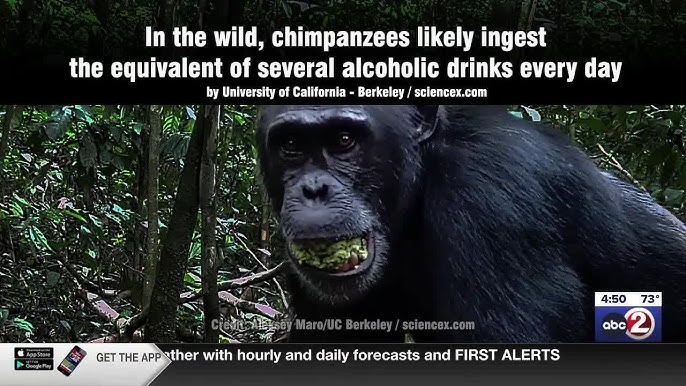
- Researchers placed motion-activated cameras near raffia palm trees where fruit regularly fell. These cameras recorded hours of footage showing chimpanzees approaching, smelling, picking up, and eating fruit. They often sat for extended periods instead of quickly eating and moving on.
- After feeding events, scientists collected remaining fruit samples. Laboratory testing confirmed ethanol was present. The concentrations varied but were consistently measurable.
- Despite consuming ethanol, chimpanzees showed normal coordination. They climbed trees, walked steadily, groomed companions, and cared for young without any visible loss of balance. This indicates their bodies metabolize alcohol efficiently.
- The finding aligns with genetic research showing primates possess enzymes specifically designed to break down ethanol. The behavior suggests wild chimpanzee alcohol consumption is not unusual biologically it may be an ancient dietary adaptation.
Sharing Behavior: A Critical Clue
Perhaps the most fascinating part of the discovery was social behavior. Chimpanzees do not usually share fruit. Each animal typically collects and eats its own food. Sharing is normally reserved for rare and valuable items like meat from a hunt. However, researchers recorded chimpanzees passing pieces of fermented fruit to others. Adults shared with younger individuals, and sometimes unrelated adults exchanged food. These interactions lasted longer than typical feeding sessions. Social sharing is extremely important in primate communities. It strengthens alliances, reduces tension, and builds trust. The presence of sharing during wild chimpanzee alcohol consumption suggests the fruit had social value, not just nutritional value. This observation mirrors human behavior. In many cultures, alcohol is consumed during gatherings, celebrations, and bonding activities. The chimpanzee behavior may represent an early evolutionary form of communal feeding that later developed into social drinking among humans.
Why Fermented Fruit Matters to Evolution
- Scientists connect these observations to what is often called the drunken monkey hypothesis. The theory proposes that primates evolved attraction to ethanol because it signals ripe, energy-rich fruit.
- Fermentation produces strong aromas. Animals capable of detecting these smells could find food more easily. Additionally, fermented fruit is often softer and easier to digest because microbes have begun breaking down sugars.
- For early primates, this would provide a survival advantage. Individuals capable of processing ethanol safely could consume more food without illness. Over generations, natural selection favored improved alcohol metabolism.
- This helps explain why humans possess a high tolerance for alcohol compared to many animals. Our ancestors may have experienced regular low-level exposure for millions of years. Therefore, wild chimpanzee alcohol consumption provides behavioral evidence supporting evolutionary biology.
Not Intoxication, But Nutrition
- It is important not to imagine chimpanzees drinking for pleasure. The alcohol levels are low. The animals are not seeking intoxication but responding to calories.
- Fermented fruit contains simple sugars and energy essential for active animals. Ethanol also enhances flavor and smell, making food more attractive. From a biological perspective, the chimpanzees are choosing efficient nutrition.
- Understanding this difference is crucial. The behavior is not recreation. wild chimpanzee alcohol consumption represents natural foraging behavior guided by smell, taste, and caloric benefit.
Possible Connection to Human Social Drinking
Humans across the world independently invented fermented drinks. Ancient societies produced wine, beer, palm wine, and rice beverages long before modern science explained fermentation. Researchers now suspect early human ancestors may have gathered around naturally fermenting fruit sources just as chimpanzees do today. Shared feeding sites could have encouraged cooperation and communication. If true, alcohol did not create social bonding. Instead, social bonding existed first, and fermented food became part of it. Over time, humans learned to control fermentation and produce stronger drinks. The behavior seen in primates suggests the roots of social drinking may be far older than agriculture. wild chimpanzee alcohol consumption may represent a behavioral bridge between animal feeding and human cultural traditions.
Cautions and Next Steps
While the findings are important, scientists emphasize that research is ongoing. Only one chimpanzee population has been studied in detail so far. Future research aims to determine whether other chimpanzee groups show the same behavior, whether bonobos or gorillas also consume fermented fruit, whether individuals differ in preference or tolerance, and whether the behavior affects hierarchy or mating. More data will help scientists understand how widespread wild chimpanzee alcohol consumption truly is.
FAQs About Alcohol Consumption in Wild Chimpanzees
1. Do chimpanzees intentionally drink alcohol?
They intentionally eat fermented fruit that contains ethanol. This behavior is known as wild chimpanzee alcohol consumption.
2. Can chimpanzees get drunk?
No clear signs of intoxication have been recorded. Alcohol levels are mild and their bodies process it efficiently.
3. Why is fermented fruit attractive to chimpanzees?
It contains more accessible sugars, higher calories, and strong smell signals that help locate food.
4. Does this explain human alcohol tolerance?
Yes, researchers believe humans inherited alcohol-processing ability from primate ancestors exposed to fermented fruit.