
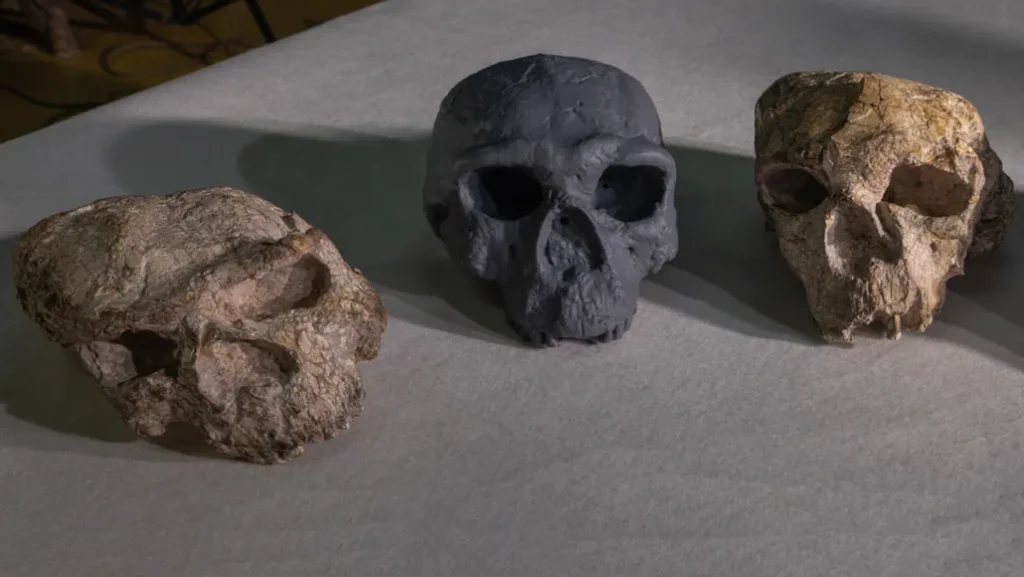
A growing body of research suggests the Ancient Chinese Fossil Skulls discovered in central and eastern China may belong to a previously unrecognized branch of early humans. Scientists say the fossils, some nearly 1.8 million years old, complicate the long-held view that a single human lineage spread across Eurasia from Africa and instead indicate a more diverse and interconnected history of human evolution and early human migration.
Table of Contents
Ancient Chinese Fossil Skulls
| Key Fact | Detail |
|---|---|
| Age of earliest skulls | Approximately 1.7–1.8 million years old |
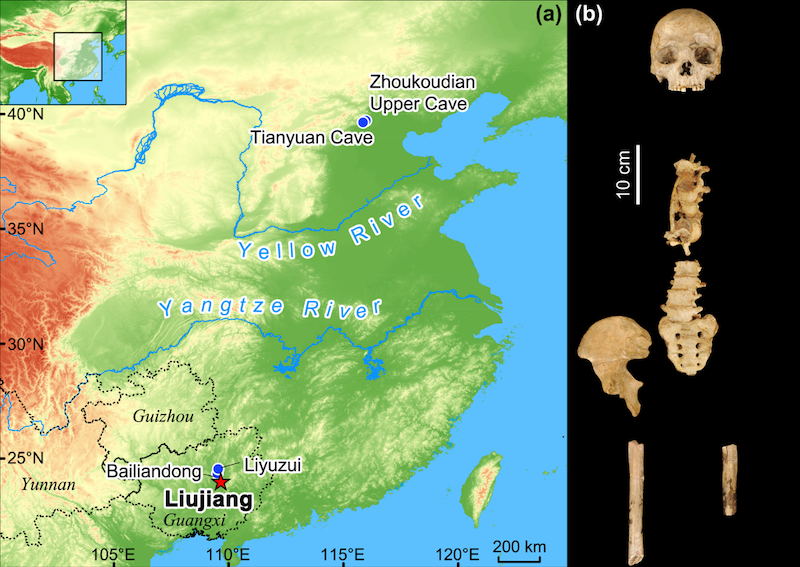
| Locations | Yunxian, Hualongdong, Dali, Xujiayao sites in China |
| Main implication | Possible separate human lineage in East Asia |
How the Ancient Chinese Fossil Skulls Were Found
The discoveries span multiple archaeological sites across China. Among the most studied are skulls unearthed in Yunxian County in Hubei Province, first excavated in the late 1980s and recently re-dated using improved radiometric techniques.
Researchers from the Chinese Academy of Sciences (CAS) reported the fossils are significantly older than earlier estimates. According to their analysis, the remains date to roughly 1.77 million years ago, making them among the oldest known human-related fossils in East Asia.
Dr. Xiu-Jie Wu, a paleoanthropologist at CAS who has worked extensively on the specimens, said in a research statement that the skulls “do not fit neatly into existing species classifications” and show a combination of primitive and advanced features.
The sites themselves provide additional clues. The fossils were discovered in ancient river sediments, suggesting early humans lived near water sources that offered food, animals, and stone suitable for making tools. Nearby excavations uncovered stone flakes and cutting tools, indicating these populations butchered animals and processed plant materials.
Why Scientists Are Questioning the Traditional Human Evolution Model
For decades, many textbooks described a straightforward progression: early humans evolved in Africa, then Homo erectus spread into Asia and Europe, eventually giving rise to Neanderthals and modern humans.
The new evidence complicates that model.
A Mosaic of Traits
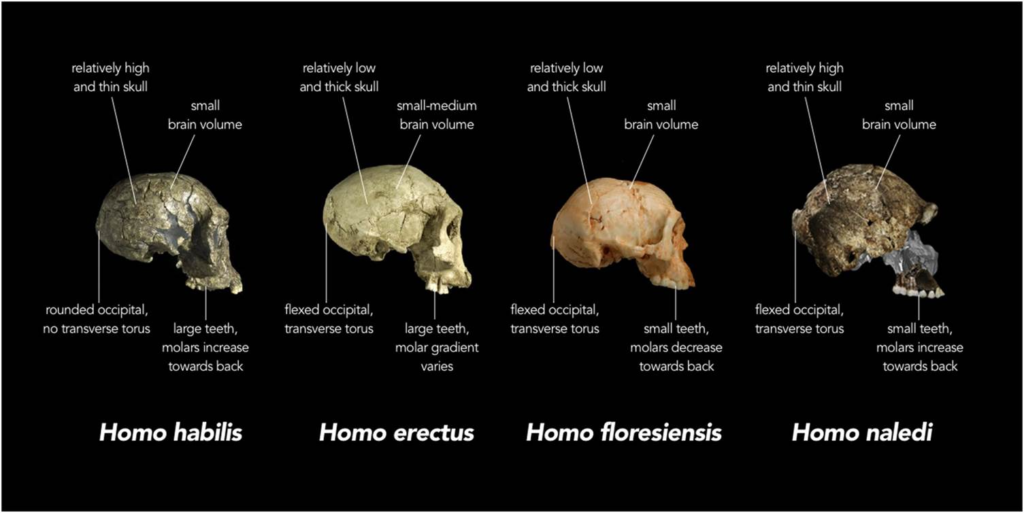
The skulls display a mix of characteristics. Some resemble Homo erectus, including thick brow ridges and robust skull bones. Others appear closer to later human populations, such as expanded cranial capacity and facial structure differences.
This “mosaic anatomy” is important because species typically show consistent features. When fossils display mixed characteristics, researchers often suspect evolutionary transitions.
Dr. Chris Stringer, a human evolution specialist at the Natural History Museum in London, has noted in scientific commentary that Asian fossils increasingly show “regional diversity rather than a single uniform population.” According to him, multiple human groups likely lived simultaneously across Eurasia and may have interbred.
Parallel Human Populations
The concept aligns with genetic discoveries from the last decade. DNA evidence has already confirmed that modern humans interbred with Neanderthals and Denisovans after migrating out of Africa about 60,000 years ago.
Researchers now suspect some East Asian fossils may represent populations related to Denisovans — an archaic human group first identified through genetic material rather than complete skeletons.
Dating Methods and Scientific Debate
Improved Dating Technology
Recent studies used uranium-series dating and sediment analysis, which examine mineral buildup and surrounding geological layers. These methods provided a more precise age than earlier estimates based mainly on fossil context.
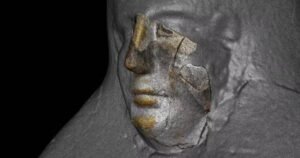
Researchers also applied CT scanning and 3-D reconstruction. Digital modeling allows scientists to compare internal skull structures without damaging fossils. These scans revealed braincase features not typical of classic Homo erectus populations found in Indonesia and Africa.
Professor María Martinón-Torres, a paleoanthropologist at University College London, has said in conference presentations that the fossils “could represent a population close to the ancestry of later humans in Asia.” However, she also emphasized that classification remains uncertain.
Disagreement Among Researchers
Some scientists argue the fossils are simply regional variations of Homo erectus. Others propose a separate species or a transitional group between older hominins and modern humans.
The disagreement centers on a fundamental problem in anthropology: species definitions are difficult when evolution is gradual. Unlike living animals, fossils rarely preserve DNA, and scientists must rely heavily on bone shape and geological context.
The debate reflects a broader shift in anthropology. Rather than a simple evolutionary tree, many researchers now describe human origins as a network of overlapping populations exchanging genes over hundreds of thousands of years.
The Role of Denisovans and Genetics
One of the most intriguing possibilities is that the Ancient Chinese Fossil Skulls may be connected to Denisovans. Scientists discovered Denisovans in 2010 using DNA extracted from a finger bone in Siberia’s Denisova Cave.
Modern populations in Asia and Oceania still carry Denisovan DNA today. Some Tibetan communities inherited genetic adaptations allowing them to live at high altitude, which researchers traced back to Denisovan ancestors.
However, Denisovan fossils are extremely rare. Scientists have struggled to match genetic data with physical bones. The Chinese skulls could provide the missing anatomical evidence.
If proven, it would link genetics and fossils for the first time and provide a clearer picture of early human migration across Asia.
Why East Asia Matters in Human Origins
Historically, Africa has been considered the primary center of human evolution. While that remains supported by overwhelming fossil and genetic evidence, the Asian discoveries indicate the region may have played a larger role than previously thought.
Stone tools found near the fossils show early humans adapted to temperate forests, river valleys, and colder climates. This suggests they developed survival strategies earlier than previously believed.
Archaeologists also note the distance involved. Early humans traveled thousands of kilometers from Africa to China — a journey requiring generations of gradual movement rather than a single migration event.
This supports the theory of repeated waves of early human migration, not a single dispersal.
Life of the Early Humans Who Left the Skulls
The environment of Ice Age China differed greatly from today. The region hosted large mammals such as giant deer, ancient elephants, and saber-toothed cats.
Early humans likely lived in small groups of 20 to 40 individuals. They probably scavenged and hunted opportunistically, using simple stone tools to cut meat and crack bones for marrow.
Fire use remains uncertain at some sites, but nearby locations in northern China show early evidence of controlled burning. If related populations used fire, they could have cooked food and survived colder seasons.
Their diet likely included:
- Meat from large animals
- Nuts and roots
- Wild fruits
- Insects
Such flexible diets helped humans spread into new environments.
Broader Implications for Human History
If confirmed as a separate lineage, the Ancient Chinese Fossil Skulls could reshape timelines of early human dispersal. Instead of a single wave, researchers may need to consider repeated migrations and long-term coexistence of different human populations.
This model also explains why modern human DNA contains traces of Neanderthal and Denisovan ancestry. Humans were not isolated populations but interacting groups exchanging genes over tens of thousands of years.
Scientists increasingly describe evolution not as a ladder but as a braided river — streams dividing and reconnecting over time.
Scientific Importance Beyond Anthropology
The discoveries affect more than archaeology. They also influence genetics, climate science, and medicine.
Understanding ancient adaptation helps researchers study:
- immune system development
- disease resistance
- altitude tolerance
- metabolism
Some modern genetic traits, including immune responses, may originate from archaic humans.
Current Status
Scientists caution that no final classification has been reached. Further excavations, especially the recovery of ancient DNA, may be needed to determine whether the fossils represent a new species, a Denisovan-related population, or a regional form of Homo erectus.
“Human evolution is not a straight line,” Stringer has said in public lectures. “It is a complex history of migrations and mixtures.”
Researchers expect ongoing excavations in central China to continue for years, and additional discoveries could provide crucial answers. Several new digs are planned, and improved DNA extraction techniques may allow genetic analysis even in warm climates where preservation is difficult.
FAQs About Ancient Chinese Fossil Skull
Are these fossils ancestors of modern humans?
Possibly. Scientists say they may represent a population that contributed genetically to later humans, but the evidence is still inconclusive.
Do the discoveries contradict the Out-of-Africa theory?
No. Most experts still agree humans originated in Africa. The fossils instead suggest multiple migrations and interactions outside Africa.
Why is classification difficult?
Because the skulls share traits with several known human species, making them hard to place within existing categories.
Why are Chinese fossils especially important?
Because East Asia previously had fewer complete skull fossils. These discoveries fill a major gap in the human fossil record.