

For decades, the fossil known as “Little Foot” has fascinated scientists studying human evolution. Discovered in South Africa’s Sterkfontein Caves, this remarkably complete skeleton has provided a rare glimpse into life nearly 3.7 million years ago.
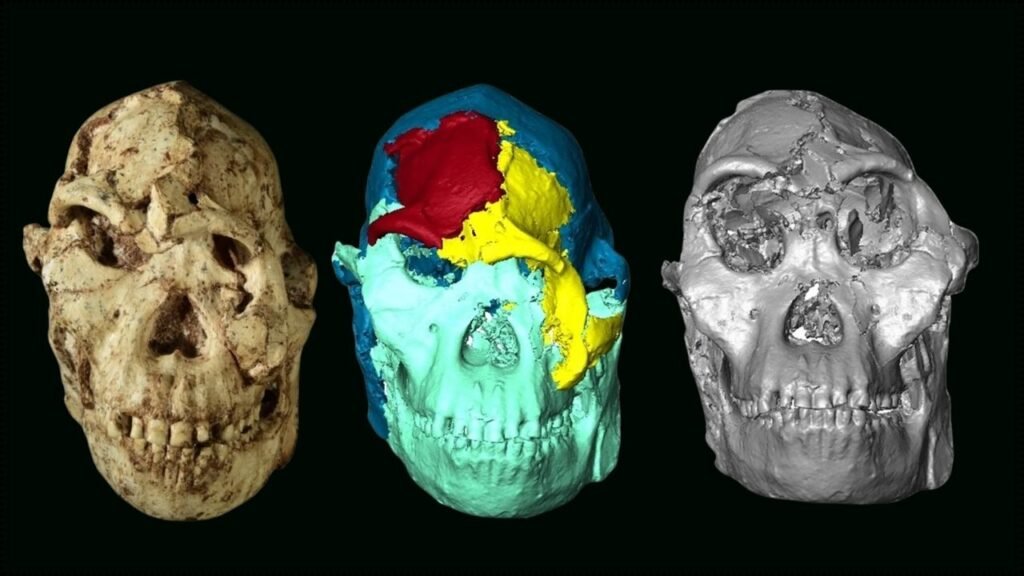
Despite the extraordinary preservation of the bones, one part of the fossil remained a mystery for years—the face. The skull had been crushed and distorted by millions of years of geological pressure, making it difficult for researchers to accurately understand what this ancient ancestor looked like. Recent advances in digital technology have now allowed scientists to reconstruct the face of this early hominin, offering new insight into the appearance and evolution of Australopithecus.
Table of Contents
Face of Little Foot Australopithecus
| Key Detail | Information |
|---|---|
| Fossil Name | Little Foot (StW 573) |
| Species | Australopithecus |
| Age | Approximately 3.67 million years |
| Discovery Location | Sterkfontein Caves, South Africa |
| Discovery Period | 1990s |
| Skeleton Completeness | Around 90% complete |
| Reconstruction Method | 3D digital scanning and modeling |
| Scientific Importance | Helps understand early human evolution and facial development |
Little Foot Australopithecus Face Reconstruction
The Little Foot Australopithecus face reconstruction represents a major breakthrough in paleoanthropology. Using high-resolution scanning and advanced 3D modeling techniques, researchers were able to digitally correct distortions in the fossilized skull and rebuild the facial structure. The reconstruction reveals the likely appearance of an individual who lived roughly 3.67 million years ago. It also provides valuable clues about how early human relatives in southern Africa may have been connected to other hominin populations across the continent.
What is “Little Foot”?
“Little Foot” is the nickname given to one of the most significant fossil discoveries in human evolution research. Officially cataloged as StW 573, the fossil represents an individual belonging to the genus Australopithecus. This group of early hominins lived millions of years before modern humans and played an important role in the evolutionary story of our species.
The nickname “Little Foot” originated from the first bones discovered—four small foot bones that were identified in fossil collections from the Sterkfontein caves. Further excavation revealed that these bones belonged to a nearly complete skeleton buried deep within the cave system. Over time, researchers carefully removed the surrounding rock and uncovered more of the fossil.
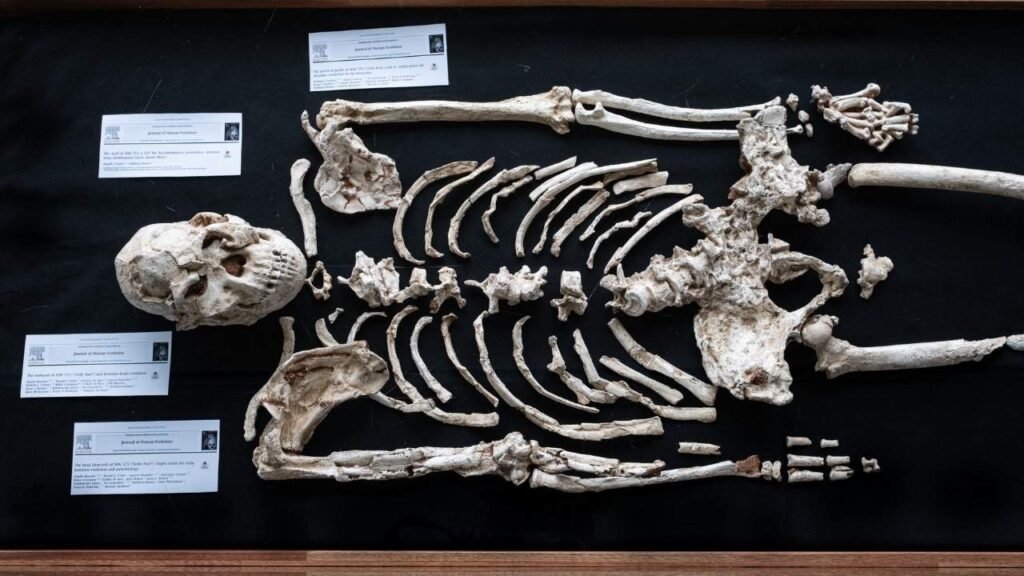
What makes Little Foot exceptional is the completeness of the skeleton. Approximately 90 percent of the bones have been recovered, making it one of the most complete Australopithecus skeletons ever discovered. Most fossils from this time period are fragmentary, often consisting of only a few bones. In contrast, Little Foot provides scientists with an unusually detailed record of the anatomy of an early human ancestor.
How Scientists Reconstructed the Face
Reconstructing the face of Little Foot was not a simple process. The fossilized skull had been heavily damaged by geological forces during the millions of years it remained buried underground. The bones were compressed and distorted by the surrounding rock, making it impossible to determine the original shape of the face through traditional methods.
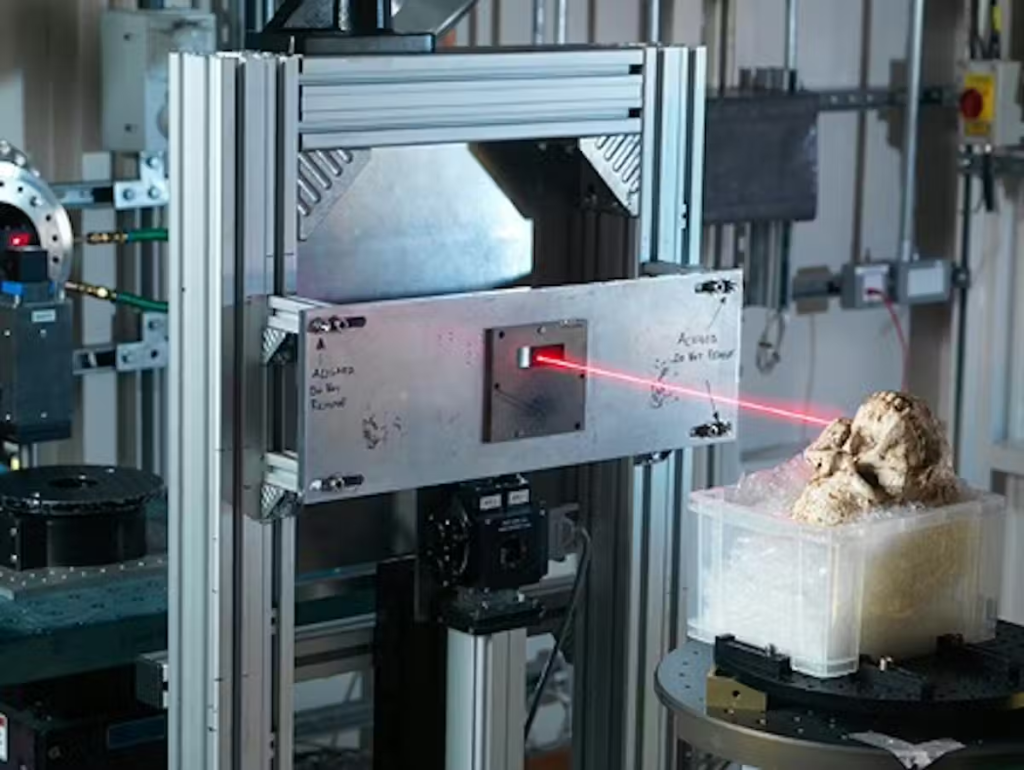
To solve this problem, researchers turned to modern imaging technology. High-resolution X-ray scanning allowed scientists to examine the internal structure of the skull without damaging the fossil. These scans produced detailed digital images of the bones, which could then be analyzed and manipulated using specialized software.
Once the digital scans were created, scientists used 3D modeling techniques to correct the distortions in the skull. This involved virtually repositioning bones, aligning fractured pieces, and restoring the original proportions of the face. By carefully studying the anatomy of the skull and comparing it with other Australopithecus fossils, researchers were able to create a realistic reconstruction of the ancient hominin’s facial features.
The final digital model represents the most accurate reconstruction of Little Foot’s face to date. It provides a visual representation of what this individual might have looked like during life, something that had remained uncertain for decades.
What the Reconstructed Face Reveals
The reconstructed face of Little Foot offers several important insights into the anatomy of early hominins. One of the most noticeable features is the relatively large eye sockets, which suggest prominent eyes and a distinctive facial appearance. The face also shows a slight forward projection, a characteristic seen in several Australopithecus species.
These features indicate that Little Foot possessed a mix of primitive and more advanced traits. While the face still retains characteristics associated with earlier ape-like ancestors, it also shares similarities with other Australopithecus fossils discovered in East Africa.
The reconstruction suggests that populations of Australopithecus across different regions of Africa may have been more closely related than previously thought. This connection could help researchers better understand how early human ancestors spread across the continent and adapted to different environments.
Another interesting aspect of the reconstruction is the overall structure of the face, which may provide clues about diet and lifestyle. Facial bones, jaw shape, and muscle attachments can reveal how early hominins processed food and interacted with their surroundings. By studying these features, scientists can gain a deeper understanding of how these ancient relatives lived millions of years ago.
Why This Discovery Matters
The successful reconstruction of Little Foot’s face represents an important step forward in the study of human evolution. Fossils from the Australopithecus period are rare, and complete skeletons are even rarer. Because Little Foot is so well preserved, it serves as a valuable reference point for understanding the anatomy of early hominins.
The new reconstruction also helps researchers compare fossils from different regions of Africa. By examining similarities and differences between various Australopithecus specimens, scientists can develop a clearer picture of how these populations evolved and interacted over time.
In addition, the reconstruction highlights the role of modern technology in paleontology. Digital scanning and 3D modeling allow researchers to study fossils in ways that were impossible just a few decades ago. These tools can reveal hidden details inside fossils, correct distortions caused by geological processes, and create accurate visual models of ancient organisms.
Ultimately, discoveries like this bring scientists closer to understanding the complex path that led to the emergence of the genus Homo, the group that includes modern humans.
A Window into the Distant Past
Little Foot continues to be one of the most remarkable fossils ever discovered. Its exceptional preservation has provided scientists with valuable information about the anatomy, movement, and environment of early human ancestors. The newly reconstructed face adds another important piece to this puzzle.
Seeing the likely appearance of a hominin that lived nearly four million years ago allows researchers—and the public—to better visualize the distant past. It transforms a collection of ancient bones into a recognizable individual, reminding us that human evolution is a story that spans millions of years.
As technology continues to improve, scientists may uncover even more details from fossils like Little Foot. Each new discovery brings us closer to understanding how our earliest ancestors lived, adapted, and eventually gave rise to the species we are today.