
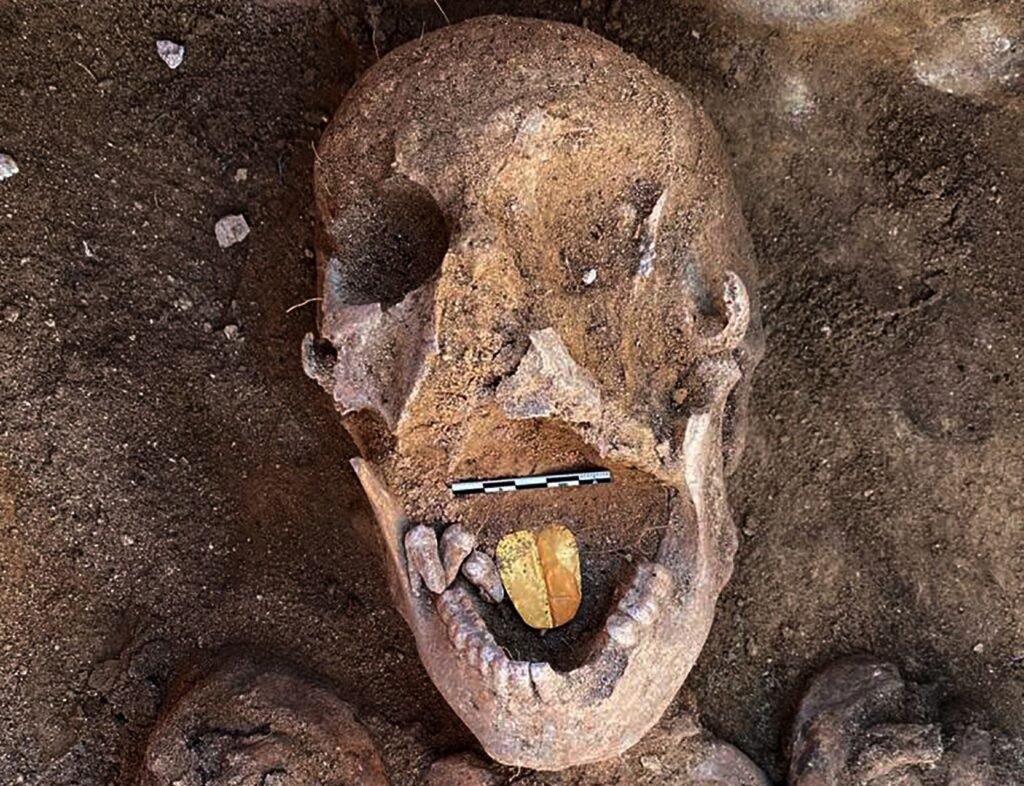
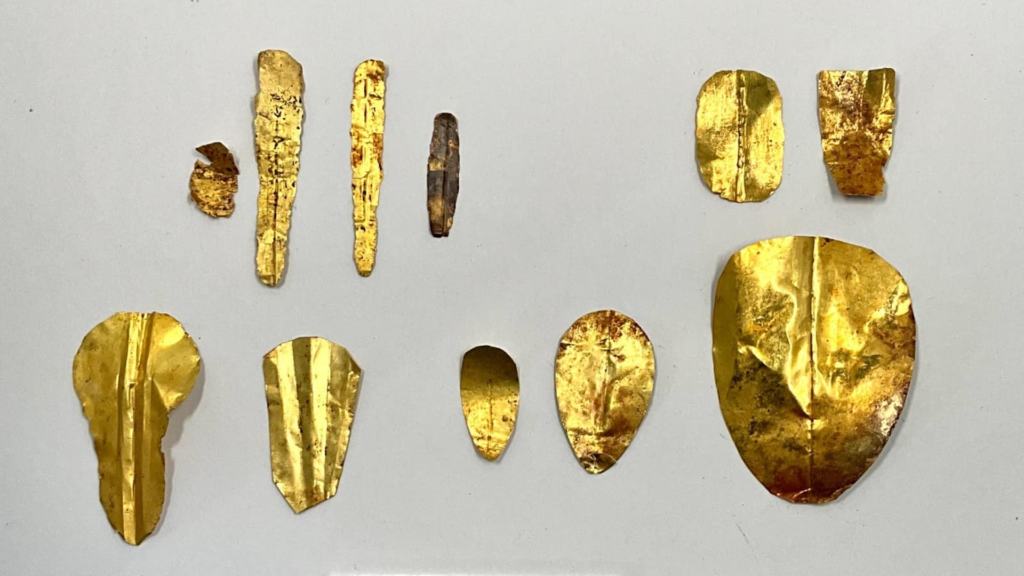
Archaeologists in Egypt have uncovered several Gold-Tongued Mummies, human remains fitted with thin gold foil tongues placed inside their mouths during burial. The discovery, announced by Egypt’s Ministry of Tourism and Antiquities, dates to the Ptolemaic and early Roman periods and offers new insight into how ancient Egyptians believed the dead communicated with gods in the ancient Egyptian afterlife.
Table of Contents
Gold-Tongued Mummies Unearthed in Egypt
| Key Fact | Detail |
|---|---|
| Burial Period | Ptolemaic to early Roman era (around 300 BCE–300 CE) |
| Unique Feature | Gold foil tongues and gilded fingernails |
| Religious Purpose | Enable speech during judgment before the god Osiris |
Excavators say the tomb complex may contain many more burials. Each newly opened chamber could reveal how ordinary Egyptians—not only rulers—prepared for eternity, offering a clearer picture of how deeply the ancient Egyptian afterlife shaped daily life thousands of years ago.
Discovery Site and Historical Context
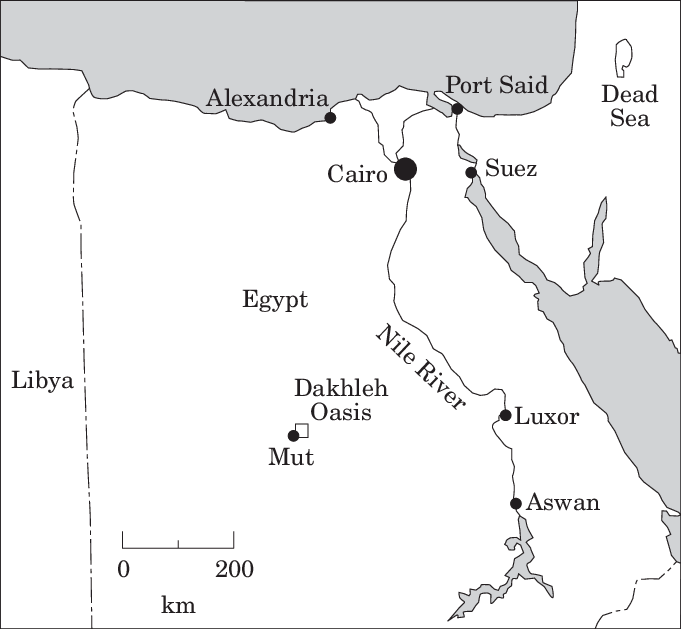
The tomb complex lies near the ancient city of Oxyrhynchus, now called Behnesa, about 160 kilometers (100 miles) south of Cairo. Spanish and Egyptian archaeologists conducted the excavation as part of an ongoing study of late-period burial practices and mummification rituals.
Researchers found multiple burial shafts containing decorated coffins, painted amulets, funerary inscriptions, and ceramic vessels alongside the Gold-Tongued Mummies. Several coffins were brightly painted with images of protective deities and hieroglyphic prayers intended to guide the deceased through the underworld.
Dr. Esther Pons Mellado, an archaeologist working at the site, said in a statement released through excavation partners that the objects were “not ornamental but ritual tools connected to resurrection beliefs.”
Why the Location Matters
Oxyrhynchus was once a major religious and administrative center during Greek and Roman rule in Egypt. It was also a hub of literacy and administration, where papyrus texts—including religious writings—were stored and copied.
Because of this, the site provides rare evidence of how local populations adapted traditional Egyptian religion while living under foreign rulers. Historians say the Gold-Tongued Mummies demonstrate that Book of the Dead beliefs remained powerful even centuries after Egypt lost political independence.
The Meaning of the Gold Tongue
Ancient Egyptian religion held that death marked the beginning of a legal and spiritual process rather than an immediate transition to paradise.
After burial, the soul entered the underworld and faced divine judgment. According to funerary texts such as the Book of the Dead, the deceased had to recite declarations of innocence before the god Osiris.
Egyptologist Dr. Salima Ikram of the American University in Cairo has explained in academic lectures that speech was essential to survival in the next world. “The dead needed to speak, identify the gods, and defend themselves,” she noted. “Silence could mean annihilation.”
Symbolism of Gold
Gold carried special religious significance. Ancient Egyptians considered it the flesh of the gods because it did not corrode or decay. The sun god Ra was also associated with gold, reinforcing its link to immortality.
By inserting a gold tongue, embalmers symbolically gave the deceased a divine voice. Archaeologists say the practice may have acted as a spiritual prosthetic, ensuring the person could communicate during the Osiris judgment.
Evidence of Evolving Burial Practices
The discovery is important because similar burial treatment was once reserved mainly for royalty or high priests. However, the new finds indicate that by the Greco-Roman period, complex afterlife rituals had spread to broader segments of society.
According to the Egyptian Ministry of Tourism and Antiquities, additional finds included:
- protective amulets
- funerary masks
- painted coffins
- gilded fingernails
- scarab talismans placed over the heart
Archaeologists believe these objects worked together as a protective system designed to rebuild the body spiritually after death. Each amulet protected a different body function: eyesight, breath, heartbeat, or speech.
Dr. Aidan Dodson, an Egyptologist at the University of Bristol, has written that later Egyptian burial customs increasingly emphasized magical preparation. “The tomb became a carefully engineered gateway,” he said in research examining mummification rituals during Roman Egypt.
The Afterlife Trial
Central to Egyptian belief was the “weighing of the heart.” In this ritual, the deceased’s heart was placed on a scale against a feather representing truth and moral order.
If balanced, the person entered the Field of Reeds — a paradise resembling an idealized Egypt. If heavier, a mythological creature known as Ammit destroyed the soul permanently.
The Gold-Tongued Mummies suggest Egyptians were deeply concerned about passing this trial and took practical measures to prepare.
Scientific Analysis and Modern Technology
Researchers are now using CT scanning and 3D imaging to study the Gold-Tongued Mummies without unwrapping them. Non-invasive imaging allows scientists to examine bone structure, dental health, age, and possible illnesses.
Preliminary scans indicate some individuals suffered arthritis and tooth wear, suggesting they lived into middle age or beyond—relatively long lifespans for the era.
Chemical residue analysis is also underway. Scientists hope to identify resins and oils used in embalming. Earlier studies of Egyptian mummies have found pine resin imported from the eastern Mediterranean, suggesting long-distance trade networks supported burial practices.
Comparison With Other Egyptian Burials
The practice of adding metal elements to mummies is not entirely unique. Archaeologists previously discovered:
- gold eye coverings
- gold heart scarabs
- gilded funerary masks
However, a gold tongue is unusually specific. Experts say it reflects anxiety about communication in the afterlife.
Unlike modern ideas of heaven, the ancient Egyptian afterlife required knowledge, memory, and correct speech. The deceased had to answer questions from gatekeepers and recite spells correctly to pass safely.
Religious and Cultural Interpretation
Historians say the Gold-Tongued Mummies illustrate a fundamental concept of Egyptian religion: the soul was not automatically safe after death.
Instead, existence continued in a structured world mirroring earthly life. The deceased farmed, worked, and interacted with gods. Preparation was therefore practical, not symbolic.
The Book of the Dead beliefs describe over 190 spells guiding the soul through dangers, demons, and gates. Some spells specifically restore body functions, including speech and breathing.
What the Discovery Changes
Historians say the find challenges a common modern assumption that mummification was mainly about preserving the body.
Instead, it functioned as ritual technology designed to restore senses after death: speech, sight, movement, and identity.
The discovery also highlights religious continuity. Even centuries after Greek conquest and Roman rule, Egyptian spiritual traditions remained dominant among local populations.
Looking Ahead
Researchers plan further analysis, including isotope testing to determine diet and geographic origin. This may reveal whether those buried were locals, migrants, or members of priestly families.
Egyptian officials say additional excavation at Oxyrhynchus is expected to continue for several seasons. Archaeologists believe many tomb shafts remain unexplored.
FAQs About Gold-Tongued Mummies Unearthed in Egypt
What are Gold-Tongued Mummies?
Mummies buried with thin gold foil placed in the mouth to allow speech in the afterlife.
Why was speech important?
Ancient Egyptians believed the dead had to speak during divine judgment before entering paradise.
Were these people royalty?
Probably not exclusively. The site suggests middle- and upper-class individuals also used complex funerary rituals.
Are more discoveries expected?
Yes. Archaeologists believe dozens of additional burials may still lie beneath the site.