

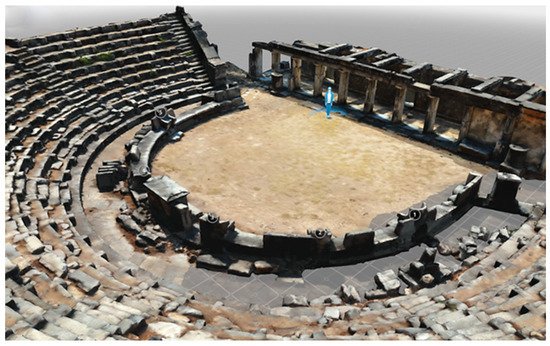
Archaeologists in southern Italy have identified a long-hidden Roman theater and civic complex after aerial surveys using High-Tech Drones mapped an ancient settlement buried beneath farmland. The discovery, announced in early 2026, reveals a planned Roman town near the historic Appian Way and reshapes historians’ understanding of the region’s importance during the late Roman Republic.
Table of Contents
High-Tech Drones Help Locate a “Lost” Roman Theater
| Key Fact | Detail |
|---|---|
| Location | Fioccaglia near Flumeri, Campania region, Italy |
| Main Discovery | Monumental Roman theater next to a forum |
| Technology Used | Multispectral imaging, thermal scanning, geophysical mapping |
| Period | Approximately 2nd–1st century BCE |
High-Tech Drones Map a Buried Roman City
The research team conducted a wide-area survey over agricultural land where earlier excavations had uncovered Roman pottery fragments, coins, and building materials. These finds suggested a settlement existed but did not reveal its full scale.
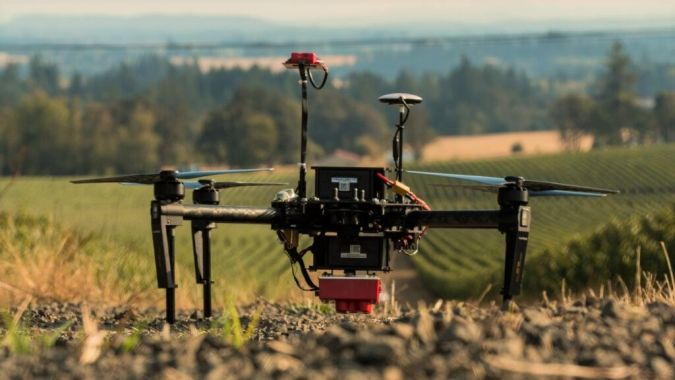
Instead of traditional excavation, archaeologists deployed High-Tech Drones equipped with multispectral cameras and thermal imaging systems. The aircraft flew repeated patterns over farmland to capture detailed measurements of temperature and vegetation health.
The sensors detected tiny differences in plant growth. Buried stone foundations retain moisture differently from surrounding soil, and crops growing above walls develop differently than crops over empty ground. From the air, these patterns formed a visible architectural blueprint.
Researchers then processed the aerial images using digital mapping software, producing a three-dimensional reconstruction of the town.
The resulting map showed a classic Roman urban plan: straight streets intersecting at right angles, a central forum, and a semicircular theater structure beside the civic square.
Dr. Marcello Rotili, an archaeologist involved in the project, said in a heritage authority statement the aerial data “allowed us to read the plan of the ancient city without excavation and to recognize a monumental public building previously unknown.”
Why the Theater Matters
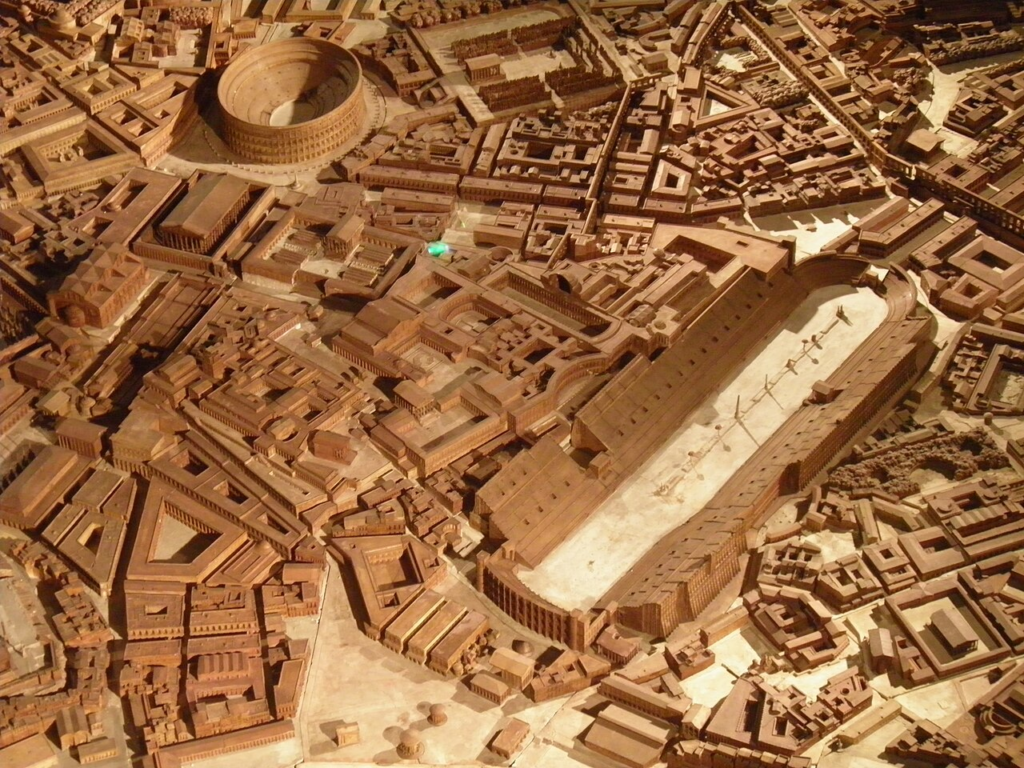
Roman theaters were among the most important civic buildings in antiquity. They served not only for entertainment but also for political and social functions. Public speeches, festivals, and religious celebrations often took place there.
The newly mapped settlement is widely believed to be Forum Aemilii, a town historically mentioned in Roman administrative records but never fully identified on the ground.
The site lies near the Via Appia, or Appian Way, one of Rome’s main military and commercial roads linking Rome to the southern port city of Brundisium (modern Brindisi). The road functioned as an economic corridor, facilitating troop movement and trade.
Historians say towns located along the road commonly served as supply centers, tax collection points, and administrative hubs. The presence of a theater indicates the town had political institutions and an organized urban population rather than scattered rural dwellings.
Archaeologists estimate the theater could have seated several thousand spectators, suggesting a population large enough to support civic gatherings and performances.
Daily Life in the Ancient Town
Based on comparable Roman settlements, researchers believe the community likely contained:
- Bathhouses (thermae)
- Shops and marketplaces
- Temples and shrines
- Residential courtyards
- Government offices
Roman towns were designed according to standardized planning principles. The forum served as the economic and political center, surrounded by basilicas for administration, markets for trade, and temples for worship.
Residents would have attended theatrical performances, legal hearings, and religious ceremonies in the theater complex. Seasonal festivals, often honoring Roman gods such as Jupiter or Apollo, likely attracted travelers from surrounding countryside communities.
Coins discovered earlier in the area indicate commercial activity. Merchants and travelers moving along the Appian Way probably used the town as a resting and trading point.
A Shift Toward Non-Invasive Archaeology
How Remote Sensing Works
The drone systems combined multiple sensing techniques:
- Thermal imaging detecting underground temperature variations
- Multispectral imaging tracking vegetation stress
- Magnetometry identifying buried stone structures
Each method identifies different subsurface features. When combined, they allow archaeologists to interpret entire cities.
Professor Sarah Parcak, a remote sensing archaeologist, has explained in research presentations that buried walls affect soil chemistry, which alters how plants grow. “You are not seeing the buildings themselves,” she has said in lectures. “You are seeing their environmental signature.”
This approach helps preserve fragile heritage. Excavation permanently disturbs archaeological layers, while aerial scanning allows researchers to plan carefully.
How High-Tech Drones Are Changing Archaeology
Over the past decade, drone technology has become one of archaeology’s most important tools. Previously, researchers depended on ground excavation, aerial photography from aircraft, or satellite imagery. Each method had limitations in cost, resolution, or accessibility.
High-Tech Drones offer several advantages:
- Extremely detailed imagery at low cost
- Ability to scan difficult terrain
- Rapid survey of large areas
- Minimal damage to sites
In some cases, drones have revealed entire buried cities, including Roman villas in Britain and ancient settlements in Central America. Researchers say the technology is especially valuable in farmland where buildings are hidden below cultivated soil.
Italian heritage officials believe many undiscovered Roman towns may remain underground in agricultural regions.
Preservation and Legal Protection
Italy maintains strict cultural heritage protection laws. Once identified, archaeological sites are protected under national legislation administered by the Ministry of Culture.
Officials are now assessing the Fioccaglia area for protected status. Landowners may continue farming, but deep plowing or construction could be restricted.
Archaeologists emphasize that preservation is essential. Unlike artifacts displayed in museums, buried structures retain valuable information about social organization, diet, trade, and architecture.
Careful excavation may occur in selected areas to confirm building functions and collect datable materials.
Broader Implications for Roman History
The discovery changes the understanding of inland southern Italy during the late Roman Republic.
Previously, historians believed urban development in this region concentrated mainly along the coast. The newly mapped city suggests inland transport routes were equally important.
The finding also indicates Roman expansion involved systematic urban planning. Rather than isolated settlements, the empire established networks of towns connected by roads, administration, and culture.
Archaeologists expect further drone mapping to reveal:
- Water systems and aqueduct channels
- Defensive walls
- Industrial areas such as kilns or workshops
Future Research Plans
Researchers plan additional seasonal surveys when crops grow at different stages. Variations in sunlight, rainfall, and plant growth reveal new patterns.
Targeted excavations may begin after environmental studies and legal permissions. Scientists will likely focus on the forum and theater to determine construction dates and confirm the town’s identity.
Experts say combining drone data with small excavations provides the best balance between discovery and preservation.
Looking Ahead
For now, the city remains largely hidden beneath fields, but scholars already consider it one of the most significant archaeological findings in the region in recent decades. As survey techniques improve, archaeologists expect similar discoveries elsewhere across Europe.
One project researcher summarized the shift: aerial technology now allows scientists “to discover entire landscapes of antiquity while leaving them protected for future generations.”
FAQs About High-Tech Drones Help Locate a “Lost” Roman Theater
What are High-Tech Drones in archaeology?
They are unmanned aerial vehicles equipped with imaging sensors that detect buried structures without excavation.
Why was the theater called lost?
Historical sources referenced a settlement, but its location and civic buildings had never been physically identified.
Will tourists be able to visit?
Possibly in the future, but preservation planning must occur first.
What makes the discovery important?
It shows the town was a major Roman administrative center rather than a rural settlement.