
The Lovelock Cave Legends describe a race of red-haired giants supposedly defeated by Native Americans in what is now Nevada. More than a century after miners uncovered human remains and artifacts at the site in 1911, archaeologists and tribal historians say the story reflects a mixture of Indigenous oral tradition, early excavation errors, and later exaggeration rather than evidence of a lost giant species.
Table of Contents
Lovelock Cave Legends
| Key Fact | Detail |
|---|---|
| Excavation date | Commercial guano mining began in 1911 |
| Age of human activity | Human occupation from about 2500 BCE |
| “Red hair” explanation | Chemical changes after burial can lighten dark hair |
What the Lovelock Cave Legends Claim
Accounts linked to the Lovelock Cave Legends trace to the Northern Paiute people, whose oral history refers to hostile enemies called the Si-Te-Cah. Tribal narratives describe conflicts with a group associated with marshlands and reed rafts.
Anthropologists emphasize that oral traditions often preserve memories of real conflicts but employ symbolic language. “Many cultures describe enemies as monsters or giants,” said Dr. Adrienne Kaeppler, a cultural anthropologist affiliated with the Smithsonian Institution. “That does not necessarily mean the description is biological or literal.”
Later retellings, especially in 20th-century newspapers and modern online videos, expanded the story into claims of 7-to-12-foot-tall cannibals trapped and burned inside a cave.
1911 Discovery and Early Excavation Problems
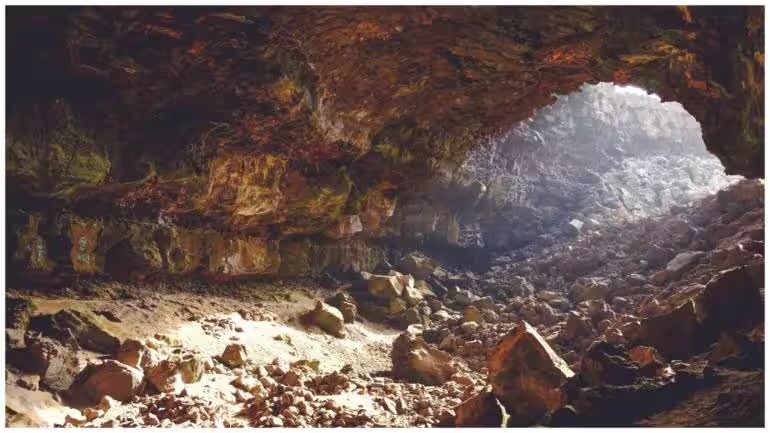
The modern story began when miners extracting bat guano fertilizer entered the cave in 1911. Workers removed tons of sediment before archaeologists arrived, according to research from the University of Nevada, Reno.
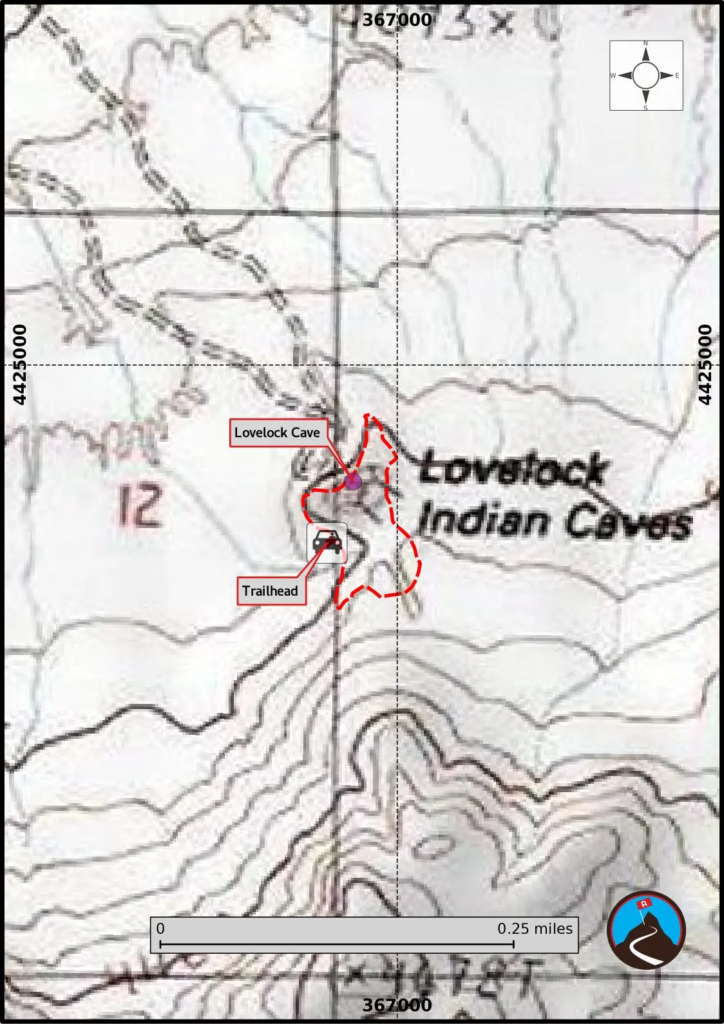
Early removal methods were crude. Artifacts were collected selectively, while other materials were discarded, eliminating critical archaeological context.
“This was common in early 20th-century archaeology,” said Dr. Kelly Dixon, an archaeologist at the University of Montana who has studied Great Basin sites. “Once the layers are disturbed, you lose information about how people lived, not just what they left behind.”
How Mining Created the Legend
Guano deposits had accumulated for thousands of years from bats nesting in the cave. These deposits preserved organic materials such as textiles, feathers, and plant fibers.
However, miners were not trained archaeologists. Many items were reportedly sold, discarded, or taken as souvenirs. Some local displays even showcased bones without documentation, helping rumors spread that unusual skeletons had been found.
Historians say this gap between discovery and scientific analysis became fertile ground for mythmaking.
The Ancient Environment: Why People Lived There
Around 4,000 years ago, the cave overlooked wetlands connected to ancient Lake Lahontan, a vast Ice Age lake that once covered much of Nevada.
The environment offered:
- migratory birds
- fish
- reeds for weaving
- edible seeds and roots
Archaeologists now believe the cave was a seasonal camp used by hunter-gatherers who specialized in wetland resource harvesting.
“The site was not isolated desert as it appears today,” said Dixon. “It was a productive ecosystem.”
Why the “Red-Haired Giants” Appeared
Reports from the excavation mentioned mummified remains with reddish hair. Conservation scientists offer a straightforward explanation.
Human hair often changes color after death. Environmental exposure, mineral salts, and oxidation can transform dark hair into a rust-colored shade over centuries.
Researchers at the Smithsonian’s National Museum of Natural History note that similar changes occur in mummies worldwide, including Egyptian remains.
The Science of Hair Color Change
Hair contains melanin pigment. After burial:
- proteins break down
- pigment degrades
- minerals bleach remaining keratin
The result can appear red, orange, or blond regardless of the person’s original hair color.
Claims of giant skeletons also lack verified documentation. The tallest recorded individual from Lovelock Cave was reportedly about 6 feet 6 inches tall, well within normal human variation.
“No credible museum or scientific collection holds a skeleton outside human proportions from the site,” said Dixon.
What Archaeology Actually Found
While the giant story lacks evidence, the real discoveries are significant.
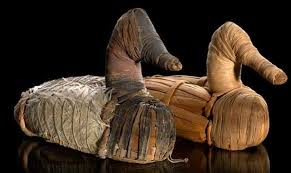
Excavations conducted later by archaeologists documented:
- woven baskets and textiles
- fishing tools
- nets and traps
- sandals and cordage
- animal bones and plant remains
Among the most important finds were waterfowl hunting decoys made from reeds and feathers. They represent some of the oldest known hunting decoys in North America.
Evidence From Ancient Diets
Scientists examined preserved fecal material (coprolites). Analysis showed a diet including:
- waterfowl
- fish
- marsh plants
- seeds
This confirmed the population was adapted to wetland subsistence rather than large-game hunting.
Indigenous Oral History and Historical Context
Northern Paiute representatives stress the oral tradition should not be dismissed but interpreted carefully.
“The stories speak to real experiences of conflict and survival,” wrote tribal historians in regional heritage documentation.
Anthropologists say oral narratives often preserve cultural memory across generations, though the descriptions may be symbolic. A rival group could become “giants” as a metaphor for danger or foreignness.
The Role of Early Newspapers
Newspaper coverage in the early 1900s often dramatized archaeological discoveries. Headlines referred to “mysterious cave people” and “ancient giants.”
Media historians note that during this era, archaeology was poorly understood by the public. Sensational stories sold papers, and verification standards were lower than today.
As a result, speculative reports sometimes became accepted folklore.
Why the Myth Persists in the Internet Age
In recent decades, the Lovelock Cave Legends gained attention in online forums, documentaries, and fringe archaeology programs.
Researchers say myths endure because they combine three powerful elements:
- a real archaeological site
- Indigenous tradition
- incomplete early records
When these overlap, people often fill gaps with speculation.
Scientific Consensus Today
Most scholars agree the cave represents a long-term seasonal settlement of Great Basin hunter-gatherers rather than a lost civilization.
Researchers emphasize the site’s real importance: it demonstrates sophisticated prehistoric engineering, especially wetland hunting technologies.
“The archaeology is extraordinary without needing giants,” said Dixon. “It shows human innovation over thousands of years.”
Preservation and Cultural Respect
Modern archaeological work now follows stricter standards. Federal law, including the Native American Graves Protection and Repatriation Act (NAGPRA), requires respectful treatment and return of human remains to affiliated tribes.
Some materials recovered from the cave have since been repatriated to Native American communities.
Tribal collaboration is now considered essential to interpreting the site responsibly.
Looking Ahead
Lovelock Cave remains protected as an archaeological and heritage site. Ongoing collaboration between archaeologists and tribal representatives focuses on preservation and respectful interpretation.
Researchers also study the site for environmental insights. Ancient plant remains provide information about climate change in the Great Basin over thousands of years.
As research continues, experts say the cave’s significance lies not in mythic beings but in its record of early human adaptation to environmental change — a topic still relevant today.
FAQs About Lovelock Cave Legends
Were giants actually discovered at Lovelock Cave?
No verified scientific evidence supports the existence of giant humans at the site.
Why did the mummies have red hair?
Chemical processes after burial can change hair color over time.
Who lived there?
Ancient Indigenous hunter-gatherer populations linked to the ancestors of Great Basin tribes.
Is the Paiute story false?
No. Scholars consider it an important oral tradition that may reflect real historic conflict, but not literal giants.