
For most of history, people accepted night as a natural boundary. Work slowed, noise faded, and the sky took over. Even today, when cities stay awake around the clock, darkness still plays an important role in how we live and how nature functions. Recently, however, a striking idea has pushed its way into public conversation: using space mirrors to brighten the Earth after sunset.
The concept sounds imaginative at first, but once you think about it, the implications are enormous. The moment the public heard about space mirrors, the discussion shifted from technology to responsibility should a company be able to change the night sky that belongs to everyone? Commercial space activity is expanding quickly. Private rockets launch regularly, satellites are cheaper to build, and companies are searching for new services they can offer from orbit. Internet satellites were only the beginning. Now engineers are considering artificial lighting from space.
Some people see efficiency and progress, while others see environmental disruption and a permanent change to something humans have relied on for thousands of years. Space mirrors refer to reflective satellites placed in low Earth orbit that redirect sunlight toward specific locations on Earth. Even when it is dark on the ground, the Sun still illuminates objects in orbit. By adjusting angles carefully, operators could bounce that sunlight downward, producing a glow similar to a bright moonlit evening. Supporters say this could help ports, construction sites, shipping lanes, and disaster zones operate safely without massive ground lighting systems. Critics warn that large‑scale deployment of space mirrors would not remain local. The brightness would spread across regions, affecting scientists, ecosystems, and everyday people who never agreed to the change.
Table of Contents
A Startup Wants to Light the Night Sky with Space Mirrors
| Item | Details |
|---|---|
| Primary Idea | Reflect sunlight from orbit onto Earth after sunset |
| Technology | Thin, lightweight reflective satellite panels |
| Orbit Type | Low Earth Orbit (LEO) |
| Intended Use | Urban lighting, emergency illumination, industrial activity |
| Claimed Benefits | Reduced electricity use, disaster relief lighting, extended work hours |
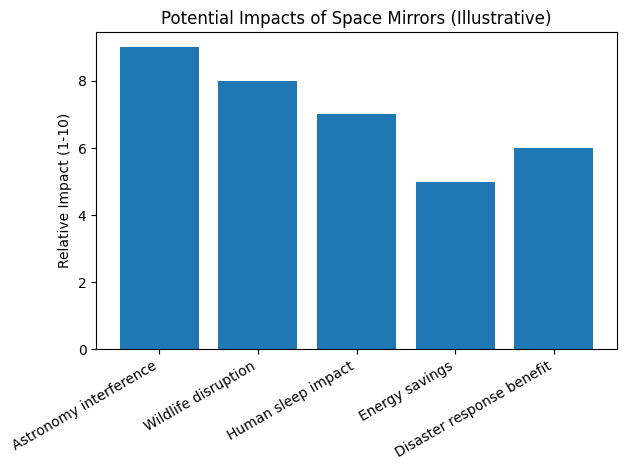
| Major Concerns | Astronomical interference, wildlife disruption, light pollution |
| Scientific Community Reaction | Strong caution and opposition from many astronomers |
| Regulatory Status | Unclear; current space law does not directly address reflective illumination |
How the Concept Works
- The satellites would operate somewhat like controlled artificial moons. Each spacecraft would carry a wide reflective sheet, similar to a solar sail used in experimental propulsion systems. Ground operators would tilt the panel to direct sunlight toward a target area on Earth. Instead of a harsh spotlight, the atmosphere would scatter the light, creating a broad, gentle brightness across a city or coastline.
- The company behind the proposal argues the system could reduce dependence on floodlights and generators. Nighttime road repairs could be completed faster. Harbors could operate longer hours. Remote mining facilities and polar research stations could gain safe working conditions during long winter darkness. Rescue teams responding to earthquakes or hurricanes could receive temporary lighting if power grids fail.
- However, scientists emphasize a critical detail: light in the atmosphere does not stay contained. Clouds, particles, and air molecules scatter illumination widely. A city might request it, but surrounding farmland, forests, and even neighboring countries could still experience brighter skies.
Why Astronomers are Worried
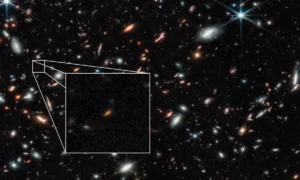
- Astronomy depends on darkness more than most people realize. Telescopes collect extremely faint light, sometimes photons that have traveled billions of years. To capture that data, observatories use long exposures. When a bright object crosses the field of view, it leaves a streak and destroys the image.
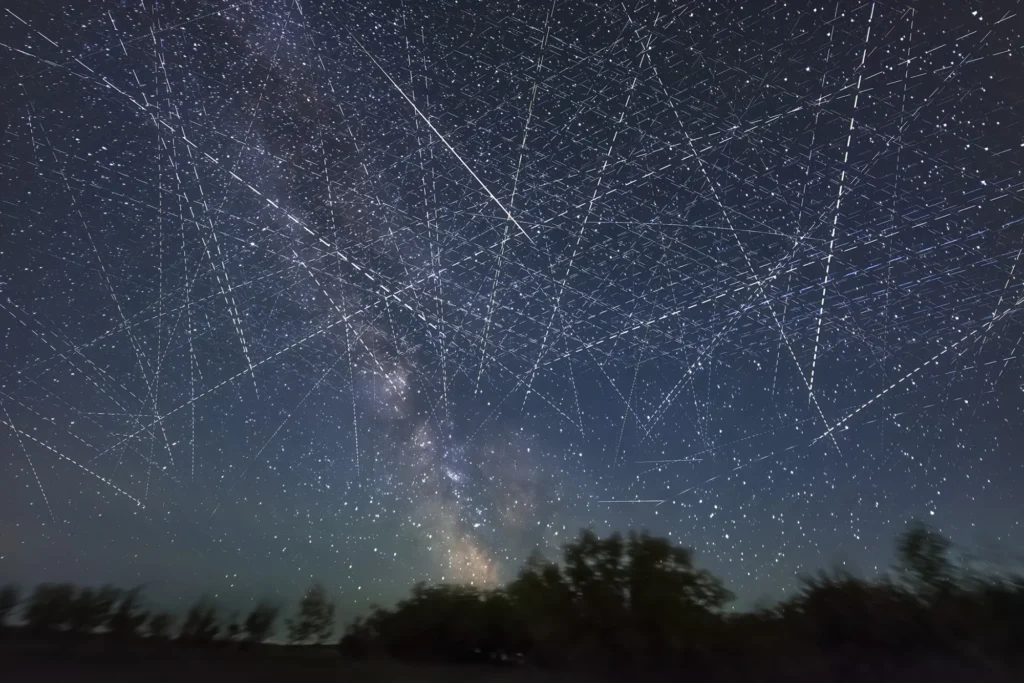
- Astronomers already face this challenge from growing satellite constellations. Observatories report increasing image contamination, forcing researchers to discard valuable observations. Space mirrors would be brighter by design. A single reflection could interfere with multiple telescopes across a continent.
- The consequences extend beyond professional research. Surveys that track asteroids rely on clear detection conditions. Missing data points could affect early warning systems for potential impacts. Other projects study the early universe, mapping faint galaxies and cosmic background radiation. These require pristine darkness. Even modest additional brightness could reduce accuracy or end certain types of ground‑based observation entirely.
- There is also a cultural element. The night sky inspired navigation, calendars, art, and science across civilizations. Many people today rarely see the Milky Way because of urban light pollution. Artificial orbital illumination could erase it from rural regions as well.
Impact On Wildlife and Human Health
- Nature evolved with predictable cycles of day and night. Animals depend on darkness in ways humans often overlook. Migrating birds use stars for orientation. Nocturnal predators hunt in low light. Sea turtle hatchlings instinctively move toward the natural glow over the ocean horizon. Artificial brightness confuses these signals.
- Ecologists warn that increased sky brightness could affect large geographic areas simultaneously. Unlike a streetlamp that influences a single neighborhood, a reflected glow from orbit could extend across entire habitats. Feeding patterns, mating behaviors, and migration timing could shift in ways scientists cannot fully predict.
- Humans are also sensitive to nighttime light. The body produces melatonin in darkness, regulating sleep cycles and recovery. Continuous exposure to light, even dim light, can interfere with circadian rhythms. People living in cities already experience this through excessive nighttime illumination. A brighter sky could worsen sleep quality without individuals recognizing the cause.
Legal and Regulatory Questions
Space law was created decades ago when only national governments launched spacecraft. Agreements focused on avoiding military conflict and limiting orbital debris. They never anticipated commercial services that alter environmental conditions on Earth. This creates a complicated situation. No nation owns the sky, yet everyone shares it. If a company illuminates one coastal city, surrounding regions will still see the reflection. Who grants permission? Who has the right to object? Currently, regulations vary widely and do not directly address orbital lighting systems. Some policy experts suggest international guidelines similar to environmental agreements may be necessary. Others propose designated dark‑sky protection zones around major observatories. The debate is still developing, but one thing is clear existing law is not prepared for space mirrors.
Is There Any Benefit?
- Supporters emphasize energy savings. Cities spend significant resources on lighting streets, stadiums, and infrastructure. If orbital reflection replaced part of that demand, electricity use and emissions might drop. Remote operations in harsh environments could also benefit from reliable illumination without transporting fuel.
- Yet analysts question whether the environmental advantage is real. Rocket launches produce emissions in the upper atmosphere. Satellite manufacturing requires materials and energy. Ground‑based solutions such as efficient LEDs and smart lighting systems already reduce consumption substantially. Critics argue improving existing infrastructure may provide similar benefits without changing the sky.
- The debate therefore becomes a balance of practicality and impact. Even if useful in specific situations, global deployment could introduce widespread consequences that outweigh localized gains.
The Path Forward
- The controversy surrounding space mirrors reflects a broader shift. Space is no longer a distant scientific frontier; it is becoming an active commercial environment. Decisions made in orbit now directly affect daily life on Earth.
- Astronomers are not rejecting technology itself. Many collaborated successfully with satellite operators to reduce brightness and minimize interference. Their request is consultation before deployment and careful impact studies. They want brightness limits, operational schedules, and international oversight.
- Ultimately, the issue goes beyond engineering. The night sky is a shared human experience. It shaped mythology, guided explorers, and continues to inspire scientific discovery. Changing it permanently is not a routine technological upgrade. It is a planetary decision that requires global discussion and thoughtful restraint.
FAQs on Night Sky with Space Mirrors
1. What Are Space Mirrors?
They are reflective satellites designed to redirect sunlight onto Earth after sunset, creating artificial nighttime illumination over selected regions.
2. Would Nights Become As Bright as Day?
No. The expected brightness would resemble a strong moonlit evening, but even that level can disrupt astronomical observations and ecosystems.
3. Could They Help During Emergencies?
Potentially yes. Rescue teams working after disasters could use temporary illumination when electrical infrastructure is damaged.
4. Are They Harmful To People?
They are not directly dangerous, but increased nighttime light exposure may interfere with sleep cycles and long‑term health patterns.