

Oceans Set Another Heat Record: and that’s not just a catchy headline, it’s a scientific red flag. The Earth’s oceans, which act like giant planetary heat sinks, have now absorbed more warmth than ever before, for the eighth year in a row. This isn’t just something for scientists to puzzle over. It’s a wake-up call with direct implications for weather patterns, sea levels, marine ecosystems, and communities around the world. The numbers are in, and they’re clear: 2025 broke yet another record for ocean heat content (OHC), marking a consistent, worrying trend. The oceans, which absorb about 90% of the excess heat trapped by greenhouse gases, are telling us something urgent — climate change is not just coming, it’s already here, and it’s gaining strength.
Table of Contents
Oceans Set Another Heat Record
To sum it all up: Oceans Set Another Heat Record for the Eighth Straight Year is more than just a scientific headline. It’s a sign of a rapidly changing world. From rising seas and extreme weather to marine biodiversity loss and economic challenges, the consequences are real, growing, and global. But with awareness, policy change, and sustainable action, we can turn the tide. The oceans have taken the heat for us — now it’s time we return the favor with smart, science-backed climate solutions.
| Key Data Point | Insight |
|---|---|
| 2025 ocean heat content (OHC) hit record levels | Highest heat storage ever recorded in global oceans |
| 8th consecutive year of record ocean heat | Sign of accelerating climate change |
| 90% of excess heat stored in oceans | Oceans are the primary buffer for global warming |
| Over 16% of ocean areas were the hottest ever measured | Regional heat hotspots are expanding |
| Sea surface temperatures (SST) among top three in recorded history | Warmer surface waters fuel stronger storms |
| Main data sources: NOAA, IAP/CAS, Copernicus, WMO | Trusted international climate science organizations |
| Official data link | NOAA Ocean Heat Content Dataset |
What Does “Oceans Set Another Heat Record” Actually Mean?
Ocean Heat Content (OHC) refers to the total amount of heat energy stored in the ocean, typically measured from the surface to a depth of 2,000 meters. It’s recorded in zettajoules (ZJ) — a unit so big that one ZJ equals one sextillion (that’s 1 followed by 21 zeros) joules. In 2025, Earth’s oceans stored excess energy equivalent to hundreds of millions of atomic bombs, according to scientists from the Institute of Atmospheric Physics (IAP) and NOAA.
This metric is far more stable than surface air temperatures, which fluctuate seasonally. OHC provides a clearer picture of long-term warming trends, especially since ocean warming is less influenced by short-term weather patterns like El Niño.
How Did 2025 Oceans Set Another Heat Record?
Here’s how the data stacks up:
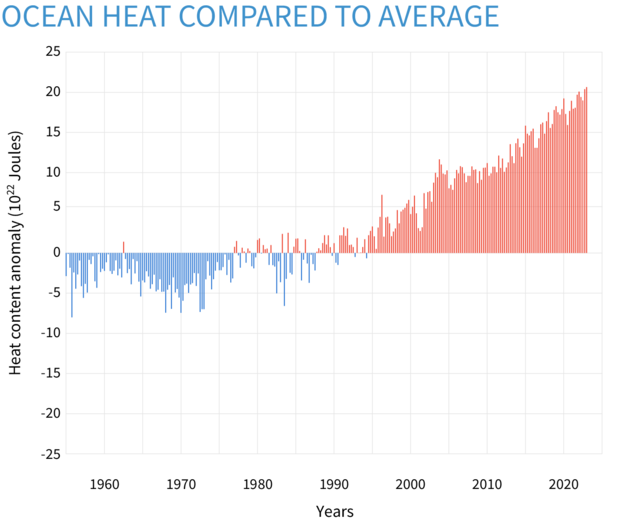
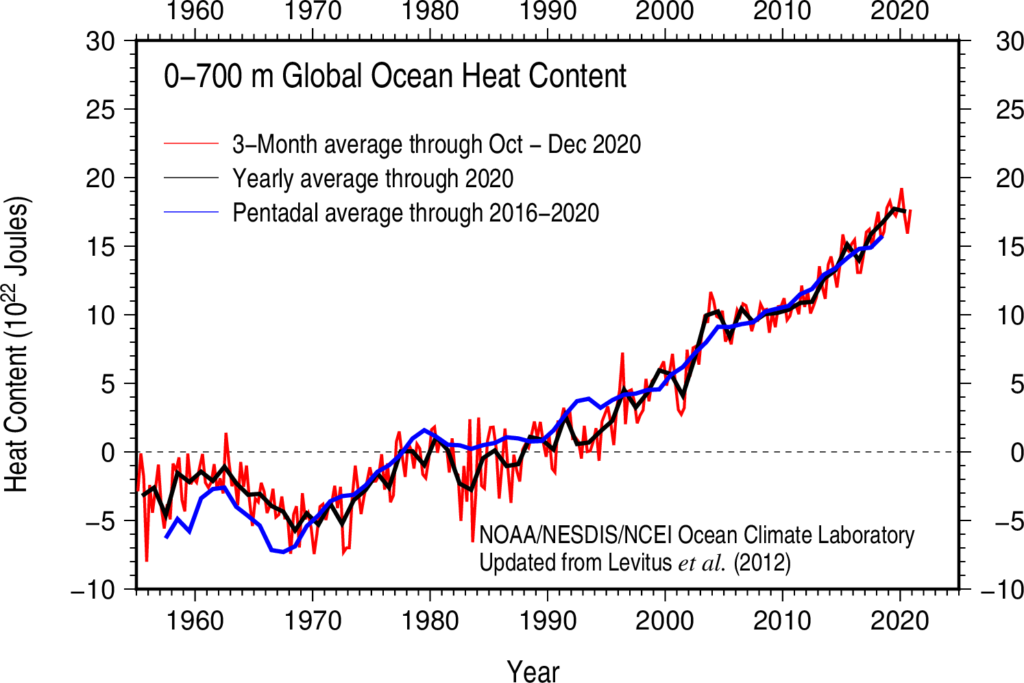
- Total ocean heat content in 2025 exceeded 300 ZJ, the highest since measurements began.
- The heat increase was mostly in the upper 2,000 meters of the ocean, where life thrives and weather systems draw energy.
- Compared to the 1981–2010 average, heat content rose by more than 10 ZJ.
- About one-third of the ocean was in its top three warmest years, with 16% reaching record temperatures.
These conclusions are based on data from Argo floats, satellites, deep-sea probes, and modeling by institutions like NOAA, IAP, and the Copernicus Climate Change Service.
Why Oceans Set Another Heat Record Matters to Everyone — Not Just Scientists
Let’s break this down in a way anyone can understand. When the oceans heat up, the effects ripple across the globe:
1. Rising Sea Levels
Water expands when it heats — that’s physics 101. Even without adding new water from melting glaciers, thermal expansion causes the sea to rise. Warmer oceans are one of the major drivers of coastal flooding in cities like Miami, New York, and New Orleans.
2. Stronger Storms and Weather Extremes
Warm water acts like fuel for storms. The Atlantic hurricane season is already becoming longer and more intense, directly tied to sea surface temperatures. According to the World Meteorological Organization, warmer oceans contributed to record-breaking cyclones in the Pacific and Indian Oceans in 2025.
3. Ocean Ecosystem Stress
Many marine species — from plankton to whales — depend on stable water temperatures. Coral reefs, especially, are in danger. We are currently witnessing the fourth global coral bleaching event, devastating ecosystems that support millions of people and fish.
4. Decline in Marine Fisheries
As waters warm, fish migrate to cooler areas, often moving away from traditional fishing grounds. This hurts coastal economies, disrupts global supply chains, and threatens food security, particularly in developing nations.
5. Ice Melt Acceleration
Warmer oceans erode polar ice sheets from beneath. The Thwaites Glacier in Antarctica, nicknamed the “Doomsday Glacier,” is losing mass rapidly due to warm ocean currents underneath it. If it collapses, sea levels could rise by more than 2 feet globally.
Historical Timeline: A Quick Look Back
| Year | Ocean Heat Milestone |
|---|---|
| 2016 | First year recognized for setting record OHC globally |
| 2018–2020 | Consecutive records broken year after year |
| 2022 | Marked sixth year in a row of record ocean heat |
| 2023 | Coral bleaching events accelerate worldwide |
| 2024 | Unusual marine heatwaves in North Pacific and Indian Ocean |
| 2025 | Eighth consecutive year of record OHC; new peak heat observed |
This trend is clear and persistent — not random noise, but a rising signal.
Oceans Set Another Heat Record: The Science Behind the Numbers
Ocean heat content is tracked using:
- Argo floats: Over 3,800 robotic devices drifting in the ocean, diving down to 2,000 meters and surfacing every 10 days to transmit data.
- Satellites: Providing wide-scale observations of surface heat and energy fluxes.
- Ship-based CTD sensors: Instruments that measure Conductivity, Temperature, and Depth at different ocean levels.
- Model-based reanalysis: Combining real-world data with computer simulations to fill in gaps and build long-term climate records.
These datasets are analyzed by multiple international agencies including NOAA, China’s Institute of Atmospheric Physics, and the European Copernicus Program.
Coastal Economies Feeling the Heat
You don’t need to be a scientist to feel the impact. Across the U.S. and the globe, communities tied to the ocean — fishermen, tourism operators, port workers — are facing real economic challenges:
- Maine’s lobster industry has seen lobsters migrate further north, decreasing local hauls.
- Florida’s coral tourism is suffering as bleaching drives divers elsewhere.
- Pacific island nations face erosion and saltwater intrusion, endangering agriculture and homes.
These aren’t projections. They’re happening now.
Can Anything Be Done? Solutions & Mitigation
Yes — but it will take global cooperation, smart tech, and public will.
1. Reduce Greenhouse Gas Emissions
This is priority one. Cutting emissions from fossil fuels reduces heat trapping gases and slows the energy imbalance heating our oceans.
2. Expand Marine Protected Areas
Healthy ecosystems are more resilient to temperature stress. Protecting 30% of oceans by 2030 is a key international goal.
3. Transition to Clean Energy
Wind, solar, and sustainable hydrogen are critical for reducing carbon emissions. Investments in these areas also create jobs and reduce long-term energy costs.
4. Local Adaptation Strategies
Cities can upgrade infrastructure to withstand flooding. Coastal zoning laws can prevent risky development. Insurance markets can incentivize resilient construction.
5. Public Education & Community Involvement
The more people understand the link between ocean heat and climate impacts, the better our collective response. Schools, news media, and online platforms all play a role.
A 10-Second Cosmic Flash Becomes the Most Distant Supernova Ever Observed
Scientists Drill to Record Depth and Find Rock Changed by Earth’s Mantle
Evidence Suggests Earth Had Mountains and Continents Before Plate Tectonics