

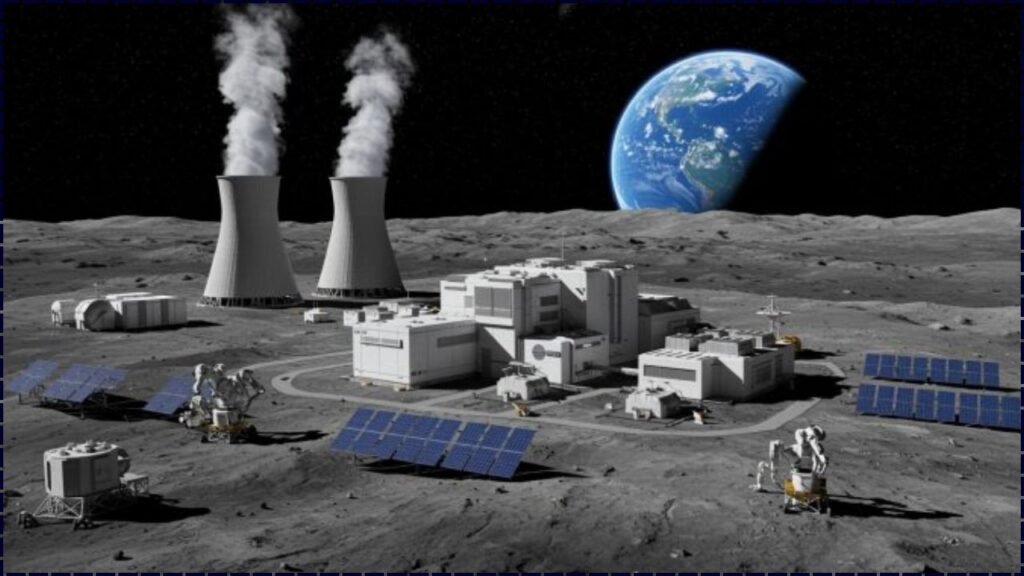
The United States is moving forward with plans to develop a Nuclear Power System on the Moon, a technology NASA says is essential for sustained human exploration beyond Earth. The initiative, developed in partnership with the U.S. Department of Energy (DOE), aims to deploy a compact nuclear reactor capable of providing continuous electricity to lunar bases by around 2030.
NASA officials say the reactor will support long-term missions under the NASA Artemis program, which seeks to return astronauts to the Moon and eventually establish a permanent human presence there. Reliable power will be necessary to operate habitats, life-support systems, vehicles, and scientific equipment in the Moon’s extreme environment.
The project represents one of the most ambitious attempts yet to create lunar energy infrastructure capable of sustaining human activity far from Earth.
Table of Contents
Plans to Place a Nuclear Power System on the Moon
| Key Fact | Detail |
|---|---|
| Target deployment | Around 2030 |
| Reactor capacity | Approx. 40 kilowatts of electricity |
| Program name | Fission Surface Power (FSP) |
| Primary goal | Provide continuous energy during lunar night |
| Strategic mission | Support Artemis lunar base |
Why NASA Wants a Nuclear Power System on the Moon
One of the biggest engineering challenges for sustained lunar missions is energy supply. Solar panels, widely used in spacecraft and satellites, can generate power only when exposed to sunlight.
On the Moon, however, daylight cycles are drastically different from Earth.
A single lunar day lasts about 29.5 Earth days, meaning each location experiences roughly 14 Earth days of continuous darkness.
During these extended nights, temperatures can drop below –250°F (–157°C), creating harsh conditions for equipment and astronauts.
A Nuclear Power System on the Moon would operate continuously regardless of sunlight, dust accumulation, or extreme temperature swings. NASA engineers say this reliability could allow astronauts to remain on the Moon for weeks or even months.
The system could power:
- Astronaut habitats
- Water extraction systems
- Communications equipment
- Scientific instruments
- Robotic vehicles and mining machinery
According to NASA engineers working on the project, nuclear energy offers a stable and scalable solution for building long-term lunar infrastructure.
The Technology Behind the Lunar Nuclear Reactor
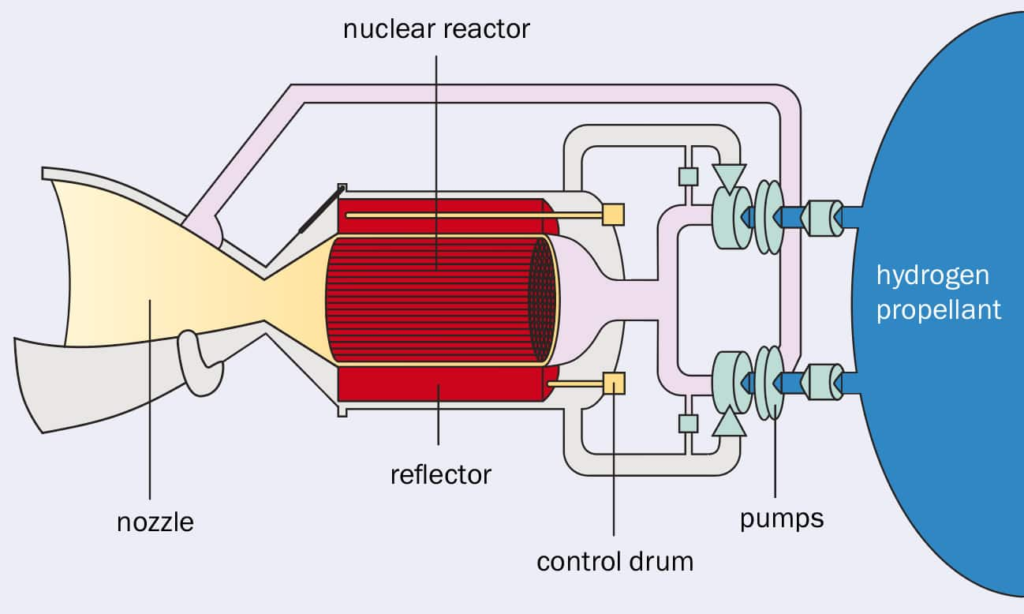
The proposed system falls under NASA’s Fission Surface Power (FSP) program. Unlike the radioisotope power generators used in some space missions, this technology involves a true nuclear fission reactor.
Fission occurs when atoms of uranium split apart, releasing large amounts of heat. That heat can be converted into electricity through a power conversion system.
NASA’s current design concept includes several components:
- A small uranium-fueled reactor core
- Heat pipes to transfer thermal energy
- A power conversion unit
- Radiators to dissipate excess heat
- Electrical distribution cables across the lunar surface
According to NASA design estimates, the system could produce about 40 kilowatts of electricity, enough to power a modest research base or several large lunar habitats.
Engineers emphasize that the lunar nuclear reactor will be compact and designed to operate autonomously for many years.
A Long History of Nuclear Power in Space
Although a Nuclear Power System on the Moon would represent a major milestone, nuclear technology has played a role in space exploration for decades.
NASA and other space agencies have used radioisotope thermoelectric generators (RTGs) since the 1960s.
RTGs convert heat from radioactive decay into electricity. They have powered numerous missions, including:
- Voyager 1 and Voyager 2 spacecraft
- Cassini mission to Saturn
- Curiosity and Perseverance Mars rovers
- New Horizons mission to Pluto
However, RTGs produce relatively small amounts of electricity. The lunar reactor would generate far more power, making it suitable for running entire facilities rather than individual instruments.
Space historians note that the United States also experimented with small nuclear reactors in space during the Cold War under programs such as SNAP (Systems for Nuclear Auxiliary Power).
The lunar reactor project builds on decades of research in compact nuclear systems.
Collaboration Between NASA and the Department of Energy
The development of a Nuclear Power System on the Moon is a joint effort between NASA and the U.S. Department of Energy.
NASA oversees space mission design and lunar infrastructure planning, while DOE contributes expertise in nuclear reactor development and safety.
In 2022, NASA awarded contracts to several companies to develop preliminary reactor concepts.
The selected contractors include:
- Lockheed Martin
- Westinghouse
- IX (formerly X-energy)
Each company proposed different approaches to designing a compact lunar nuclear reactor capable of surviving launch stresses, lunar dust exposure, and temperature extremes.
According to NASA officials, the next phase will involve detailed design reviews and ground testing before a final reactor configuration is selected.
Role in the Artemis Program
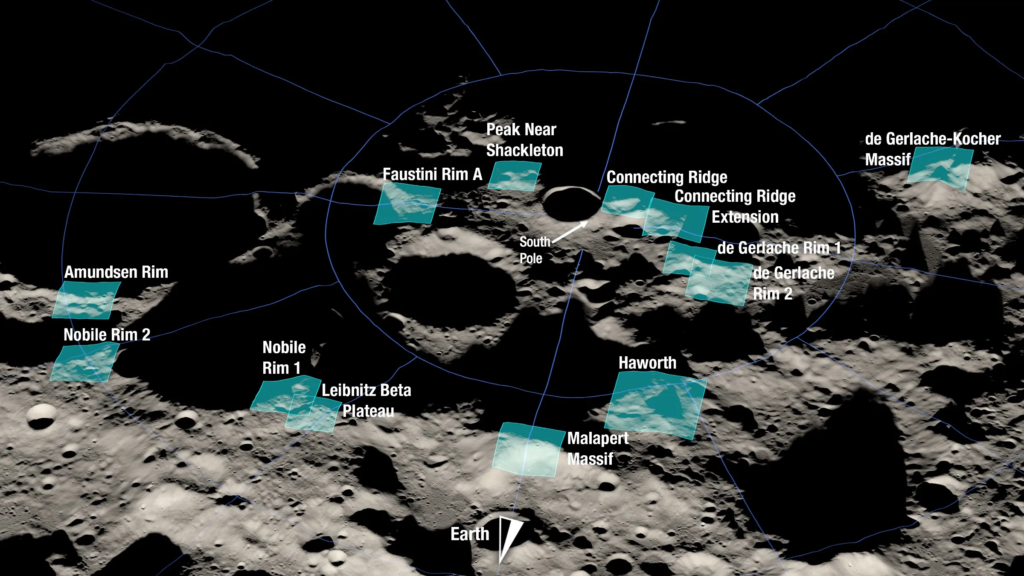
The NASA Artemis program aims to land astronauts near the Moon’s south pole later this decade. Unlike the Apollo missions, which lasted only a few days, Artemis is designed to enable extended lunar stays.
The south pole region is scientifically important because it contains permanently shadowed craters believed to hold large deposits of frozen water.
Scientists believe that lunar ice could be processed into:
- Drinking water
- Oxygen for breathing
- Hydrogen and oxygen rocket fuel
A Nuclear Power System on the Moon could power extraction equipment used to access these resources.
NASA officials say the ability to produce fuel on the Moon could significantly reduce the cost of future space missions.
Growing International Interest in Lunar Nuclear Energy
The United States is not the only country exploring nuclear power for lunar exploration.
China and Russia have announced plans for an International Lunar Research Station, which could include nuclear energy systems to power facilities.
Space policy analysts say these projects reflect a growing global focus on building permanent infrastructure on the Moon.
According to research from the Center for Strategic and International Studies, energy generation will be one of the most important technologies for future lunar economies.
Continuous power is necessary for:
- Long-term habitation
- Industrial operations
- Data transmission
- Scientific research stations
In this emerging space environment, nuclear energy may become a critical tool for sustaining activity beyond Earth.
Engineering Challenges of Building a Reactor on the Moon
Designing a Nuclear Power System on the Moon presents unique engineering challenges.
Unlike Earth, the Moon has no atmosphere and experiences extreme temperature swings.
Engineers must ensure the reactor can operate under conditions such as:
- Intense radiation exposure from space
- Abrasive lunar dust particles
- Severe temperature fluctuations
- Limited maintenance by astronauts
Transporting the reactor is another challenge. The system must survive the intense vibrations and acceleration forces experienced during rocket launch and landing.
NASA engineers are also studying how to deploy the reactor safely at a distance from astronaut habitats to minimize radiation exposure.
Safety and Environmental Considerations
Safety remains a central concern in the development of a Nuclear Power System on the Moon.
NASA officials emphasize that the reactor will remain inactive during launch. It will only begin generating power after landing safely on the lunar surface.
The design includes several safety measures:
- Radiation shielding
- Passive cooling systems
- Autonomous shutdown capability
NASA has extensive experience launching nuclear materials into space safely. Over the past several decades, numerous missions using nuclear power sources have been launched without major incidents.
Still, some experts say the project will require rigorous testing to ensure the system meets international safety standards.
Economic and Scientific Benefits
Beyond exploration, the Nuclear Power System on the Moon could have broader economic implications.
Reliable energy is essential for potential lunar industries, including:
- Resource mining
- Manufacturing using lunar materials
- Large scientific observatories
- Deep-space mission staging
Some researchers believe the Moon could eventually serve as a launch point for missions to Mars and beyond.
Producing fuel and resources locally could dramatically reduce the cost of long-distance space travel.
A nuclear reactor could power large processing facilities needed to turn lunar materials into useful products.
What Comes Next
NASA plans to continue refining reactor designs throughout the late 2020s. Engineers will conduct testing to ensure the technology can withstand spaceflight and operate safely in lunar conditions.
If development proceeds on schedule, the first operational Nuclear Power System on the Moon could be deployed around 2030.
NASA officials say the technology could eventually support missions to Mars.
Reliable energy systems will likely be essential for establishing human settlements beyond Earth.
FAQs About
Why does NASA want a Nuclear Power System on the Moon?
The Moon experiences two-week-long nights that make solar energy unreliable. Nuclear reactors provide continuous electricity regardless of sunlight.
How powerful will the lunar reactor be?
NASA’s design targets approximately 40 kilowatts of electricity, enough to power several lunar habitats and support systems.
When could the reactor reach the Moon?
NASA hopes to deploy the reactor around 2030, though development timelines may change as testing continues.
Is nuclear power safe for space missions?
NASA has used nuclear energy in space for decades. The lunar reactor will remain inactive during launch and include multiple safety systems.
Final Outlook
As space agencies move toward establishing permanent bases beyond Earth, energy supply is becoming a defining challenge. NASA’s proposed Nuclear Power System on the Moon could provide the continuous electricity needed to power habitats, support scientific research, and enable future missions deeper into the solar system.
If successful, the technology may become the foundation of a new era of lunar exploration and space infrastructure.