
Researchers have documented Alcohol Consumption Behavior in wild chimpanzees after analyzing fermented fruit consumption in African rainforests, providing rare biological evidence that alcohol intake predates human civilization. The findings, reported by international primatologists working in Uganda and Côte d’Ivoire, suggest early primates evolved tolerance to ethanol millions of years before humans began intentionally brewing alcoholic beverages.
Table of Contents
Alcohol Consumption Behavior in Wild Chimpanzees
| Key Fact | Detail / Statistic |
|---|---|
| Alcohol detected in chimps | Ethanol metabolites found in urine samples |
| Estimated intake | Comparable to one or two human drinks daily (body-mass adjusted) |
| Behavioral context | Shared consumption of naturally fermented fruit |
| Evolutionary significance | Alcohol processing ability may date back 10 million years |
Scientists say continued observation may clarify how diet shaped primate social behavior and migration patterns. The study provides rare insight into evolutionary biology and suggests human attraction to alcohol may be rooted not in culture, but deep biological history.
Alcohol Consumption Behavior: What Scientists Actually Observed
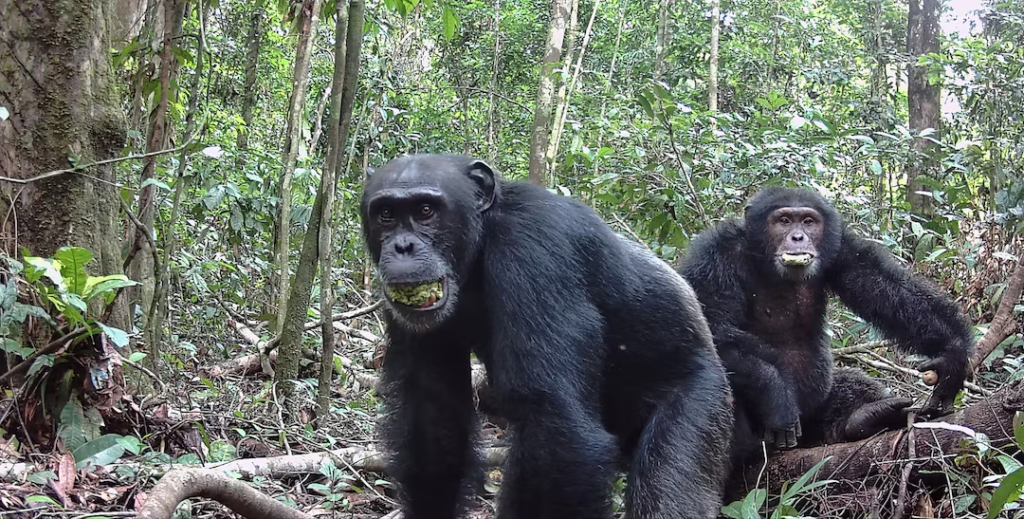
Field teams monitored chimpanzee communities across tropical forests for extended periods, collecting fruit samples and non-invasive biological specimens. Researchers detected ethyl-glucuronide, a compound produced when the body processes ethanol, confirming actual ingestion.
Dr. Kimberley Hockings, a primatologist with the University of Exeter who has spent years observing primates in West Africa, said fermented fruit “is a natural and recurring part of forest ecosystems, and chimpanzees clearly possess biological mechanisms to process it safely.”
The alcohol originates from sugars in ripe fruit fermenting due to naturally occurring yeasts. In humid rainforest conditions, fallen figs, breadfruit, and palm fruits ferment rapidly. The concentration remains low, usually below one percent ethanol, but chimpanzees feed repeatedly throughout the day.
Fermented Fruit and Social Feeding
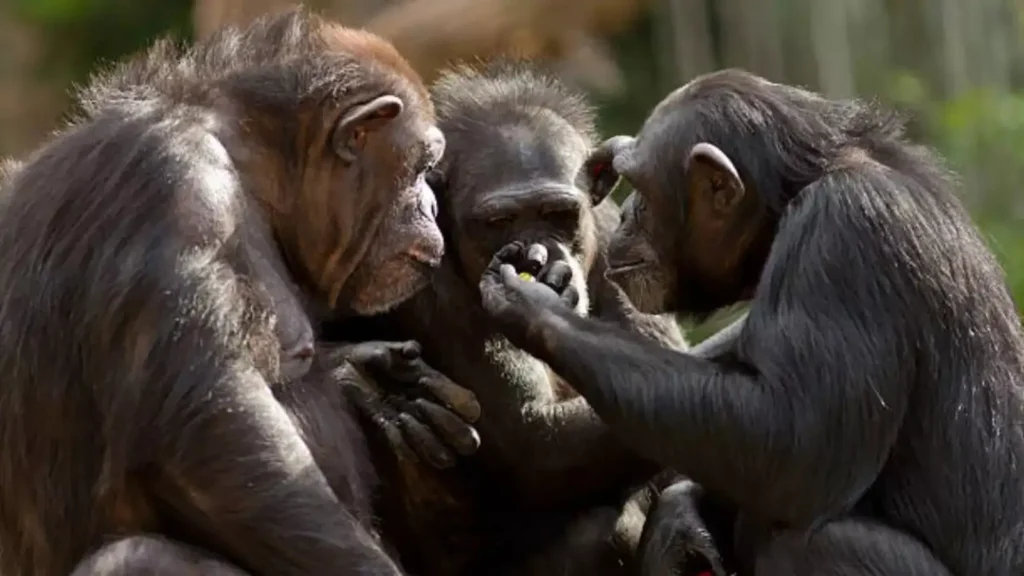
Researchers observed the primates gathering in small groups around fruiting trees. Adult chimpanzees sometimes tolerated close proximity during feeding, which is unusual for a species known to defend food resources.
Scientists believe this shared feeding may reinforce cooperation, hierarchy recognition, and social bonds.
Dr. Hockings noted that “the behavior is not drinking for intoxication. It is feeding behavior, but its social context resembles communal eating seen in many species, including humans.”
Evolutionary Context: Why This Matters
The discovery supports a long-standing scientific idea known as the “drunken monkey hypothesis.” The theory proposes that early primates evolved attraction to ethanol because its smell signaled ripe, calorie-dense fruit.
Chimpanzees share roughly 98% of human DNA, making them a powerful model for studying primate evolution.
Dr. Matthew Carrigan, a molecular anthropologist who studied alcohol-metabolizing enzymes in primates, identified a genetic mutation allowing efficient ethanol processing in a common ancestor approximately 10 million years ago.
“Fermentation reliably indicated food energy,” Carrigan explained in research commentary. “An animal capable of consuming it safely had a survival advantage.”
Ethanol Metabolism and Biological Adaptation
Unlike humans, chimpanzees rarely display obvious intoxication. Scientists attribute this to feeding patterns and enzyme activity.
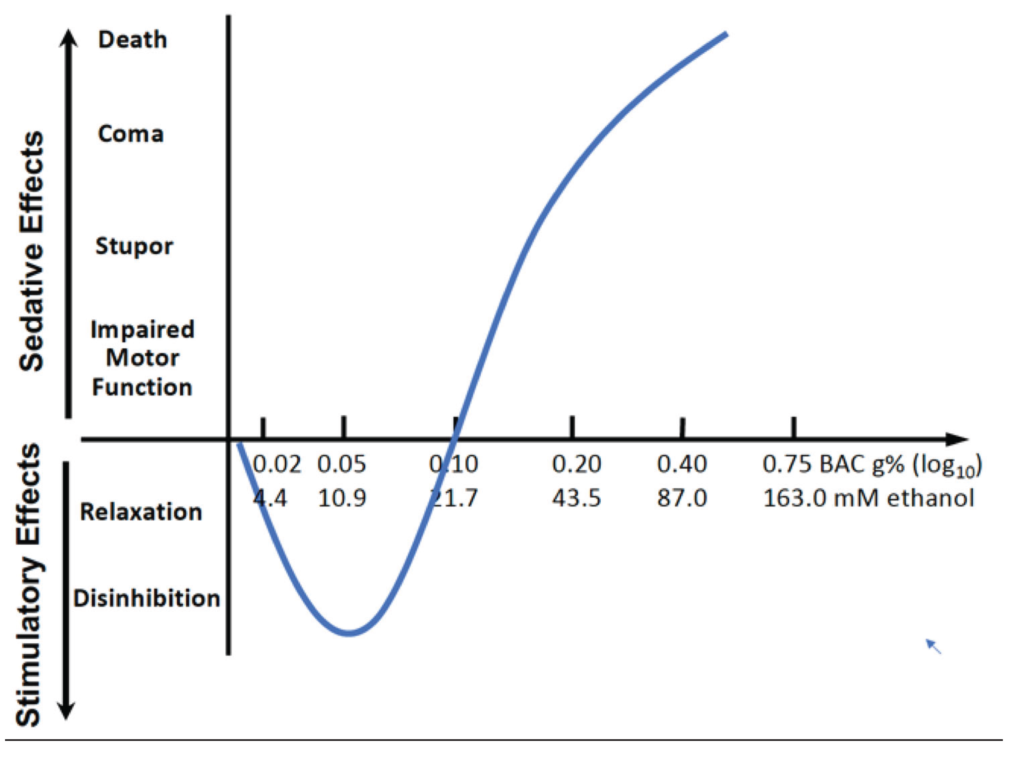
Their livers contain highly effective alcohol dehydrogenase enzymes. These enzymes break down ethanol before neurological impairment occurs.
Are Chimpanzees Getting Drunk?
Researchers say the answer is almost certainly no.
Dr. Anna Bowland, a wildlife nutrition specialist, said chimpanzees consume ethanol gradually across many hours, preventing intoxication. The alcohol levels in fruit resemble extremely weak beer.
Instead, scientists view Alcohol Consumption Behavior as a by-product of nutrition.
The animals seek sugar, not alcohol. Ethanol simply accompanies the highest-energy fruit.
Evidence Beyond Chimpanzees
Chimpanzees are not the only animals known to consume naturally fermented foods. Scientists have recorded similar behavior in:
- elephants eating fermented marula fruit
- fruit bats feeding on fermented nectar
- certain bird species consuming fermented berries
Biologists say this suggests ethanol tolerance may be widespread among fruit-eating animals.
Researchers emphasize, however, that animals do not intentionally produce alcohol. They respond to caloric signals, particularly smell.
The aroma of ethanol travels farther than the scent of sugar, helping animals locate ripe fruit in dense forests.
Broader Implications for Humans
Anthropologists say the findings may explain why humans independently invented fermentation across cultures.
Beer in ancient Mesopotamia, rice wine in China, and maize beverages in the Americas appeared without contact between civilizations. This pattern suggests a shared biological predisposition rather than coincidence.
Human Cultural Evolution
Archaeological evidence shows fermentation existed before agriculture in some hunter-gatherer societies. Humans likely encountered naturally fermented fruit long before farming.
Scientists now suspect early humans did not initially create alcohol. Instead, they copied a naturally occurring ecological process.
Alcoholic beverages may therefore represent technological amplification of an ancient dietary adaptation.
Health and Behavioral Questions
The research also raises medical questions about modern human drinking patterns.
Public health scientists note that human brains evolved in environments where alcohol concentrations were extremely low. Modern beverages can exceed 40% ethanol — thousands of times stronger than fermented fruit.
Dr. Robert Dudley, an evolutionary biologist who developed the drunken monkey hypothesis, argues that modern alcohol availability may exceed what human physiology evolved to handle.
“Our ancestors encountered diluted fermentation in food,” Dudley wrote in evolutionary research commentary. “Industrial production created exposure levels biology never anticipated.”
Scientific Debate and Limitations
Researchers caution against exaggerating the findings. Alcohol concentrations vary widely by fruit species and climate.
Additionally, chimpanzee populations differ in diet. Some groups rarely encounter fermented fruit.
Ecologists also warn against interpreting the behavior as “recreational drinking.”
The animals show no evidence of seeking intoxication or experiencing dependency.
Instead, the behavior reflects ecological opportunity — a feeding adaptation rather than a social habit.
Methods Used by Researchers
Scientists relied on multiple lines of evidence:
- Behavioral observation using remote cameras
- Collection of discarded fruit samples
- Laboratory chemical analysis
- Noninvasive urine testing
Urine samples allowed researchers to detect ethanol metabolites without disturbing the animals. This method is commonly used in wildlife toxicology and veterinary studies.
Long-term observation was essential. Some chimpanzee communities have been monitored continuously for more than 30 years, giving researchers baseline dietary knowledge.
Conservation Importance
The findings have conservation implications. Fruit-bearing trees that produce high-energy foods are critical to chimpanzee survival.
Deforestation threatens these resources. Loss of fruiting trees could disrupt feeding ecology and social patterns.
Conservation groups say understanding diet helps protect habitats more effectively.
Chimpanzees are listed as endangered by international wildlife authorities, largely due to habitat loss and illegal hunting.
Current Status and Future Research
Researchers plan expanded studies using biochemical tracking, drones, and environmental monitoring.
They hope to determine whether:
- bonobos share similar Alcohol Consumption Behavior
- seasonal changes affect fermentation rates
- early hominins relied on fermented foods
Scientists also want to analyze fossilized teeth to identify chemical signatures of fermented fruit in ancient human ancestors.
FAQs About Alcohol Consumption Behavior in Wild Chimpanzees
Do chimpanzees intentionally seek alcohol?
No. They seek ripe fruit; alcohol is a natural by-product.
Is it harmful?
Researchers have found no consistent health harm due to low concentrations.
Why does this matter?
It may explain the biological origins of human alcohol tolerance.
Could early humans have eaten fermented fruit?
Most anthropologists believe it is highly likely.