
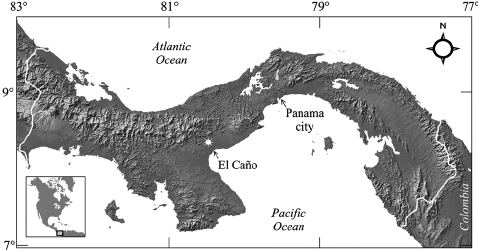
The discovery at Panama’s El Caño archaeological site has uncovered a 1,000-year-old tomb filled with gold ornaments, ceramics, and human remains, offering rare insight into political power in pre-Columbian Central America. Archaeologists say the grave, located in Coclé province, likely belonged to a high-ranking ruler and demonstrates that complex social hierarchies existed centuries before Europeans reached the region.
Table of Contents
Rich Burial Site at Panama’s El Caño
| Key Fact | Detail/Statistic |
|---|---|
| Estimated age | A.D. 800–1000 |
| Major findings | Gold breastplates, pendants, bells, pottery, multiple burials |
| Cultural group | Coclé culture chiefdom society |
Officials say research at Panama’s El Caño will continue for years, as scientists examine artifacts, remains, and surrounding structures. Archaeologists believe additional discoveries could further reshape understanding of pre-Columbian societies and demonstrate that complex civilizations existed throughout Central America long before European arrival.
A Tomb Reserved for Power
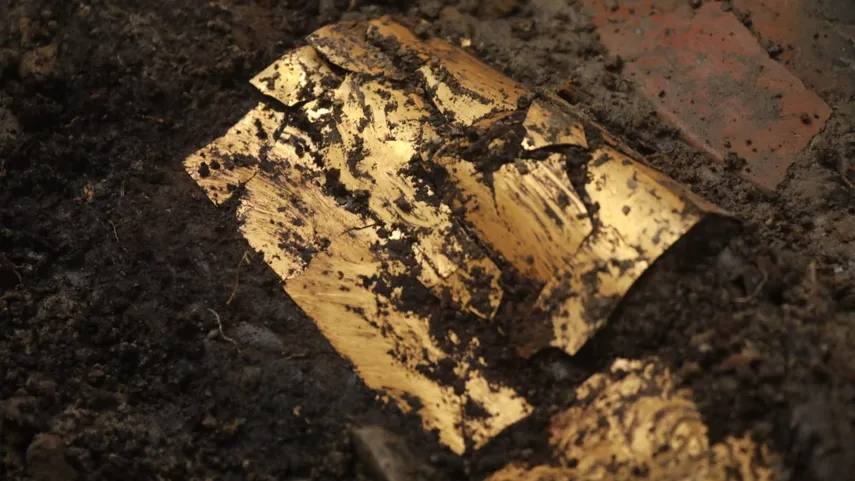
Archaeologists working at Panama’s El Caño Archaeological Park uncovered a burial chamber containing a central skeleton surrounded by ornate gold jewelry, ceremonial objects, and pottery vessels. The arrangement indicates a carefully staged funerary ceremony rather than an ordinary burial.
The excavation is led by archaeologist Dr. Julia Mayo, who has studied the site for nearly 20 years. She said the grave goods emphasize authority and sacred identity.
“Gold here was not money or wealth. It represented spiritual power and leadership,” Mayo said during a public briefing released by the Ministry of Culture.
Around the central individual were additional human remains. Researchers believe they may have been attendants sacrificed or ritually buried to accompany the leader into the afterlife, a practice documented in several early chiefdom societies.
Understanding the Coclé Culture
The burial belongs to the Coclé culture, which flourished between approximately A.D. 700 and 1100 in central Panama. Archaeologists classify the society as a hereditary chiefdom — a structured political system ruled by elite families.
Unlike larger civilizations such as the Maya, the Coclé left no written texts. As a result, ancient Central American archaeology relies heavily on burial practices and artifacts to interpret social organization.
Experts say funerals were public demonstrations of political authority.
Leaders reinforced their legitimacy through ceremonial regalia, including gold body ornaments, elaborate clothing, and ritual feasts. The tomb at Panama’s El Caño appears to represent one of these elite leaders.
Why Gold Was Sacred
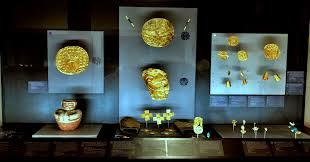
The tomb contained breastplates, beads, and animal-shaped pendants. Specialists studying pre-Columbian gold artifacts say these objects held religious meaning.
Gold was associated with sunlight and divine ancestry in many ancient American societies. Leaders wore it during rituals to symbolize connection with cosmic forces.
A heritage official from Panama’s National Directorate of Cultural Heritage said metallurgical analysis shows advanced techniques.
“They alloyed gold with copper and shaped it using hammering and casting. This required specialized artisans and organized labor,” the official said.
Archaeologists also identified iconography depicting crocodiles, birds, and jaguars — animals associated with supernatural power across Central American traditions.
Evidence of a Structured Society
For decades, historians debated whether lower Central American societies were small tribal communities or politically organized states. The discovery at Panama’s El Caño strongly supports the second interpretation.
The concentration of wealth in a single burial suggests inherited rank and social hierarchy. Nearby graves indicate a dynastic cemetery used repeatedly over generations.
Archaeologists studying the Coclé culture say ceremonial cemeteries require coordination, labor, and social order.
“A burial complex of this scale shows centralized leadership and organized ritual life,” said a regional archaeology researcher connected to the project.
How Archaeologists Excavated the Tomb
The burial was located beneath layers of soil deposited by centuries of flooding from nearby rivers. Excavators used slow, careful methods to avoid damaging fragile remains.
Teams worked with brushes, wooden tools, and dental instruments. Every layer was photographed and mapped before removal. Soil samples were preserved for laboratory analysis, including pollen and microscopic remains that may reveal diet and environment.
Radiocarbon dating of organic materials, including charcoal and bone fragments, helped estimate the burial’s age.
Scientists are also conducting isotopic analysis on teeth to determine where the individual grew up and what foods they ate.
Trade Networks and Regional Connections
Artifacts recovered from Panama’s El Caño share similarities with items found in Colombia and Costa Rica. This suggests long-distance trade routes existed across the Isthmus of Panama.
Archaeologists believe gold, shells, jade, and feathers were exchanged among cultures. The region likely served as a corridor connecting South America and Mesoamerica.
Such networks would have helped elites maintain prestige by acquiring rare goods.
Comparison With Other Ancient Civilizations
Unlike the Maya, the Coclé did not build large stone cities or pyramids. However, researchers emphasize that urban architecture is not the only measure of civilization.
Instead, political complexity can appear in ceremonial spaces, burial practices, and craft specialization.
The El Caño burial demonstrates that societies without writing or monumental architecture could still possess strong governance, religion, and social hierarchy.
Preservation and Conservation Efforts
After excavation, artifacts were transferred to conservation laboratories. Specialists are stabilizing metals and preventing corrosion.
Gold itself does not rust, but copper alloys can deteriorate when exposed to oxygen and humidity. Conservators clean the objects using microscopes and chemical solutions.
Panama’s government plans to display the objects in national museums after scientific study concludes. Officials say preservation is critical because looting has damaged many archaeological sites in the region.
Public Reaction in Panama
Local communities have shown strong interest in the discovery. Schools and universities have organized visits and lectures explaining the findings.
Cultural authorities say the site strengthens national identity by highlighting indigenous history before Spanish colonization.
Tourism officials also expect increased visitors to the region, though access to the excavation remains restricted to protect fragile remains.
Broader Historical Significance
The discovery changes how historians understand Central America’s past. Previously, many textbooks focused primarily on civilizations in Mexico and Peru.
Panama’s El Caño demonstrates that complex leadership systems existed across a wider area.
Archaeologists say the tomb reveals a society that blended religion and politics. Chiefs were not only rulers but also spiritual leaders.
What Happens Next
Researchers plan further excavations around the cemetery. Ground-penetrating radar surveys suggest additional burials may remain underground.
DNA testing may identify family relationships among the individuals buried there. Scientists hope to determine whether leadership was inherited through lineage.
Dr. Mayo said each excavation season brings new information.
“We are only beginning to understand this civilization. Many stories are still buried beneath the soil,” she said.
FAQs About A Rich Burial Site at Panama’s El Caño
Why is Panama’s El Caño important?
It provides direct evidence of organized leadership and religious authority in Central America 1,000 years ago.
Was gold used as money?
No. Archaeologists say gold symbolized sacred status, not economic wealth.
Who was buried there?
Likely a hereditary chief or ruler connected to the Coclé culture.
Will the artifacts be displayed?
Yes. Authorities plan museum exhibitions after conservation work finishes.