

Researchers have created a Fungus-Based Protein — a gene-edited food made from microscopic fungi — that could reshape how the world produces food. The development uses CRISPR gene editing to improve a naturally occurring fungus grown in fermentation tanks, offering a lower-emission alternative to meat while delivering comparable nutrition.
Table of Contents
Fungus-Based Protein
| Key Fact | Detail/Statistic |
|---|---|
| Organism used | Fusarium venenatum filamentous fungus |
| Technology | CRISPR gene editing |
| Climate impact | More than 50% lower emissions than chicken production |
| Production method | Fermentation tanks similar to brewing |
Even as regulatory decisions remain pending, the research signals a broader shift toward industrial fermentation as a food source. Scientists say future protein production may increasingly resemble brewing rather than farming, offering new tools to feed a growing population while reducing environmental impact.
What the Fungus-Based Protein Is and How It Works
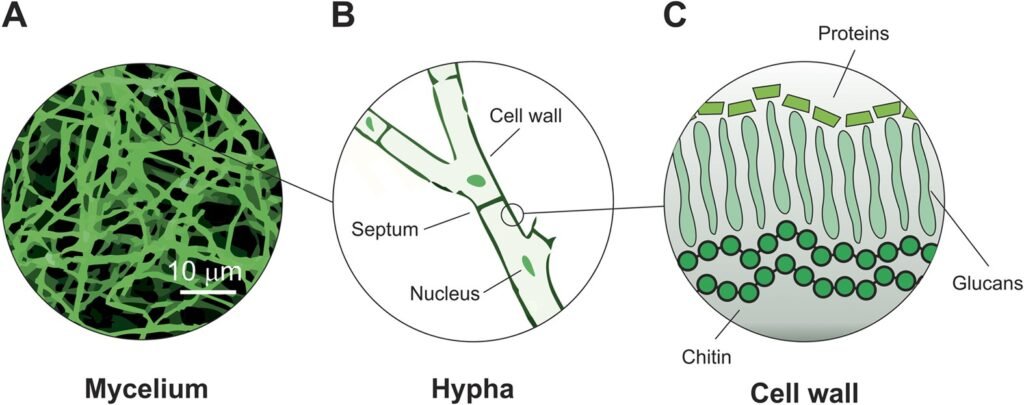
The Fungus-Based Protein refers to a protein-rich food ingredient produced from fungal cells known as mycelium. Instead of raising animals, scientists cultivate microorganisms in enclosed bioreactors and feed them sugars, minerals, and oxygen.
The species used, Fusarium venenatum, has already been consumed in commercial foods for decades in the form of mycoprotein. Food safety agencies in North America and Europe previously approved earlier versions of the organism for human consumption.
Researchers used CRISPR gene editing to adjust metabolic pathways inside the fungus. The edits improve how efficiently the organism converts nutrients into protein and slightly modify the structure of its fibers to improve digestibility and texture.
Dr. Elena Martinez, a microbial biotechnologist involved in the project, said the modification was targeted and minimal.
“We did not turn the fungus into something entirely new,” she explained in a university statement. “We optimized what it already naturally does — producing protein from simple nutrients.”
Unlike conventional genetically modified crops, the research team did not introduce DNA from other species. Instead, scientists fine-tuned genes that already existed in the fungus.
Why Scientists Are Interested: Food Demand and Climate Pressure
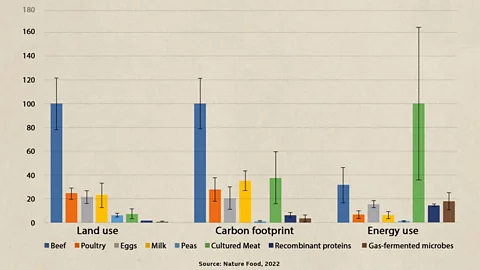
The emergence of alternative protein technologies reflects mounting pressure on the global food system. According to the Food and Agriculture Organization of the United Nations (FAO), livestock production is responsible for roughly 14–15% of global greenhouse-gas emissions.
Animal farming also consumes about 70% of agricultural land worldwide. Much of this land supports animal feed rather than food eaten directly by humans.
With the global population expected to reach nearly 10 billion by 2050, researchers fear that expanding livestock production alone may not meet future demand without accelerating deforestation and water shortages.
Life-cycle analyses conducted by environmental research institutes show the gene-edited fungal protein could cut emissions by more than half compared with chicken production and dramatically more compared with beef. Indoor fermentation also requires far less land because production occurs vertically inside buildings.
Dr. Michael Chen, a food systems analyst, said microbial foods may help stabilize supply chains.
“If production scales globally, microbial proteins could remove pressure from forests and farmland,” he said. “It is essentially industrialized agriculture without fields.”
How the Gene Editing Improves Production
Faster Growth and Higher Yield
Scientists altered enzymes controlling sugar metabolism. Early tests indicate the fungus produces similar protein amounts using significantly less feedstock and grows faster, lowering manufacturing cost.
Improved Nutrition
The mycoprotein contains all nine essential amino acids, making it a “complete protein.” It also provides dietary fiber called beta-glucan, associated with improved cholesterol levels and digestive health.
Better Texture
Because fungal filaments form long fibers naturally, the food mimics muscle tissue. Food manufacturers can shape it into cutlets, mince, or shredded meat substitutes with minimal processing.
Nutrition and Health Considerations
Nutrition researchers say fungus-derived protein may offer benefits beyond sustainability.
Unlike red meat, it contains almost no cholesterol and very little saturated fat. It is also rich in micronutrients such as zinc and B-vitamins. Clinical dietary studies have suggested mycoprotein can help people feel full longer, which may support weight management.
Dr. Sarah Goldberg, a clinical nutritionist, noted its dietary potential.
“From a health perspective, mycoprotein sits somewhere between plant protein and lean animal protein,” she said. “It provides essential amino acids but avoids many cardiovascular concerns linked to red meat.”
However, as with any new food, regulators will continue evaluating potential allergens.
Safety and Regulation Questions
Regulatory approval will determine how quickly the product reaches consumers. In the United States, the Food and Drug Administration (FDA) evaluates microbial proteins for toxicity, allergenicity, and nutritional profile. European authorities conduct similar reviews through the European Food Safety Authority.
Some consumer groups express concern about gene editing in food production. Scientists say the genetic changes resemble mutations that occur naturally during evolution.
Dr. Priya Nair, a food safety specialist, emphasized transparency.
“Public trust depends on clear labeling and open safety data,” she said. “The science suggests low risk, but acceptance is a social question as much as a technical one.”
Countries differ in regulation. The United States typically evaluates the final product, while the European Union focuses more heavily on the genetic modification process itself.
Comparison With Other Alternative Proteins
Plant-Based Meat
Made from soy or pea protein. Requires farmland, fertilizers, and irrigation.
Cultured (Lab-Grown) Meat
Produced from animal cells in nutrient solutions. Highly realistic but still costly and energy intensive.
Microbial Protein — Fungus-Based Protein
Produced continuously indoors and independent of seasons or weather.
Researchers say fermentation-based protein may scale faster because industries already use similar fermentation systems to produce insulin, enzymes, and antibiotics.
Economics and Industry Investment
Food technology investors are closely watching the development. The global alternative protein market is expected by analysts to reach hundreds of billions of dollars within two decades.
Manufacturing facilities resemble breweries more than farms. Large tanks operate around the clock, and production cycles last only a few days rather than months or years.
Economist Laura Kim said cost will determine success.
“If companies reach price parity with chicken, adoption could accelerate quickly,” she said. “Food transitions historically follow affordability, not just environmental awareness.”
Major food manufacturers are already partnering with biotechnology firms to develop consumer products such as ready meals and frozen foods.
Consumer Acceptance and Cultural Factors
Even with regulatory approval, public perception will matter. Surveys suggest younger consumers show greater willingness to try sustainable food technology compared with older populations.
Taste will likely be decisive. Early sensory testing indicates the fungus-based protein absorbs marinades and seasoning similarly to poultry.
Cultural habits also play a role. In regions where meat consumption is rising alongside economic growth, microbial protein may initially serve as a supplement rather than replacement.
Economic and Global Implications
The technology could benefit countries with limited farmland or water resources. Because fermentation requires little land, facilities can operate near cities, reducing transportation costs and food waste.
Food security experts believe indoor production could protect supply chains from drought, floods, and livestock disease outbreaks such as avian influenza.
In addition, governments studying climate policy increasingly view alternative protein as part of emission-reduction strategies.
Environmental Context Beyond Climate
Beyond carbon emissions, livestock farming also contributes to biodiversity loss and water pollution from manure runoff and fertilizers used to grow feed crops.
Microbial fermentation requires significantly less freshwater and produces minimal agricultural runoff. Environmental scientists note that replacing even a portion of meat consumption could reduce pressure on ecosystems.
What Happens Next
Companies are now scaling pilot plants while regulators review safety data. Commercial products could appear within a few years if approvals proceed smoothly.
Researchers emphasize the technology will complement rather than replace agriculture.
“We will still farm crops and raise animals,” Martinez said. “But microbial proteins could supply a meaningful share of global nutrition in the future.”
FAQs About Fungus-Based Protein
Is Fungus-Based Protein a genetically modified organism?
It is gene-edited rather than transgenic. Scientists modified existing genes without adding DNA from another species.
Does it taste like mushrooms?
No. The organism is processed into a neutral protein that resembles chicken or meat when cooked.
Is it vegan?
Yes. The product contains no animal ingredients.
When will it be available?
Availability depends on regulatory approvals, likely within several years.