


The Social Security tax cap 2026 means some high-income Americans will stop paying Social Security payroll taxes months before the year ends. The annual wage base rose to $184,500, allowing top earners to reach the limit earlier than most workers who continue contributing throughout the year.
Table of Contents
Top Earners Hit the Social Security Tax Cap
| Key Fact | Detail |
|---|---|
| 2026 Wage Base Limit | $184,500 income subject to Social Security payroll tax |
| Employee Tax Rate | 6.2% of wages (employers pay another 6.2%) |
| Maximum Employee Tax | About $11,439 in 2026 |
The rising Social Security tax cap 2026 reflects broader wage growth across the U.S. economy. While the adjustment primarily affects higher earners, it also highlights ongoing policy discussions about how the retirement program will remain financially stable for future generations. Lawmakers continue to debate whether raising the wage base, adjusting tax rates, or modifying benefits will be necessary to secure the system’s long-term sustainability.
What the Social Security Tax Cap 2026 Means for Workers
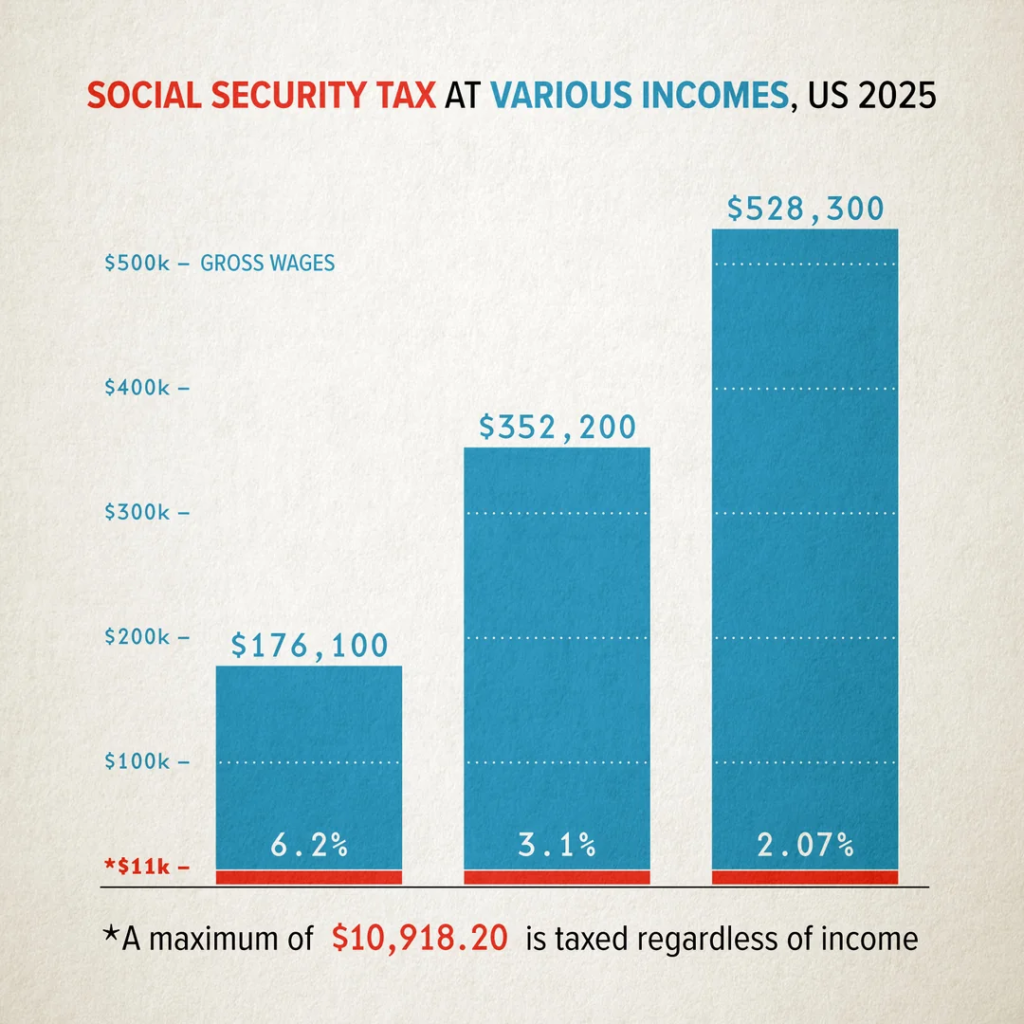
The Social Security tax cap 2026 sets the maximum amount of income subject to the Social Security payroll tax. Workers pay 6.2% of wages, while employers contribute an additional 6.2% on the employee’s behalf.
According to the Social Security Administration (SSA), wages above $184,500 in 2026 are not subject to the Social Security portion of payroll taxes. The limit is adjusted annually to reflect changes in average wages nationwide.
Once workers reach the threshold, the deduction disappears from their paychecks for the remainder of the year. For high earners, that can happen well before December.
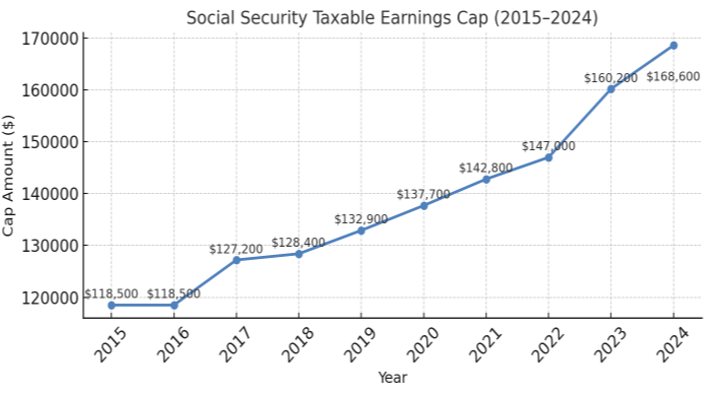
The cap increased from $176,100 in 2025, continuing a long-running trend of rising wage base limits tied to national earnings growth.
Why High Earners Stop Paying the Tax Earlier
High-income workers reach the wage base limit faster simply because they earn more each pay period.
For example:
- A worker earning $500,000 annually could reach the cap around May.
- Someone making $1 million a year may hit the threshold by March.
After reaching the limit, their paychecks increase slightly because the 6.2% Social Security payroll tax no longer applies.
Most Americans never reach the cap. The Social Security Administration reports that only about 6% of workers earn above the taxable wage base in a given year.
Economists say this structure means most workers pay the tax on their full income, while higher-income individuals contribute only on earnings below the cap.
Historical Context: How the Wage Base Limit Has Changed Over Time
The taxable maximum has increased significantly over the decades as wages and the cost of living have grown.
For instance:
- In 1990, the Social Security wage base was $51,300.
- By 2000, it had risen to $76,200.
- In 2010, it reached $106,800.
- In 2026, it stands at $184,500.
The steady increase reflects broader economic trends, including wage inflation and changes in labor market dynamics. According to the Social Security Administration, the wage base has nearly tripled in three decades.
Experts say this gradual rise helps maintain the program’s funding while keeping the system tied to actual wage growth.
Why the Wage Base Limit Changes Each Year
The wage base limit rises annually based on the National Average Wage Index, a measure used by the SSA to track overall wage growth in the United States.
When average wages increase, the taxable maximum also increases to keep Social Security revenue aligned with worker earnings.
“The taxable maximum is designed to grow with wages,” the Social Security Administration explains in its annual policy update.
The adjustment helps fund retirement and disability benefits for more than 67 million Americans, including retirees, disabled workers, and survivors.
How Payroll Taxes Appear on Paychecks
For many workers, payroll taxes appear as deductions labeled FICA, short for the Federal Insurance Contributions Act.
A typical paycheck includes:
- 6.2% Social Security tax
- 1.45% Medicare tax
Employers match both contributions, meaning a total of 12.4% of taxable wages goes to Social Security.
Once workers exceed the wage base limit, the Social Security portion stops, but the Medicare tax continues with no cap.
Workers earning more than $200,000 also pay an additional 0.9% Medicare surtax, according to the Internal Revenue Service (IRS).
Debate Over the Wage Base Limit
The wage base limit has long been a topic of debate among policymakers.
Some lawmakers argue that the cap should be removed or significantly raised to strengthen Social Security’s finances. Others caution that higher payroll taxes could discourage investment or hiring.
The Congressional Budget Office (CBO) has noted that eliminating the cap entirely could extend the solvency of the Social Security trust fund but would also increase taxes on higher-income households.
Advocates for reform say the current structure means a smaller share of high earners’ total income is taxed for Social Security compared with middle-income workers.
How the Social Security Payroll Tax Funds Benefits
Revenue from the Social Security payroll tax funds the nation’s retirement, disability, and survivor benefits.
The program operates largely on a pay-as-you-go system, meaning current workers’ contributions finance payments to current beneficiaries.
According to the Social Security Trustees Report, the program’s combined trust funds could face funding shortfalls by the mid-2030s if Congress does not enact changes.
Policy proposals under discussion include:
- Raising the payroll tax rate
- Increasing or eliminating the wage base limit
- Adjusting benefit formulas
How the United States Compares With Other Countries
Many developed countries finance public pension systems through payroll taxes, but the structure varies widely.
In Canada, the Canada Pension Plan (CPP) also sets a yearly income ceiling for contributions.
In the United Kingdom, National Insurance contributions apply across different income bands.
In Germany, the public pension system imposes income limits but with higher contribution rates.
Experts say the U.S. system stands out because of its relatively moderate payroll tax rate paired with a taxable income cap.
According to the Organisation for Economic Co-operation and Development (OECD), payroll tax structures differ based on each country’s balance between worker contributions, employer funding, and government subsidies.
Impact on Federal Revenue and the Economy
Changes to the wage base limit have implications beyond individual paychecks.
Payroll taxes account for a major share of Social Security’s funding. According to the U.S. Treasury, they represent nearly 90% of the program’s revenue.
Raising the wage base limit increases tax collections from higher-income households while leaving most workers unaffected.
Economists say this adjustment helps stabilize the program without requiring major structural reforms each year.
However, some analysts caution that relying solely on higher wage caps may not be sufficient to address long-term funding gaps.
Financial Planning Considerations for High Earners
For workers approaching the wage base limit, payroll deductions can change noticeably once the cap is reached.
Financial advisors say the increase in take-home pay later in the year can create opportunities for:
- Increasing retirement savings
- Investing in tax-advantaged accounts
- Adjusting withholding levels
However, planners also note that reaching the wage cap does not affect eligibility for Social Security benefits immediately.
Benefits are calculated using a worker’s 35 highest-earning years, according to the Social Security Administration.
What Workers Should Know
For most workers, the Social Security tax cap 2026 will have little immediate impact because their wages remain below the threshold.
However, the rising wage base means higher payroll deductions for workers approaching the limit each year.
Financial planners say employees should review pay stubs early in the year to understand how payroll taxes affect take-home pay.
“The cap primarily affects high-income households,” said Alicia Munnell, director of the Center for Retirement Research at Boston College, in a policy analysis on Social Security financing.
“But changes to the cap also play a role in long-term debates about the system’s sustainability.”
FAQs About Top Earners Hit the Social Security Tax Cap
What is the Social Security tax cap 2026?
The Social Security tax cap 2026 is the maximum amount of wages subject to Social Security payroll tax. The limit is $184,500.
What happens after you reach the cap?
Once wages exceed the cap, workers stop paying the 6.2% Social Security payroll tax for the remainder of the year.
Do employers still pay after the cap?
Employers also stop paying their 6.2% contribution once the employee reaches the taxable maximum.
Does Medicare have a cap?
No. The Medicare payroll tax of 1.45% applies to all wages and does not have a taxable maximum.
Will the Social Security tax cap keep rising?
Yes. The limit typically increases each year based on national wage growth, although it may remain unchanged if wages stagnate.