
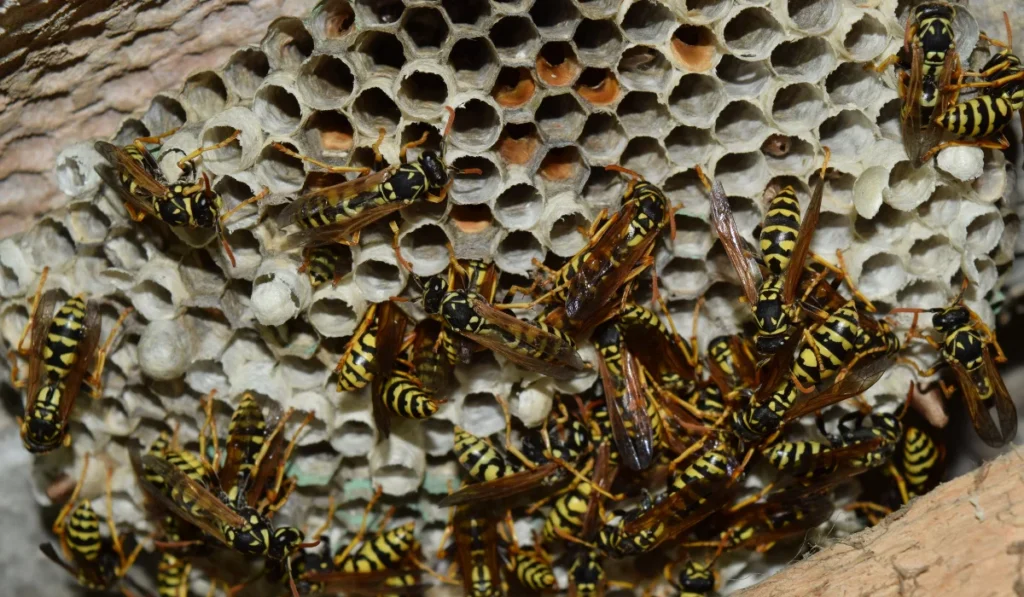
As temperatures drop across North America, Europe, and parts of Asia, bee activity fades and wasp nests appear empty. The change is not migration. Scientists studying Bees and Wasps say the insects follow sharply different winter survival strategies: bees endure the cold as a functioning colony, while nearly all wasps die, leaving a single fertilized queen to restart the population in spring.
Table of Contents
What Really Happens to Bees and Wasps When Temperatures Drop
| Key Fact | Detail |
|---|---|
| Bee colonies stay active | Bees generate heat by vibrating flight muscles |
| Wasp colonies collapse | Workers and males die in winter |
| Only queens survive | Fertilized wasp queens enter dormancy (diapause) |
Scientists say understanding Bees and Wasps winter survival helps predict ecosystem health. Pollinator populations influence food production, biodiversity, and pest control. As Ramsey noted, “How insects respond to winter tells us how nature itself is changing.” Researchers continue monitoring seasonal insect behavior as temperatures shift globally.
How Bees Survive Winter as a Living Organism
When outdoor temperatures fall below roughly 50°F (10°C), honey bees stop foraging and gather inside their hive. Scientists describe the colony as operating like a single body, sometimes called a superorganism.
Dr. Samuel Ramsey, an entomologist who studies insect parasites and bee health, explains that honey bees never truly sleep through winter.
“They remain active all season,” he said in a university seminar on pollinator biology. “The colony itself behaves like a warm-blooded animal. Individual bees matter less than the survival of the group.”
This collective behavior is one of the most unusual examples of social insect behavior on Earth.
The Winter Cluster
Inside the hive, worker bees gather around their queen and form a tight sphere known as a winter cluster.
Outer bees act as insulation. Inner bees vibrate their flight muscles without flying. This motion generates heat.
According to the U.S. Department of Agriculture (USDA), the center of the cluster remains around 90–95°F (32–35°C) even when outside air reaches freezing or below.
The cluster slowly moves across the honeycomb through winter, consuming stored food as it goes.
Honey: The Colony’s Energy Supply
Bees store nectar as honey months before winter. The food acts as fuel.
The Food and Agriculture Organization (FAO) reports a colony may require up to 90 pounds (40 kg) of honey to survive colder climates. If supplies run out before spring flowers bloom, the colony starves — a major cause of winter colony loss worldwide.
Bees convert sugar in honey into metabolic heat, similar to how mammals burn fat to maintain body temperature.
Why Bees Rarely Fly in Cold Weather
Cold weather affects muscle performance. Bees must warm their flight muscles before takeoff.
The University of Maine Cooperative Extension states a bee needs a body temperature near 86°F (30°C) to fly. Below that, wings cannot move fast enough to stay airborne.
When winter days briefly warm, bees may leave the hive. These flights are not for collecting nectar. Instead, they are sanitation flights to remove waste from the hive and prevent disease buildup.
Why Wasp Colonies Die Each Year
Social wasps follow a different survival model.
Unlike bees, they do not store winter food. Yellowjackets and paper wasps rely on hunting caterpillars, flies, and other insects. As winter arrives, prey disappears.
The University of Minnesota Extension explains that by late fall:
- workers die from cold
- males die after mating
- larvae stop developing
- the nest is abandoned permanently
The Only Survivor: The Queen
Only one individual lives — a fertilized queen.
She leaves the nest before winter and seeks shelter in soil, bark crevices, attics, or wall cavities. She enters diapause, a biological state where metabolism slows dramatically.
The Smithsonian Institution describes diapause as a survival mechanism allowing insects to tolerate freezing conditions for months.
In spring, the queen awakens and starts a colony alone, building the first nest cells and feeding larvae herself until workers emerge.
Why Wasps Become Aggressive in Autumn
People often notice increased wasp activity near food in late summer.
This behavior relates to colony collapse.
During summer, larvae provide workers with sugary secretions. When larvae production stops, workers lose their carbohydrate source.
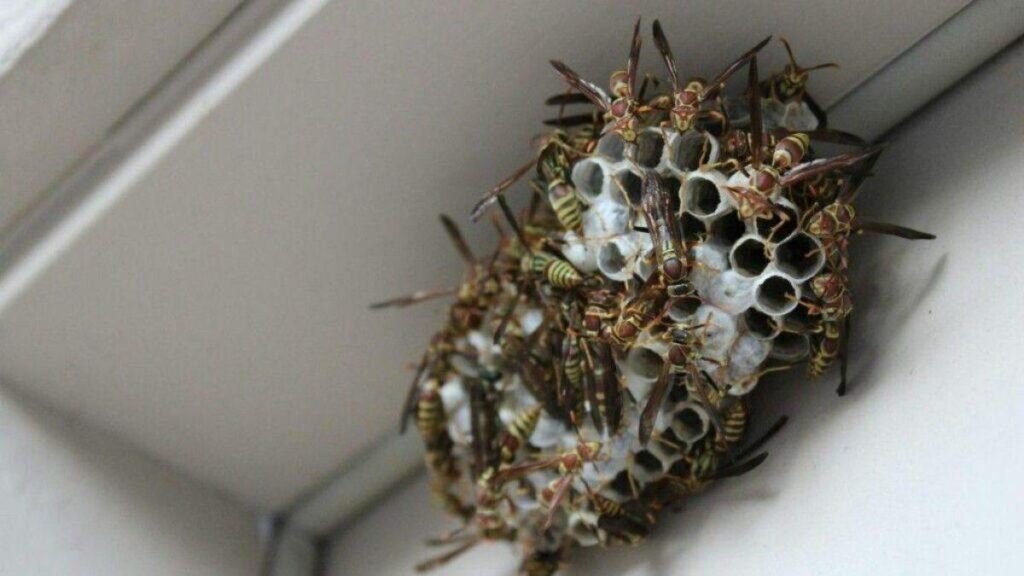
According to the National Pest Management Association (NPMA), workers then search widely for sugar — fruit, soda, and human food. The insects are not angrier; they are starving.
The Evolutionary Difference
The contrast between bees and wasps comes from food strategy.
Bees evolved as nectar collectors. Flowers disappear in winter, so colonies evolved food storage and cooperative heating.
Wasps evolved as predators. With prey absent, supporting a large colony through winter would require too much energy. Starting fresh each year is more efficient.
Dr. Marla Spivak, a University of Minnesota bee researcher, has explained that honey bees maintain year-round societies because their survival depends on stored plant energy rather than live prey.
Climate Change and Winter Survival
Scientists now study how warming winters affect Bees and Wasps populations.
Milder winters can:
- allow more wasp queens to survive
- disrupt bee hibernation timing
- cause early flowering mismatches
The Intergovernmental Panel on Climate Change (IPCC) has warned that altered seasonal timing may reduce pollination efficiency if bees emerge before plants bloom or after flowers fade.
Researchers also report that warmer winters can increase parasite survival, including the Varroa mite, one of the main threats to honey bee colonies.
Urban Environments and Human Encounters
Urban areas change insect winter survival.
Cities retain heat through buildings and pavement. This “urban heat island effect” creates warmer microclimates. Scientists have found that wasp queens increasingly overwinter in attics and wall voids.
This explains why homeowners sometimes find a slow-moving wasp indoors during winter. The insect is typically a dormant queen awakened by indoor heating.
Experts advise against panic. A single winter wasp rarely forms a colony indoors because it must leave in spring to build a nest outdoors.
Ecological Importance
Both insects are critical pollinators and pest controllers.
The U.S. Department of Agriculture estimates pollinators contribute billions of dollars annually to agricultural production. Honey bees pollinate crops including almonds, apples, and blueberries.
Wasps also benefit agriculture. By feeding insects to their young, they reduce caterpillar populations that damage crops.
“Wasps are natural pest managers,” according to guidance from agricultural extension agencies. “They help farmers without chemicals.”
Public Health and Safety
Though feared, winter behavior reduces sting risk.
Bee colonies remain inside hives and rarely sting unless disturbed. Wasps, meanwhile, are largely absent except for dormant queens.
Allergy specialists note most stings occur during late summer — not winter — when foraging activity peaks.
Additional Scientific Insight: Winter Bees vs Summer Bees
A lesser-known fact about Bees and Wasps concerns lifespan.
Worker bees born in summer live about 4–6 weeks. Winter bees, however, live up to 6 months.
Researchers say winter bees develop larger fat reserves and special proteins that protect cells from cold stress. These adaptations allow them to survive until spring flowers bloom.
Wasps lack this biological shift. Workers cannot survive prolonged cold regardless of food availability.
Global Perspective
The phenomenon occurs worldwide but varies by climate.
In tropical regions, wasps may remain active year-round. In colder climates such as Canada and Northern Europe, colony die-off is rapid and complete.
Beekeepers in harsh regions often insulate hives or position them to reduce wind exposure, improving winter survival rates.
FAQs About What Really Happens to Bees and Wasps When Temperatures Drop
Do bees hibernate?
No. Bees remain active and generate heat inside the hive.
Why do I see a single wasp indoors in winter?
It is usually an overwintering queen that sheltered inside a building.
Do wasps reuse nests?
No. Every nest is built from scratch each spring.
Why are bees important pollinators?
They transfer pollen between flowers, enabling fruit and seed production.
Are winter bees different from summer bees?
Yes. Winter bees live several months, while summer workers live only weeks.