


Millions of Americans receiving February Social Security Payments are seeing higher benefits and altered payment timing in 2026, following a cost-of-living increase and calendar adjustments. The Social Security Administration (SSA) says deposits follow a birth-date schedule, while Supplemental Security Income recipients may notice two payments this month because March benefits were issued early.
Table of Contents
February Social Security Payments
| Key Fact | Detail |
|---|---|
| Payment schedule | Based on beneficiary birth date |
| COLA increase | 2.8% benefit rise in 2026 |
| Early payment | March SSI paid in late February |
The next major update to Social Security payments will occur in late 2026, when the government announces the 2027 cost-of-living adjustment based on inflation data. Officials say the system will continue using staggered payment dates to maintain processing stability and prevent banking disruptions.
The SSA advises beneficiaries to monitor official notices and online accounts for accurate payment information and avoid relying on rumors or unofficial reports.
Understanding February Social Security Payments
The Social Security program provides monthly income to more than 71 million Americans, including retirees, survivors, and people with disabilities, according to the Social Security Administration.
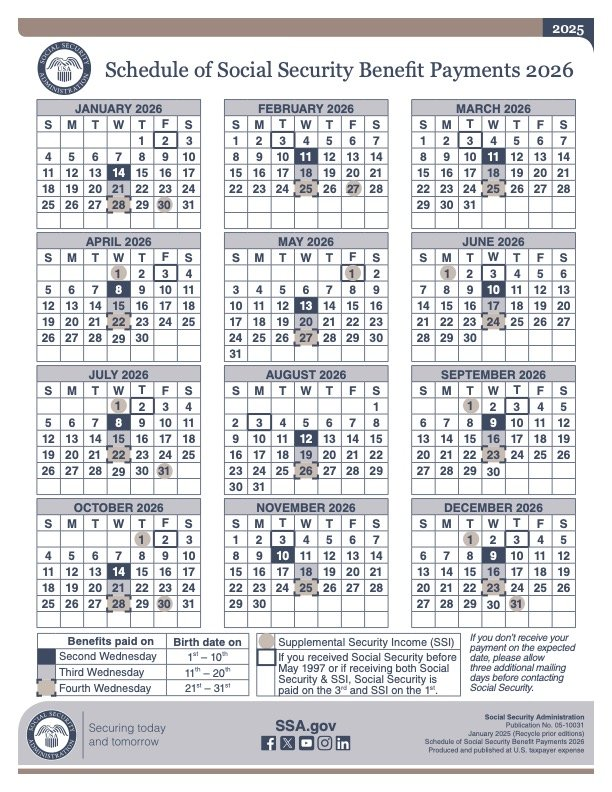
In February 2026, payments follow the agency’s long-standing staggered distribution system, designed to manage banking transactions and ensure reliability. Individuals who began receiving benefits after May 1997 are paid according to their birth date.
Payment Schedule for February 2026
- Birthdays 1–10: February 11
- Birthdays 11–20: February 18
- Birthdays 21–31: February 25
People who began benefits before May 1997 typically receive payment around the third day of each month, according to the SSA.
The staggered system was introduced to prevent banking congestion and administrative delays. Before the change, nearly all beneficiaries were paid on the same day, which occasionally overwhelmed processing systems and financial institutions.
Why Some Recipients Got Two Payments
A number of beneficiaries reported confusion after receiving an extra deposit.
The explanation is administrative rather than financial.
Supplemental Security Income (SSI) benefits are normally issued on the first day of each month. However, March 1, 2026 falls on a Sunday. Under federal policy, the SSA sends payments on the previous business day. As a result, the March SSI payment arrived on February 27.
Officials emphasize recipients did not receive additional money — only an advance of the next month’s payment.
“SSI payments always move to the prior business day when the first falls on a weekend or federal holiday,” the agency explains in its public payment calendar guidance.
This adjustment is part of the standard SSI payment schedule, which shifts several times each year depending on holidays. Financial planners often advise beneficiaries to budget carefully because the next payment may then arrive weeks later.
The Major Change: 2026 Cost-of-Living Adjustment (COLA)
The most significant development affecting February Social Security Payments is the annual cost-of-living adjustment, or COLA.
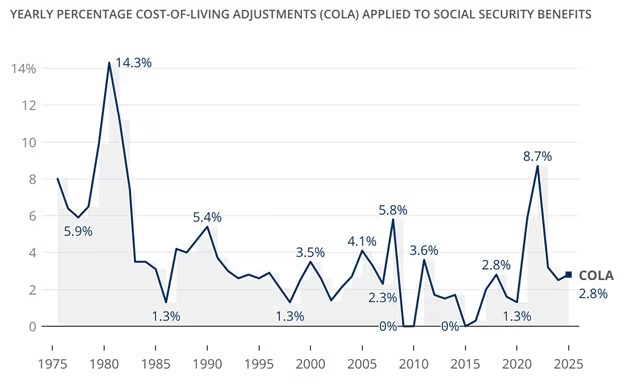
For 2026, benefits rose 2.8%. The increase began with January payments, so February checks reflect the higher amount.
The adjustment is calculated using inflation data from the Consumer Price Index for Urban Wage Earners and Clerical Workers (CPI-W), compiled by the U.S. Bureau of Labor Statistics.
The SSA said the increase adds roughly $50–$60 per month for the average retiree, though individual amounts vary by earnings history and retirement age.
Why COLA Matters
Social Security COLA exists to prevent retirees’ purchasing power from declining due to inflation. Without it, fixed incomes would lose value each year as prices rise.
During high inflation in 2022, COLA reached 8.7%, the largest increase in four decades. The smaller Social Security COLA 2026 reflects moderating inflation but still provides additional monthly income.
Economists note that retirees often face higher inflation than younger households because they spend more on healthcare, housing, and utilities — categories that have risen sharply in recent years.
New SSI Maximum Federal Payments
- Individual: $994 per month
- Couple: $1,491 per month
Other Rule Changes Affecting Benefits
Earnings Limit for Early Retirees
Americans who collect benefits before reaching full retirement age can still work, but income above a yearly threshold temporarily reduces payments.
In 2026, the earnings test applies above approximately $24,480 annually. According to SSA policy, withheld benefits are later credited back once beneficiaries reach full retirement age.
Disability Work Threshold
Recipients of Social Security Disability Insurance (SSDI) can earn more income before losing eligibility. The 2026 “substantial gainful activity” limit rose to about $1,690 per month.
Medicare Premium Interaction
Most beneficiaries have Medicare Part B premiums deducted from their Social Security checks. While premiums increased in 2026, federal “hold-harmless” protections generally prevent a person’s net payment from declining.
Who Relies on Social Security Most
The program functions not only as retirement income but also as a major anti-poverty system.
Research from policy groups shows:
- Nearly 90% of Americans aged 65+ receive Social Security
- About half of retirees depend on it for at least 50% of income
- For roughly one in four retirees, it provides 90% or more of income
Women, disabled workers, and widows rely on benefits particularly heavily because they often have lower lifetime earnings.
The Social Security benefit increase therefore affects household spending nationwide, influencing retail sales, rent payments, and even local economies in retirement-heavy states such as Florida and Arizona.
How the Program Is Funded
Social Security is funded primarily through payroll taxes collected under the Federal Insurance Contributions Act (FICA). Workers and employers each contribute 6.2% of wages up to a taxable maximum income cap.
In 2026, the taxable wage base increased to $184,500. Earnings above that level are not subject to Social Security payroll tax.
The funds are deposited into two trust funds:
- Old-Age and Survivors Insurance (OASI)
- Disability Insurance (DI)
Long-Term Outlook and Solvency Debate
The Social Security trustees have warned that the retirement trust fund may face depletion in the mid-2030s if Congress makes no changes. After that point, payroll taxes would still cover most payments, but benefits could be reduced.
Policy proposals under discussion include:
- Raising the retirement age
- Increasing payroll taxes
- Adjusting benefit formulas
- Expanding taxable wages
Economists say the issue is demographic. Americans are living longer while birth rates have declined, meaning fewer workers support more retirees.
Despite the debate, current beneficiaries will continue receiving payments. Federal law requires benefits to be paid from incoming payroll taxes even if trust reserves decline.
Why Payment Timing Matters
Economists say the payment schedule is significant because Social Security is a primary income source for many older Americans.
The Center on Budget and Policy Priorities reports Social Security provides at least half of income for about half of retirees and nearly all income for roughly one-quarter of older households.
Because of this dependence, even timing changes can cause confusion or financial planning challenges.
Financial advisers recommend retirees:
- Track deposit dates monthly
- Maintain emergency savings when possible
- Avoid assuming early payments are extra income
Historical Background
Social Security was created in 1935 during the Great Depression to provide income security for older Americans who had lost savings and employment.
The first monthly benefit, issued in 1940, was $22.54.
Over decades, the program expanded to include:
- Survivors benefits (1939)
- Disability insurance (1956)
- Automatic inflation adjustments (1975)
Today it is the largest federal benefit program in the United States and one of the most widely supported public policies across political parties.
FAQs About Social Security Payments
Why did I receive two February Social Security Payments?
You likely received an early SSI payment for March due to the weekend calendar shift.
Did benefits increase in February?
Yes. The 2.8% COLA began in January, so February payments reflect the higher amount.
Are payment dates always Wednesdays?
Yes, for most beneficiaries. The specific Wednesday depends on your birth date.
Will I get extra money because of the early SSI payment?
No. The early payment replaces March’s check; it is not a bonus.
Will Social Security run out?
The program is not expected to disappear. However, future benefits could be reduced without legislative changes.