
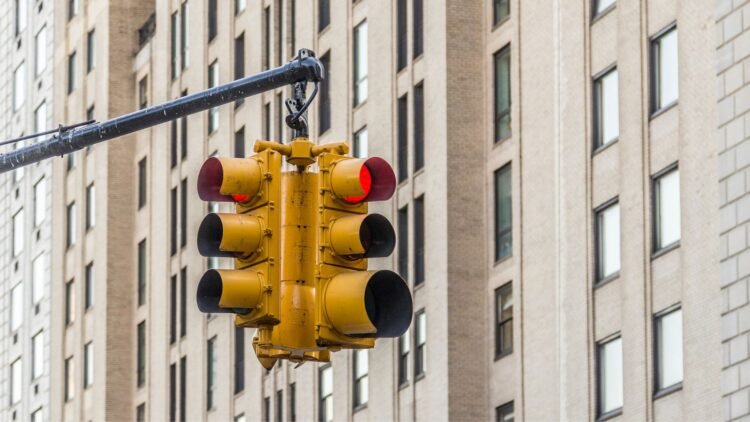
The Pedestrian Signal — the glowing red hand that instructs people not to cross — appears to display a pure red light. In many modern intersections, however, the color is intentionally not fully red. Transportation engineers and vision scientists say the signal uses a calibrated orange-red shade designed to improve visibility, reaction time, and pedestrian safety under real-world lighting conditions.
Table of Contents
Why That Pedestrian Signal Looks Red
| Key Fact | Detail |
|---|---|
| Not pure red | Many pedestrian signals use a red-orange spectrum rather than deep red |
| Why | Human eyes detect brightness and contrast faster than exact hue |
| Safety impact | Faster recognition improves pedestrian reaction time |
How the Pedestrian Signal Was Engineered for the Human Eye
Traffic signals originated in railway systems in the 1800s, where red indicated danger because it was visible over long distances. When automobiles became widespread in the early 20th century, cities adopted similar systems for roads.
Pedestrian-specific signals were introduced decades later as urban congestion increased and pedestrian injuries rose. According to transportation historians, the first illuminated walk/don’t-walk signals appeared in U.S. cities during the 1930s and 1940s.
The modern Pedestrian Signal uses not only engineering but behavioral psychology.
Dr. Mark Fairchild, a color scientist at the Rochester Institute of Technology, explains:
“Your brain does not measure a precise color wavelength. It interprets a message. The signal must be recognized instantly in any environment.”
In other words, traffic control devices are communication systems — not decorative lights.
Why “Not Quite Red” Works Better
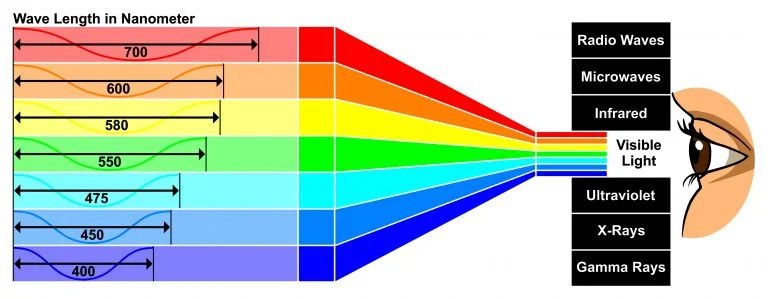
A deep red light lies at the extreme end of the visible spectrum. Although effective for long-distance vehicle signals, it appears relatively dark to the human eye in bright daylight.
Engineers therefore shifted toward a slightly orange-red output. The difference is subtle but important.
The adjusted color:
- appears brighter in sunlight
- stands out from vehicle brake lights
- improves peripheral detection
- reduces misinterpretation at complex intersections
Research in human vision science shows people recognize high-contrast colors faster than pure hues. The orange-red spectrum activates both long- and medium-wavelength cone receptors in the eye, increasing perceived brightness.
Human Vision: Why Your Brain Still Says “Red”
Human perception relies on interpretation. The eye collects data, but the brain assigns meaning.
Scientists call this color categorization. Instead of identifying an exact wavelength, the brain groups colors into familiar categories. Since society universally links red with danger and stopping, observers interpret the pedestrian signal as red regardless of the precise hue.
Dr. Julie Harris, a perception researcher, explains:
“We do not see physics. We see expectations. The brain labels the color based on learned meaning.”
The effect is strengthened by context. A hand icon at a crosswalk immediately triggers the stop association. The brain fills in the color category automatically.
Night Vision and the Purkinje Effect
Human eyesight changes in darkness. Under low light, rod cells dominate vision and become more sensitive to blue-green wavelengths. This phenomenon is known as the Purkinje effect.
As a result, deep red appears dimmer at night.
A pure red pedestrian light could be difficult to detect after sunset. The slightly orange hue prevents that. It maintains visibility while preserving the stop message.
This adjustment is particularly important in urban environments where glare from headlights competes with signals.
LED Traffic Lights Changed the System
Early signals used incandescent bulbs behind colored lenses. The lens filtered white light into red.
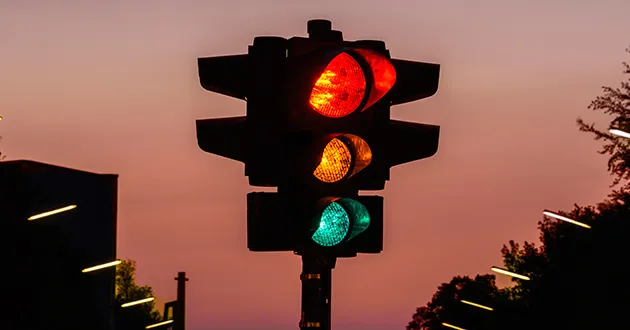
Modern LED traffic lights work differently. LEDs emit specific wavelengths directly. This allows engineers to fine-tune the output spectrum.
Transportation departments now calibrate pedestrian signals to maximize recognition speed while reducing power consumption. LED systems also last far longer — often 10 years or more — reducing maintenance costs.
Energy agencies estimate LED signals consume up to 80% less electricity than incandescent traffic lights.
Accessibility and Color-Blind Pedestrians
Approximately 8% of men worldwide experience some form of color-vision deficiency. Because of this, modern traffic safety design does not rely on color alone.
Pedestrian signals include:
- a standing person icon
- a walking person icon
- flashing countdown timers
- audible beeping tones in many countries
Transportation agencies emphasize symbol recognition over color accuracy.
A municipal transportation official noted:
“The icon communicates the instruction even if the color is not perceived normally.”
This design approach follows universal accessibility guidelines used in public infrastructure.
Countdown Timers and Reaction Time
Many intersections now feature countdown displays. Studies by transportation safety researchers show pedestrians make crossing decisions in under two seconds.
Countdown timers:
- reduce mid-crossing hesitation
- decrease last-second running
- improve compliance rates
Several large cities reported measurable declines in pedestrian injuries after installing them.
International Differences
The pedestrian signal is not identical worldwide.
Japan
Japan uses a green walking figure and a red standing figure, often accompanied by melody chimes to guide visually impaired pedestrians.
Germany
East Germany introduced the iconic “Ampelmännchen” figure in the 1960s. The character remains culturally significant and is still used today.
United Kingdom
The UK uses a red standing figure and green walking figure alongside audible clicking sounds at crossings.
Australia and New Zealand
Signals include voice announcements saying “wait” and “cross now.”
Despite design variations, the same principle applies globally: clarity of meaning outweighs precise color physics.
Why You Never Noticed
Most people assume the signal is red because the brain associates traffic control with specific meanings learned from childhood.
This is a cognitive shortcut known as top-down processing. Instead of analyzing color, the brain interprets intent.
The pedestrian signal therefore demonstrates applied psychology in public infrastructure.
You are not responding to a color.
You are responding to a command.
Pedestrian Safety Impact
According to road safety agencies worldwide, pedestrian fatalities remain a significant public safety issue in urban areas. Intersections are among the most common accident locations.
Engineering improvements — including optimized signal color — aim to reduce:
- missed signals
- late crossings
- distracted walking incidents
Transportation safety experts emphasize small design changes can produce large behavioral effects. Even milliseconds of faster recognition can prevent collisions.
Future Technology in Pedestrian Signal
Cities are testing new smart intersections featuring:
- adaptive brightness signals
- smartphone alerts
- sensors detecting waiting pedestrians
- audible navigation for visually impaired users
Some prototypes even adjust signal timing based on crowd size.
Engineers say the fundamental goal remains unchanged: rapid human comprehension.
What Comes Next
Transportation planners continue refining signal design using behavioral science and data analysis. The pedestrian signal will likely become more responsive and accessible, but its color principle will remain.
A transportation researcher summarized:
“The signal is not meant to be scientifically red. It is meant to be unmistakably understood.”
FAQs About Why That Pedestrian Signal Looks Red
Is the pedestrian signal actually orange?
Often it uses a red-orange wavelength engineered for visibility.
Why not increase brightness instead?
Brightness alone cannot compensate for human visual perception limitations.
Are traffic lights also adjusted?
Vehicle traffic lights remain closer to standardized red wavelengths due to long-distance visibility requirements.